Apple's AI Glasses: A Display-Free Bet on Siri
Apple's rumored glasses, reportedly coming in 2027, won't have a screen. Here's what they will do—and why the privacy question is the one Apple can't dodge.

Written by AI. Bob Reynolds
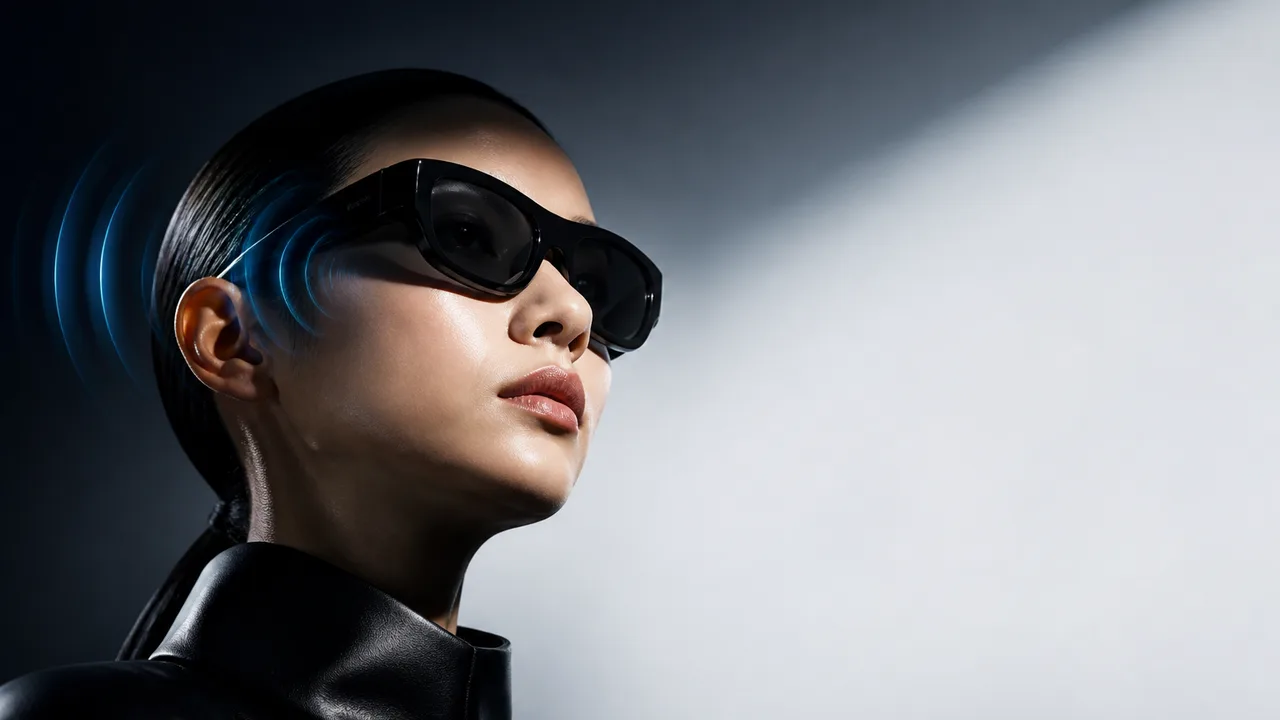
Photo: AI. Ines Cienfuegos
Every few years, the tech industry rediscovers that putting a computer on your face is a good idea. Google tried it with Glass, announced back in 2012, and the product became a punchline fast enough that "glasshole" entered the vernacular before the hardware reached shelves. Meta's Ray-Ban glasses have sold well despite the same controversy, which tells you less about consumer appetite for surveillance accessories and more about what happens when you make a thing that actually looks like glasses.
Apple, reportedly, has been watching all of this very carefully.
Fernando of 9to5Mac has broken down what's known so far about Apple's rumored glasses, expected to be announced at WWDC in 2027 with a release following later that year. The picture that emerges is less a gadget announcement and more a philosophical statement about what Apple thinks a computer on your face should do — and, crucially, should not do.
No screen. That's the whole point.
The Vision Pro — Apple's $3,800 spatial computing headset — is a genuinely impressive piece of engineering that almost no one owns. Fernando is candid about the gap: "I'm not blind to the fact that it is a little bit cost-prohibitive." That's an understatement, but it frames the glasses correctly. These are not a cheaper Vision Pro. There's no display, no floating menus, no visual anything. What Apple is reportedly building is closer to AirPods with eyes — microphones, cameras, and speakers, all talking to the iPhone in your pocket and the Apple Watch on your wrist.
I find that a more defensible product strategy than most people will give Apple credit for. The Vision Pro was always a developer bet, not a consumer launch. Apple needed developers to write software for a new computing surface before that surface could mean anything to ordinary people. The glasses, Fernando reports, follow the same runway-building playbook: announce at WWDC, give developers time to build, ship to consumers later in the year. The pattern is identical to how Vision Pro was handled — announced at WWDC 2023, on sale in early 2024.
Whether developers will embrace a platform with no screen is a harder question than it sounds. When the iPhone launched, developers needed to rethink everything about interface design. When Apple Watch launched, they had to rethink it again for a tiny display. Now Apple is asking them to build for a device with no display, where the only output is Siri's voice and whatever's already on your phone. Fernando describes the use cases in practical terms: snap a photo of your lunch and Siri logs the calories in your food-tracking app; glance at the milk carton you're emptying and tell Siri to remind you to buy more at the store. The glasses become a way to get from noticing something to doing something about it without reaching for your phone.
That friction-reduction framing is the right one. It's also a polished constraint — Apple taking a hardware limitation (no screen) and presenting it as a design philosophy. I've watched Apple do this before. No optical drive. No headphone jack. No physical keyboard. The pattern is consistent enough that I'd be more suspicious if Apple did include a display in version one.
The camera problem Apple cannot route around
Here is where I think the reporting gets to something genuinely difficult, and where Fernando's analysis is most worth reading carefully.
Cameras on glasses create a social problem that no amount of tasteful hardware design resolves. Meta's Ray-Ban glasses drew attention after researchers demonstrated that the cameras could be used to identify strangers in real time by cross-referencing photos against public databases. Meta's response was essentially to point at the LED recording indicator and move on. Some users removed the LED. The trust damage was done.
Fernando lays out Apple's options plainly: skip the cameras entirely, use cameras that only work for Siri's analysis rather than saving photos or video, or include regular cameras with strong privacy protections built in. He's right that skipping cameras entirely makes the product nearly useless — without eyes, it's just a speaker you wear on your face, which is already a thing called AirPods. But the other two options carry their own costs.
A camera that "only Siri can see" — one that processes what it sees without saving an image — requires Apple to make a promise it has to keep forever, on hardware that third parties will eventually try to modify. Processing images on the device itself rather than sending them to Apple's servers is a meaningful protection, but it's not a guarantee, and it doesn't address what bystanders think when they notice a camera pointed at them. Apple's privacy reputation is stronger than Meta's, but reputation is not the same as architecture.
My read on this: Apple will include cameras, they'll process data locally where possible, and they'll make the indicators more prominent than Meta did. That will satisfy a majority of buyers and satisfy almost no privacy advocates. The social norm question — whether it's acceptable to have cameras on your face in public spaces — won't be answered by Apple's engineering team. It'll be answered slowly, imperfectly, through a hundred small confrontations in coffee shops and gyms and workplaces. Fernando acknowledges Apple "is going to have to fight a battle when it comes to privacy," and that battle isn't one a product launch can win. It's one a product has to live through.
Where the ecosystem story is strong — and where it isn't
Apple's genuine advantage here isn't the hardware. It's that the glasses connect to everything else you already own. Fernando puts it this way: the glasses give your phone "another set of eyes and ears." If you've bought into Apple's products over the years — iPhone, Apple Watch, AirPods — the glasses slot into an existing infrastructure. Siri can already see your calendar, your messages, your location, your health data from the Watch. The glasses add a camera and a mic that are always already with you.
Fernando reports that health and fitness applications are on Apple's longer-term roadmap for the glasses, though likely not at launch. The Vision Pro's weight made it impractical for movement; glasses don't have that problem. Workout coaching, form analysis, real-time health monitoring — these feel like the version of the product Apple would build in generation two or three, once the base platform is established.
I believe the ecosystem advantage is real. I'm less convinced by the claim that Siri will be meaningfully better than competing AI assistants at personal, contextual tasks by 2027. Apple Intelligence has rolled out gradually since its announcement, and the distance between Apple's Siri ambitions and Siri's actual behavior has been notable enough that repeating the "Siri will know you better than anyone" line requires some patience from the listener.
What Apple does have is the data, with user permission, already sitting in the ecosystem. The Watch knows your heart rate. The iPhone knows where you've been. The question is whether Apple can turn that data into an assistant that's actually useful moment to moment, or whether the glasses will, in practice, be a slightly more convenient way to set timers and send texts.
What I actually think happens
Here's where I'll stop hedging and commit.
The glasses will ship. They'll look good — Apple is too focused on how products feel in the hand, or in this case on the bridge of your nose, to get that wrong. Version one will be a modest success among the same Apple enthusiasts who bought Apple Watch in 2015 and defended it for two years before the fitness tracking got good enough to matter to everyone else. The developer ecosystem will be thin at launch and denser by year two, because that's how every Apple platform has worked.
The privacy confrontation will be messy and specific — not a scandal, but a series of incidents that keep the question alive. Apple will handle them more carefully than Meta has, which will be sufficient to keep sales moving but insufficient to make bystanders comfortable.
The deeper question is whether Apple has correctly identified what people actually want from a computer on their face. The Vision Pro answered a question about immersion. These glasses, as Fernando describes them, answer a question about friction — how do you get small things done faster, without breaking stride? That's a less dramatic answer than spatial computing, but it's a more honest one. And it's the kind of answer that, historically, tends to find an audience.
More Like This

Anthropic's Claude Routines Targets No-Code Automation Market
Claude Routines lets users automate workflows with natural language instead of drag-and-drop builders. Is this the end of traditional no-code platforms?
iOS 27 Siri Redesign: What the Leaks Actually Say
Bloomberg's Mark Gurman reports iOS 27 will overhaul Siri with Dynamic Island integration, AI model choice, and deep personal context. Here's what we know.

AgentZero's Sub-Agents: Self-Modifying AI Delegation
AgentZero demonstrates AI agents that create and manage specialized subordinates on demand. The system modifies itself—which raises practical questions.
Anthropic's Advisor Strategy: When Cheaper AI Models Work Better
Anthropic's new advisor strategy pairs expensive Opus with budget models, cutting costs by 12% while maintaining quality. But testing reveals surprises.
Meta Puts Ray-Ban Smart Glasses Behind a Paywall
Meta is rate-limiting its Ray-Ban smart glasses AI features and charging $20/month for extended use. Here's what that actually means for buyers.
Not Every Problem Needs AI. Here's How to Tell.
Google engineers explain when to use generative AI, traditional machine learning, or just plain code. The answer matters more than you'd think.
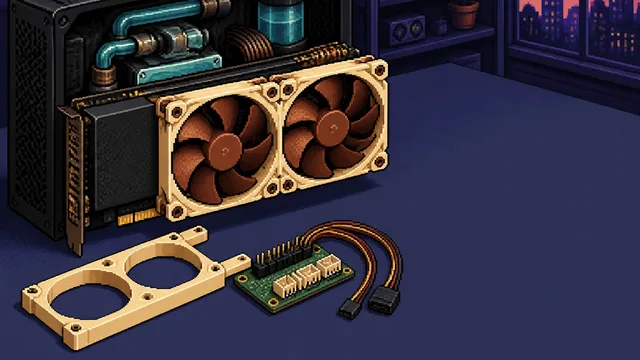
A Custom GPU Cooling Mod Built Without Zip Ties
A PC builder refused the easy fix and designed a custom GPU fan bracket and PCB splitter instead. Here's what that obsession looks like in practice.

Python Backtesting Tools Promise a Lot. Know the Limits.
Zipline can simulate stock trading strategies in Python — but the leverage trap and survivorship bias can make bad strategies look brilliant. Here's what to watch.