AgentZero's Sub-Agents: Self-Modifying AI Delegation
AgentZero demonstrates AI agents that create and manage specialized subordinates on demand. The system modifies itself—which raises practical questions.

Written by AI. Bob Reynolds
The demo from AgentZero's development team shows something I haven't seen articulated this clearly before: an AI agent that creates specialized versions of itself, on demand, to handle specific tasks. Not through a complex interface. Through conversation.
The creator demonstrates asking AgentZero to spawn a "product owner" agent—one that thinks like a product manager and generates user stories and acceptance criteria. The system examines its existing agent templates, figures out the structural pattern, and creates a new specialized agent profile. Then it successfully delegates work to this newly created subordinate. The whole process takes about as long as explaining what you want.
This is worth examining not because it's revolutionary—AI agents delegating to specialized instances isn't new—but because of how frictionless they've made it. The complexity is hidden. Whether that's brilliant or concerning depends on what you're trying to accomplish.
The Corporate Metaphor
The AgentZero team uses a corporate analogy: the main agent acts as CEO, delegating to specialized "employees" with different expertise. Out of the box, AgentZero ships with profiles for a hacker (security testing), a researcher (data analysis), a developer (code writing and review), and a generic default for general tasks.
Each subordinate operates in its own context window—a separate conversation thread that doesn't pollute the main agent's working memory. The creator explains: "Those are separate sessions with their own context window that agent zero can start autonomously. It can delegates tasks to a subordinate agent that will spawn with a new context window and just work on that task without polluting your main context window."
The corporate metaphor works until you remember that corporations have organizational charts, reporting structures, and accountability mechanisms. AgentZero's delegation happens through a simple tool called "call subordinate" that accepts a profile name, a prompt, and a reset flag. That's it. The subordinate spawns, does its work, and reports back.
What's interesting is what's missing: no explicit hierarchy visualization, no approval workflows, no audit trails that I can see mentioned. Whether that matters depends entirely on your use case.
The Self-Modification Feature
Here's where it gets genuinely interesting—or potentially concerning, depending on your perspective. AgentZero has filesystem access to its own configuration files. This means you can ask it to modify itself.
The creator demonstrates this directly: "You can just ask agent zero to do it for you. Right? And that's the beauty of having a agent that has access to its own file system. Right? It can modify itself and improve based on your instructions."
In the demo, the agent creates the product owner profile by examining existing templates, understanding the pattern (an agent.json configuration file, a _context.md description, and a prompts folder with role definitions), and generating appropriate versions for the new specialization.
This capability extends beyond agent creation. The creator mentions asking AgentZero to generate a WebGL presentation explaining how subordinates work. The system can apparently handle configuration management, documentation generation, and other meta-tasks.
I've seen self-modifying code before. Usually in research contexts or proof-of-concepts where the goal is exploring the theoretical boundaries of what's possible. Making it accessible through natural language is a different proposition. It removes the traditional friction that prevents casual modification of complex systems—friction that sometimes exists for good reasons.
The Persistence Problem
The video spends considerable time on file structure, which suggests the developers have thought about operational realities. AgentZero uses a root /a0/ directory for the system itself, but creates a /a0/user/ folder for custom agents and a project-specific hidden folder for project-scoped configurations.
This separation matters because updates could wipe system-level customizations. The creator is explicit about this: "This user folder is the one that will persist across updates. So you don't risk losing your agent. You know, if you define it on the top level AO when you update it, your agent might get lost."
It's a practical consideration that reveals experience with real deployment. The fact that they're thinking about Docker volume mapping and update procedures suggests this is beyond prototype stage.
The folder structure allows three levels of scope: global agents available everywhere, user-specific agents that persist across updates, and project-specific agents that only exist in certain contexts. That's sensible architecture. Whether users will understand these distinctions without documentation is another question.
What's Actually Being Demonstrated
Strip away the terminology and here's what AgentZero does: it maintains multiple conversation threads with different system prompts, it can spawn new threads on demand, and it can modify its own configuration files through natural language instructions.
Each piece is established technology. The combination and interface are what's new here. The creator demonstrates creating a specialized agent in about thirty seconds of conversation. No API calls, no JSON editing, no configuration management. Just description of intent.
This kind of abstraction has always been the goal—systems that respond to intent rather than syntax. Whether it's mature enough for production use is a question the six-minute demo can't answer. What happens when the agent misinterprets instructions? How do you roll back unwanted modifications? What's the debugging experience when something goes wrong in a subordinate agent's context?
The demo shows the happy path. It always does.
The Questions That Remain
AgentZero's approach raises practical questions. When the main agent decides to delegate, what's the actual decision logic? Is it keyword matching, semantic similarity, or something more sophisticated? The video mentions a _context.md file that provides "a shortened version the definition of this agent" so "the main orchestrator agent knows when to use this one." That suggests relatively simple matching, but the specifics matter.
How do subordinate agents report failures? If the hacker agent can't complete a penetration test, does it escalate? Retry? What's the error handling model?
And the larger question: if an AI agent can modify its own configuration through natural language, how do you maintain system stability? The creator treats this as an unambiguous benefit—"that's the beauty of having a agent that has access to its own file system." Maybe. Or maybe it's a debugging nightmare waiting to happen.
These aren't criticisms exactly. They're the questions that separate a compelling demo from production-ready software. The AgentZero team has clearly thought about some of this—the persistence model proves that. Whether they've thought about all of it, we can't tell from a six-minute video.
The technology is impressive. The approach is novel. Whether it's useful depends entirely on what problem you're trying to solve—and how much you trust AI agents to modify themselves.
More Like This
AI Agents: The Future of Coding by 2026
Explore how AI agents are reshaping software development, making coding accessible to non-developers, and transforming engineering roles.
TypeScript Bash Implementation Cuts AI Token Costs by 95%
JustBash runs Bash commands in TypeScript without infrastructure, reducing AI agent token usage from 133,000 to 6,000 in real-world tests.
Anthropic Bet on Teaching AI Why, Not What. It's Working.
Anthropic's 80-page Claude Constitution reveals a fundamental shift in AI design—teaching principles instead of rules. The enterprise market is responding.
AI Agents That Work While You Sleep: The Next Shift
Cloud-based AI coding agents now run scheduled tasks overnight. A developer built a news monitoring system in one afternoon that never sleeps.
When AI Safety Instructions Failed 37% of the Time
Anthropic tested 16 AI models with explicit safety rules. More than a third ignored them. The problem isn't the instructions—it's the assumption they'll work.
Mastering AI Agents with Gemini CLI and ADK
Discover AI agent creation using Gemini CLI and ADK—vibe coding, integration, and cloud deployment.

35 GitHub Projects Mapping the AI Agent Trust Gap
This week's GitHub trending list is less a catalog of tools and more a collective argument: developers don't fully trust AI agents yet—and they're building accordingly.
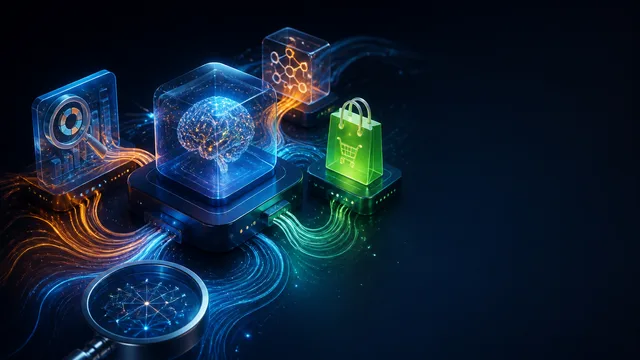
Claude Code and AI-Driven SEO for Shopify Stores
A live walkthrough of using Claude Code, SEMrush MCP, and Shopify to build AI-optimized pages raises real questions about where SEO is heading.