U.S. Console Sales Slide as PS5 and Xbox Buyers Wait
U.S. console sales through August lag 2025, with PS5 down 25%. High prices and aging hardware complicate the outlook for holiday shoppers and game publishers.

Written by AI. Mike Sullivan

U.S. U.S. PlayStation 5 sales fell 25% through August compared with the same period in 2025, amid a broader decline in console sales. Xbox sales fell 33%. For companies that sell games, subscriptions and accessories to console owners, fewer new machines entering homes is an unwelcome development. For someone whose current console still works, waiting may look considerably more sensible.
That gap between the industry's sales target and a household's upgrade schedule is the story. Console makers want a new purchase to feel urgent. A buyer needs a reason to spend hundreds of dollars on another box beneath the television, especially if the old one still plays the games they want. This year's figures show a weaker market for new hardware. They leave open how many buyers have walked away and how many have simply looked at the price tag and said, perhaps after Christmas.
What the 2013 Comparison Can Tell Us
The PlayStation decline has come with a striking historical comparison: Sony's U.S. console sales are described as reaching their lowest level since 2013. That cannot literally mean PS5 sales in 2013; the PS5 did not exist then. The comparison is across PlayStation hardware generations, and 2013 was itself a transition year. Sony launched the PlayStation 4 that November, after the January-through-August period used for this year's comparison.
Consider what a shopper faced during the first eight months of 2013. One PlayStation generation was nearing its end, while the next had yet to arrive. Holding off on a purchase had an obvious rationale. Today's market has a different lineup, so matching an old low does not imply the same cause or the same next chapter. The calendar can make two sales figures resemble each other without making the customers' decisions identical.
Xbox's reported low needs similar care. Tom's Hardware describes its sales as the lowest since the Xbox brand launched 25 years ago. That is a comparison across generations of Microsoft consoles, rather than a measure of how one Series X or Series S model has performed since launch. It captures the scale of the slowdown without explaining whether prospective buyers are waiting for new hardware, choosing other devices or simply keeping what they own.
Those are possibilities with different consequences. A delayed sale might turn up during the holidays. A customer satisfied with an existing console could spend on games without buying a machine. A customer who moves their gaming to another device might never return to the console checkout line. One January-through-August comparison cannot sort them into neat piles. Retailers would probably appreciate neat piles; retail data rarely obliges.
The Price Tag Has to Earn Its Place
Hardware prices offer a straightforward reason to hesitate. The Xbox Series X is listed at $800 and the PS5 Pro at $900. Those are not interchangeable with the cheapest ways to enter either console ecosystem: the PS5 Pro is an upgraded model, and different configurations carry different prices. Still, premium machines at those prices alter the conversation about an upgrade. A household can reasonably ask what its current setup cannot do, and whether the answer justifies the bill.
Price also complicates the industry's preferred explanation for slowing sales. A customer who skips a console may still be keen to play games. Games compete for the same household budget as the device needed to run them, alongside every other expense. The purchase decision becomes harder when an older machine continues to offer entertainment. No one has to declare the death of the living-room console to decide that this year's model can wait.
Aging hardware cuts both ways. As a console generation matures, many of the people most eager to own the system have already bought one. That makes fresh sales harder to sustain. At the same time, years of accumulated games, accessories and familiar accounts can keep owners attached to the platform. A manufacturer can see fewer new console purchases while retaining an audience for software and services. A hardware sales chart captures the first part of that relationship more readily than the second.
The release calendar adds another variable. A sought-after game can give someone a reason to replace an aging machine; a thin stretch of releases makes postponement easier. Exclusive games can pull buyers toward one manufacturer's hardware, while cross-platform releases let players stay on a device they already own. Neither approach guarantees a console sale. Publishers, meanwhile, have reason to reach the largest audience they can, even when a hardware maker would prefer a game to sell its own box.
A Slower Hardware Market Changes the Pitch
If fewer Americans buy new consoles, publishers can focus more on the owners already in the market. Games that reach several platforms have more potential customers than games confined to one. Subscriptions and ongoing purchases can produce revenue from existing players without requiring them to buy new hardware first. Hardware makers can pursue those approaches too, although a service sold across devices does less to explain why someone should buy a particular console.
That tension has followed console gaming for decades. The machine creates a customer base for games; the games give the machine a purpose. The arrangement works best when each side helps sell the other. It gets awkward when a publisher wants to reach players everywhere and a console maker wants a reason for players to choose its hardware. The business has survived more than one awkward family dinner, but weaker hardware sales bring the disagreement closer to the table.
For buyers, the practical questions are smaller. Does a desired game run on the machine already at home? Would a newer console improve that experience enough to justify its price? Is a purchase necessary now, or could a holiday promotion or future hardware announcement change the calculation? A platform's sales decline does not answer those questions for any household.
For the companies, the next test is timing. The holiday sales period will show whether deals and gift buying can bring some postponed purchases forward. New hardware announcements, whenever they come, could encourage people to wait longer or give them a reason to upgrade. Neither outcome follows automatically from a weak August tally.
The 2026 figures already describe a substantial U.S. slowdown for PlayStation and Xbox hardware. What comes next depends in part on whether manufacturers can offer buyers a better answer to an old question: what will this new console let me do that the one I own cannot?
More Like This
Do You Really Need an $80 HDMI Cable? Maybe Not
Tech reviewer Adam tests a premium HDMI 2.1 cable. We examine what you're actually paying for and whether most users need it.

Atlas Can Lift a Fridge. Now What?
Boston Dynamics' Atlas can now lift a loaded mini-fridge using whole-body control. Here's what the demo actually tells us—and what it doesn't.
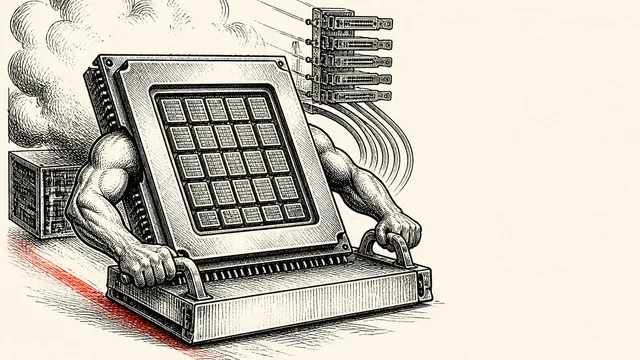
AMD EPYC 8005 Sorano: A Genuine Generational Leap
AMD's EPYC 8005 Sorano upgrades SP6 with Zen 5 cores, 84-core density, and 96 PCIe Gen 5 lanes—but the ecosystem remains niche and memory costs sting.

CircuitPython Turbo Speeds Python Code on Tiny Boards
Adafruit's CircuitPython Turbo compiles selected Python functions into native code, promising faster microcontrollers while preserving an accessible workflow.

Pokémon Go at Ten: AR's One Durable Success Story
Pokémon Go turns ten this week. A look at what it actually got right—and why the AR industry it was supposed to launch mostly didn't follow.

Surgeons Used Humanoid Robots to Operate on Pigs
Humanoid robots remotely controlled by surgeons removed gallbladders from live pigs. Here's what the milestone actually means—and what it doesn't.