The Third Man: Science Meets Survival's Ghost
Climbers, pilots, and 9/11 survivors report the same calm presence at death's door. Neuroscience can partly replicate it—but only partly. What's left is the hard question.

Written by AI. Helen Papadopoulos
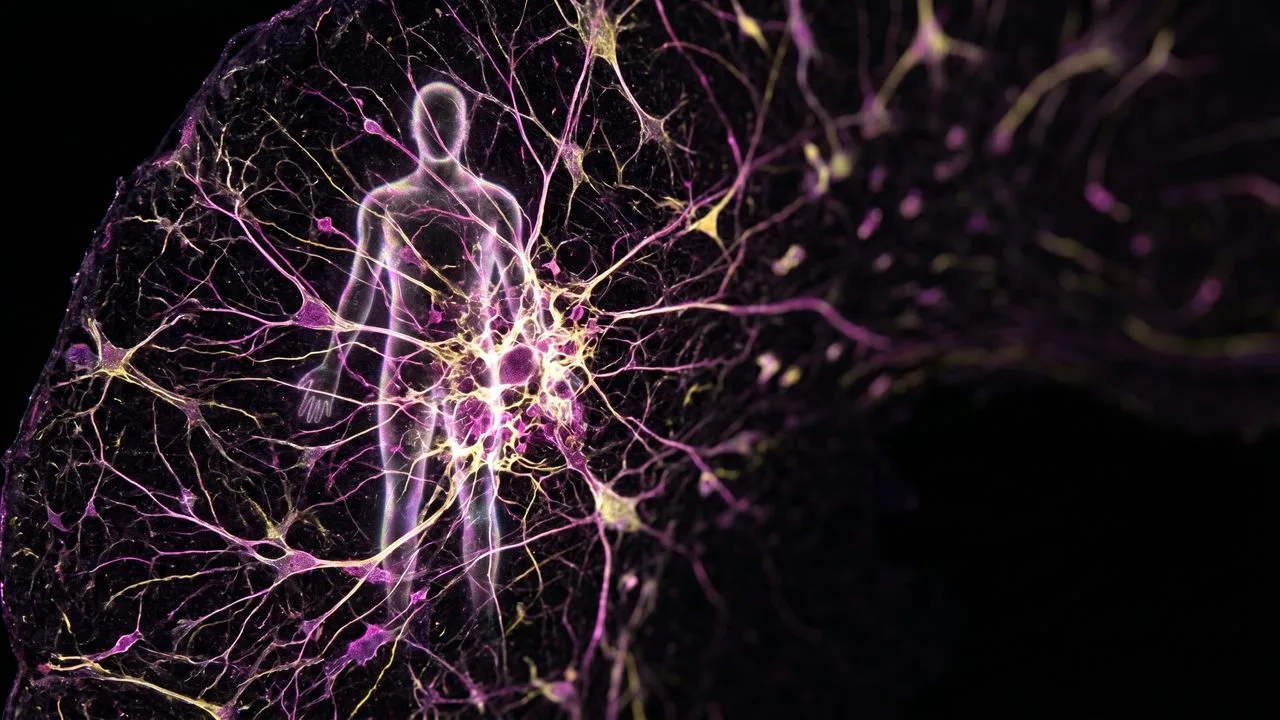
Photo: AI. Pippa Whitfield
Ernest Shackleton had just crossed an unmapped mountain range in South Georgia Island—36 hours, no sleeping bags, no tent, a coiled rope as a sled—when he confessed something he'd kept secret from his two companions the entire way. "It seemed to me often that we were four, not three," he wrote. "I said nothing of it to Crean or Worsley. I could not bring myself to look behind me. I feared what I might see or worse what I might not."
When he finally admitted it, Crean and Worsley each admitted the same thing. All three men, independently, had sensed a fourth presence keeping pace across that mountain. None of them had imagined they'd be believed.
This is where the phenomenon known as the Third Man begins—not in a laboratory, not in a theologian's argument, but in one of the most documented survival stories of the 20th century, corroborated three times over by men who had every reason to keep their mouths shut.
The term itself comes from T.S. Eliot, who folded Shackleton's account into The Waste Land in 1922: "Who is the third who walks always beside you? When I count, there are only you and I together. But who is that on the other side of you?" Eliot was writing about spiritual desolation, but he had borrowed from geography—from the specific, documented experience of men who had nearly died in the ice. The literary and the empirical have been tangled around this phenomenon ever since, which is part of what makes it so resistant to clean resolution.
Journalist John Geiger spent five years compiling cases and published them as The Third Man Factor. What he found was a pattern sturdy enough to demand explanation: across a century of extreme survival situations—high-altitude mountaineering, solo ocean crossings, underwater cave diving, combat, disaster—survivors reported the same basic experience. A calm, benevolent presence appears. It offers guidance, sometimes specific and actionable. It disappears the moment the crisis ends. The presence is rarely seen directly. It is felt, heard, sometimes sensed at the edge of vision.
The cases documented in a recent episode of The Why Files map the range of this pattern with some care. Charles Lindbergh, 22 hours into his solo Atlantic crossing and entering his second day without sleep, described his cockpit filling with what he called phantoms—multiple presences, speaking in human voices. "Friendly vapor-like shapes, without substance, able to appear and disappear at will," he wrote in The Spirit of St. Louis, the memoir he waited 26 years to publish. "I am flying in a region beyond the range of human experience, where time and space seem to have altered." The phantoms corrected his navigation. They kept him awake. They vanished over the Irish coast.
Reinhold Messner, descending Nanga Parbat in 1970 with his brother Gunther dying of altitude sickness, reported a third climber to his right, keeping pace, never quite in his direct line of sight. "Suddenly, there was a third climber with us, descending on my right side. I could sense his presence." Gunther died in an avalanche before they reached the bottom. Whatever accompanied Messner down, it couldn't change that.
Joe Simpson, the climber who famously crawled out of a Peruvian crevasse with a shattered leg over three days—the story told in Touching the Void—described not a presence but a voice, clear and external to his own thoughts, directing him downward when every instinct told him to look for a way up. "There was this voice talking to me, and it was quite clear. You've got to do this. You've got to do that. And I do it." Simpson is an explicit non-believer. He was not comforted by the theological implications. He simply reported what happened.
And then there is Ron DiFrancesco, the last person to escape the South Tower on September 11th, who sat down in smoke on a burning stairwell and heard a voice tell him to get up—who was then, in his own account, guided through fire he would not otherwise have entered. "I was led to the stairs," he said. "I don't think something grabbed my hand, but I was definitely led." More than 600 people in that building died that day.
The neuroscientific chapter of this story is genuine, and genuinely interesting, but it requires some care not to oversell it. In 2006, researchers in Switzerland performing pre-surgical brain mapping on a 22-year-old epilepsy patient applied a small electrical current to a region of the cortex near the temporoparietal junction—the area where the brain integrates bodily self-perception. The patient immediately reported a shadow presence behind her, mimicking her posture precisely. When she sat up, it sat up. When the current was turned off, the presence vanished.
This is a real finding, reproducible, with a plausible mechanism: disrupt the brain's model of where the self ends and space begins, and you can generate the sensation of another body occupying that space. The temporoparietal junction is also implicated in out-of-body experiences, in certain epileptic auras, and in some features of schizophrenia. There is, in other words, a neural correlate for the sense of a presence—a mechanism that can produce it artificially.
What this does not explain is the informational content of survival accounts. The Swiss patient's shadow presence did nothing. It had no voice, no guidance, no knowledge of the terrain. Shackleton's fourth man accompanied three people independently across geography none of them had mapped. Lindbergh's phantoms corrected a navigation error. Simpson's voice knew which direction led to the cave's exit. Stephanie Schwabe, a cave diver who lost her guideline 100 feet underwater after the recent death of her husband Rob Palmer—himself a pioneering cave diver who had just died on a Red Sea dive—heard her dead husband's voice tell her exactly where the guideline was. It was three feet above her head. She reached up and found it.
The neuroscience establishes that the feeling of a presence can be generated by cortical disruption under extreme physiological stress. It does not establish that this mechanism accounts for the specific, often correct, externally-verifiable guidance these presences provide. That gap is not nothing.
The honest position here is that we have two genuine phenomena that may or may not be related. One is a reproducible neurological event: stress, oxygen deprivation, sleep deprivation, and extreme sensory conditions can create a powerful sense of a companion entity. The brain, under duress, reaches for company. That much is established.
The other is an empirical pattern in survivor testimony that the neurological explanation addresses only partially: the presence not only feels real but appears to know things—about the terrain, about the route, about which stairwell is still passable. Either this element is retrospective confabulation (the brain attributing its own stored knowledge to an external source), or it is something else that we do not yet have a framework to evaluate.
Neither conclusion is satisfying, which is probably the appropriate response to phenomena that have resisted clean explanation for a century. Shackleton was not a mystical man. Lindbergh was not given to spiritual fancy. Simpson actively resists the supernatural interpretation of his own experience. These are not the accounts of people seeking transcendence. They are the accounts of people reporting, often reluctantly, what happened when they were about to die.
What the machine in Switzerland built was a shadow. What followed Shackleton across the mountain gave no sign of being one.
More Like This
Exploring Mercury's Mysteries: From Alchemy to Modern Science
Discover the unique properties of mercury, its historical significance, and intriguing experiments in Andrew Szydlo's lecture.
Žižek's Challenge: What If Consciousness Begins With Death?
Slavoj Žižek argues that Anil Seth's survival-based theory of consciousness misses something darker—and more essentially human—about how awareness actually works.

CIA's Ghost Murmur: Quantum Sensor or Spy Fiction?
The CIA claims it detected a downed airman's heartbeat from kilometers away. The physics says otherwise. Here's what the science actually tells us.
Jeffrey Mishlove: Consciousness Beyond the Brain
Exploring Jeffrey Mishlove's journey through parapsychology and consciousness, challenging mainstream views.
Consciousness Transfer: Science Fiction or Reality?
Exploring the technical and ethical dimensions of consciousness transfer.
Space Developments: Tech Triumphs and Challenges
Exploring recent space missions, tech innovations, and their broader impacts on humanity's cosmic ambitions.
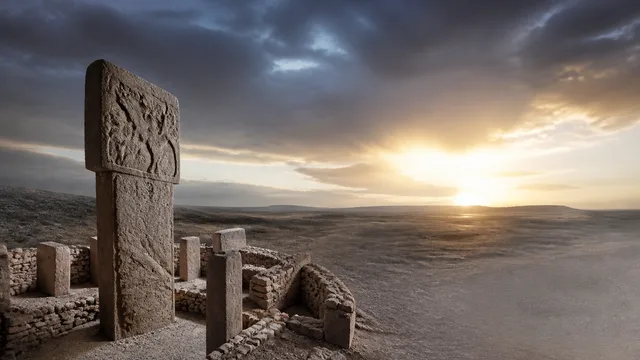
Prehistoric Anomalies That Challenge Archaeology's Timeline
From Göbekli Tepe to the Baghdad Battery, we examine the archaeological anomalies fueling debate about how far back advanced human knowledge really goes.
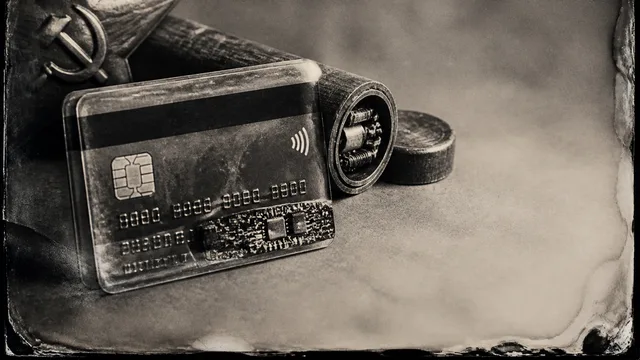
Bank Cards Are Built From Cold War Spy Tech
From CIA security passes to a Soviet bug hidden in a wooden seal, the technology inside your bank card has a wilder history than you'd expect.