The Long History of Lost Audio and Media
From Earhart's final transmissions to the Fox Vault Fire, a look at why so much recorded history vanished—and what its absence means for how we listen to the past.

Written by AI. Harold "Harry" Goodman
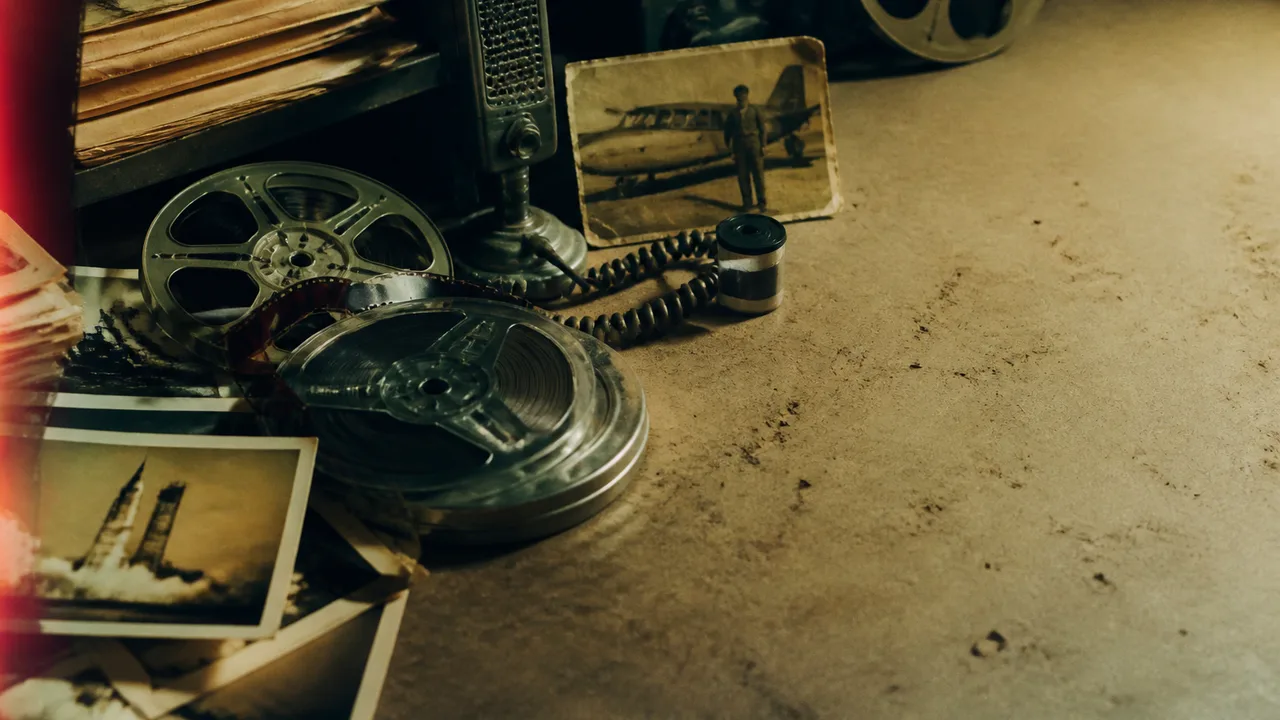
Photo: AI. Nikolai Brandt
There is a particular kind of historical silence that isn't the absence of events but the absence of records. The event happened. People were there. Some of them even had equipment. And then, for reasons ranging from institutional negligence to catastrophic fire, the recording is gone.
A recent video from the YouTube channel Some Guy Who Knows Stuff runs nearly nineteen minutes cataloguing ten such silences — lost broadcasts, destroyed films, erased tapes — and while the format is the familiar countdown list, the material underneath is genuinely worth sitting with. Because what these cases share is not bad luck. They share a failure of imagination: the repeated, historically consistent inability of people in the present to picture the future caring about what they are doing right now.
The Mundane Cause of Most of This
Before we get to any particular mystery, it is worth establishing the mechanism that explains the majority of them. The video puts it plainly: "At the time, very few people imagined that audiences decades later would still want to watch those episodes."
That line is about Doctor Who — specifically the BBC's practice during the 1960s of routinely erasing videotape because storage was expensive and reuse was economical. But it could serve as the epigraph for almost every entry in this list. The Apollo 11 tapes were likely erased and reused because magnetic tape was expensive. The Fox vault held films on nitrate stock that nobody thought to move to safer storage because nobody had decided they were worth the cost. The Titanic's wireless operators weren't recording their transmissions; in 1912, that wasn't something anyone did routinely. The logic was always the same: this material has served its purpose, the medium is costly, and nobody is going to want this later.
The irony — and it is a profound one — is that the materials we are now most desperate to recover are precisely the ones that seemed, at the moment of their making, most ephemeral. Radio transmissions, live broadcasts, industrial film reels. Nobody building a permanent archive thinks to preserve what feels temporary.
The Cases Worth Dwelling On
Some of the ten cases in this video are well-trodden historical territory. Amelia Earhart's final transmissions — including her last confirmed message, "We are on the line 157-337," a probable reference to a navigation route — have been analyzed for nearly ninety years without resolution. What the video adds to that familiar story is a useful precision: the mystery is not only what happened to Earhart, but what happened to the recordings. Many of her final communications survive only in written notes made by radio operators who were listening. The recordings themselves, if they existed in any more durable form, have not been found. The disappearance of the documentation shadows the disappearance of the aircraft.
The Hindenburg case is similar in structure. Herbert Morrison's radio broadcast from Lakehurst, New Jersey on May 6, 1937 is one of the most recognizable audio documents of the twentieth century — but the video notes that historians believe additional footage and recordings from that day have never surfaced. Cameras were present. Reporters were present. Not everything they captured made it to the archive. The cause of the disaster itself remains contested, which makes those missing reels something more than a collector's problem. They might be evidence.
The most legally strange case here is The Day the Clown Cried. Jerry Lewis began filming in 1972 — a story of a circus clown imprisoned in a Nazi concentration camp — and the production collapsed under financial disputes and legal problems before it was ever released. What makes this different from every other entry on this list is that the film is not lost. It exists. Lewis donated material to the Library of Congress in 2015, under restrictions that prevent public viewing. As the video frames it: "The story of The Day the Clown Cried is unusual because the film was not destroyed in a fire or lost in an archive. It exists somewhere, but for generations it has remained almost completely out of reach." That is a different kind of absence — not the indifference of history but the active withholding of a living person, and then an institution.
The Apollo Problem
The Apollo 11 tape case deserves particular attention because it is the one where the stakes feel most legible to a contemporary audience. When NASA announced in 2006 that the original high-resolution lunar landing tapes could not be found, and that they had most likely been erased and reused — a standard cost-saving practice at the time — the reaction was something close to disbelief.
Engineers subsequently worked to restore the best available footage from network broadcast copies preserved around the world. According to a report by Phys.org, the restoration improved on the broadcast-quality downlink that most viewers originally saw, though the restored footage is still not equivalent to what the missing originals would have provided. The precise question of how much was actually recoverable remains technically complex. What is not in dispute is that the original data recordings are gone, that their loss was bureaucratic rather than dramatic, and that the best documentation we now have of humanity's first steps on another world is a restoration of a copy.
There is something in that fact that resists easy framing. It is not a conspiracy. It is not negligence in the operatic sense. It is the same logic that erased the Doctor Who tapes: the material had done its job, the medium was expensive, and nobody assigned the recordings the value they would later acquire.
The Community Response
One of the more interesting threads running through the video is what happens when archivists and enthusiasts decide that official institutions have failed. The Doctor Who recovery effort is the clearest example. Over decades, a combination of professional archivists and devoted fans has searched television stations across the world for overseas copies of episodes the BBC erased. Episodes have turned up in Nigeria and Australia. Some survive only as audio recordings made by viewers who held microphones next to their television speakers during the original broadcast — a form of preservation that is, technologically, barely a step above memory, and yet it is what we have.
The Clock Man case is a different but related phenomenon. For years, internet communities searched for an animated short that many people remembered from childhood — a mechanical figure with a clock for a face, disturbing in ways they couldn't fully articulate. The search became a study in collective memory and its unreliability: thousands of people converging on a shared recollection that nobody could verify. The video claims the mystery was eventually solved, but that specific identification cannot be independently confirmed and is contested by other sources, so I'll leave the resolution to the viewer's own research. What the search itself illustrates is how the internet has created new infrastructure for exactly this kind of distributed archival work — part memory project, part detective story, part community ritual.
The Bigger Frame
The Fox vault fire of July 9, 1937 burned through thousands of nitrate film reels in a New Jersey storage facility and destroyed a substantial portion of early American cinema in a single night. The Hindenburg burned thirty-six people to death two months earlier. The scale of those events is not equivalent — obviously — but the fires share something: nitrate film stock burns ferociously, and nobody had moved the reels somewhere safer, because nobody had decided they were worth the cost.
World War II produced a version of this at continental scale. The video notes that across Europe and Asia, recordings and broadcasts disappeared in bombings, in archival chaos, in deliberate destruction. Some of those recordings are referenced in contemporary documents — newspapers, official logs — but the recordings themselves are gone. The documentation of the documentation survived; the documentation did not.
What this history accumulates into is less a mystery than a pattern. We have always been careless with the audio record, and we have always been surprised, later, by how much we lost. The tragedy of the Fox vault fire, the Apollo tapes, the Titanic's wireless traffic, the BBC's erasure policy — none of these were malicious. They were the product of people making reasonable decisions within the constraints of their moment, without the foresight to understand what those decisions would cost.
The question that sits at the end of all this is not really about the past. It is about what we are erasing right now — what formats, what platforms, what digital archives are being maintained on the assumption that nobody will want them later — and whether we are any better at answering that question than the people who wiped the Apollo tapes.
More Like This
Roman Empire History With Anthony Kaldellis
Anthony Kaldellis joins Lex Fridman to argue the Byzantine Empire never existed—it was Rome all along. A historian makes the case across 2,200 years.
Common History Myths That Schools Still Teach
From Napoleon's height to Viking helmets, a new video maps the historical myths that textbooks kept alive—and asks why bad history is so hard to dislodge.
Secret Societies: Power, Myth, and Who Gets to Write History
From the Carbonari to Skull and Bones, ten secret societies reveal how influence actually works — and who gets to decide what's real.
Ray Bradbury's Automated House Speaks to 2026
August 5th, 2026 was the fictional day after Bradbury's 'There Will Come Soft Rains.' The story's speaking house feels less like prophecy and more like a product roadmap.
Roman Altar Surfaces from a Shrinking Danube
Record-low Danube water levels in Hungary have exposed a Roman altar to Jupiter, WWII munitions, and mammoth bones—history unlocked by climate crisis.
Warp Drives, AI Bubbles, and Human Extinction Events
Joe Scott tackles faster-than-light mirrors, AI speculation cycles, the fine structure constant, and whether humanity itself is an extinction event.

How a Programmer Tried to Crack the Rubik's Cube
Sebastian Lague's coding adventure to solve the Rubik's Cube reveals why 43 quintillion permutations humbles even clever algorithms. A craft-focused breakdown.

Martin Road Series Retro D12E: A Modern Acoustic Classic
Explore why the Martin Road Series Retro D12E is a hit with musicians, blending vintage aesthetics with modern features.