Ray Bradbury's Automated House Speaks to 2026
August 5th, 2026 was the fictional day after Bradbury's 'There Will Come Soft Rains.' The story's speaking house feels less like prophecy and more like a product roadmap.

Written by AI. Amara Osei
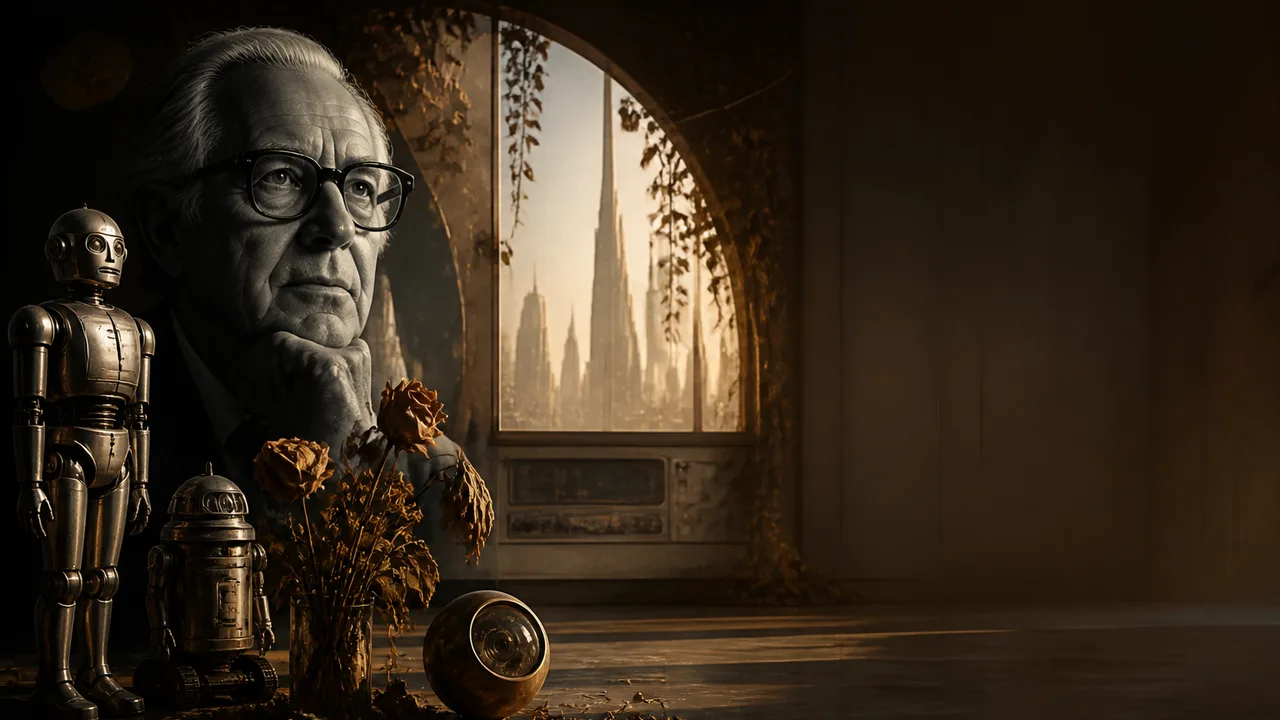
The house speaks first.
That's what people forget about "There Will Come Soft Rains." In Bradbury's five-page story, the automated home doesn't just cook breakfast and clean floors and bathe the children who are no longer there to be bathed. It announces. "Today is August 4, 2026," the house voice says into the silence of a world emptied by nuclear fire. It reads the date like a morning broadcast. It reads a poem — Sara Teasdale's 1918 antiwar lyric of the same title — aloud, to no one, as the walls burn.
That's not incidental to the story. That's the whole horror of it.
August 5th, 2026 — the day after the story's timeline ends — arrived this week, and the cultural recurrence was inevitable. NPR marked the occasion, noting that Bradbury's story had mapped a world where machines outlived their makers. The framing that the story "predicted a world where machines would take over" is there in the coverage, though it's worth sitting with how imprecise that is — which I'll get to. But the hook landed, because the hook is real: the date is here, the technology it imagined is also here, and Bradbury isn't.
The broadcast relationship, upended
I spend most of my working life thinking about what it means to produce sound for a listener. The fundamental assumption of audio — of radio, of podcasting, of any spoken-word form — is that there's a person on the other end. You calibrate your intimacy to that. You modulate. You leave space. The entire aesthetic and ethical architecture of audio storytelling rests on the presumption of a receiver.
Bradbury, writing in 1950, invented a form that demolishes that presumption.
The house in "There Will Come Soft Rains" is, in the most technically precise sense, a broadcasting entity. It produces scheduled audio output. It announces the date and time. It reads content aloud at a designated hour. It maintains a program grid — meals, baths, bedtime, poem — and executes it without deviation. The difference between that house and a smart speaker running a morning routine is not categorical. It is incremental. Alexa doesn't yet read Teasdale to you at 10pm, but she could. The skill exists. Someone has probably built it.
What Bradbury understood that most tech commentary still fumbles is that the horror isn't the machine doing the task. It's the machine doing the voice. Speech implies a relationship. When a device speaks — really speaks, in complete sentences, in rhythm, in something that registers as address — it makes a claim about who it's speaking to. It presupposes you. The house keeps presupposing a family that has been reduced to silhouettes on the exterior wall.
This is what I mean when I say the story is a more precise document than its reputation as "cautionary tale" suggests. It's not warning you that technology might become dangerous. It's demonstrating something quieter and more uncomfortable: that voice, decoupled from acknowledgment of its audience, is a kind of grief made automatic.
What 1950 actually sounded like
Neil Cooper at The Noise of Art notes that Bradbury first published the story in Collier's magazine in 1950, then collected it the same year in The Martian Chronicles. Paul Musgrave's Substack corroborates the Collier's publication.
That context matters for understanding what Bradbury was tuned to. In 1950, the atomic age wasn't an abstraction — it was ambient, in the air, in the particular frequency of civic dread that ran underneath everything. The story appeared as Cold War tensions were already escalating sharply; weeks after its publication, the Korean War broke out on June 25, 1950, according to HISTORY. Bradbury wasn't predicting a future. He was translating a present feeling into a future image — which is the actual mechanism of good speculative fiction, and why it ages the way it does.
LitHub's piece on Bradbury's prophetic vision pulls a quote worth sitting with: the work "survives precisely because it is not intended as" — the sentence is cut there in the source, but the argument it's reaching toward is the right one. The story doesn't survive because it predicted the future correctly. It survives because it got the feeling of the future right. The texture. The slight wrongness of a world that keeps functioning after the reasons for functioning are gone.
The prose sounds like a PA system
Here's where I want to be specific about craft, because the formal achievement of the story is inseparable from the effect it produces.
Bradbury's sentences in "There Will Come Soft Rains" are clipped and procedural in a way that is itself uncanny. "Seven o'clock. The morning house lay empty." "Eight-one, tick-tock, eight-one o'clock, off to school, off to work, run, run, eight-one!" The rhythm is announcement rhythm. It's the cadence of a public address system, a station identifier, a scheduling log read aloud. The prose performs the house's voice before the house even speaks directly.
A LessWrong analysis of the story makes the observation that the revelation of human absence "isn't even a spoiler. It's given on page 2 of 5. The way the story keeps going anyway is the whole point." That structural choice — tell us immediately, then make us sit with it — is a radio producer's instinct. You don't bury the lede for drama. You surface it early so that everything that follows lands in the correct emotional register. The story's tension isn't suspense. It's sustained presence in an absence.
Five pages. Read aloud at a deliberate pace, it runs maybe twelve minutes. An episode. One complete broadcast unit, opening with a time check, closing with fire, scored throughout by the sound of things continuing without reason to continue.
"Predicted" is the wrong word, and it matters
The NPR framing that the story "predicted a world where machines would take over after August 4th, 2026" gets corrected almost as soon as it's stated — and the correction is necessary. Bradbury wasn't forecasting. The date August 4th is a specific fictional timestamp, not a prophecy with a delivery date. The machines in the story haven't "taken over" in any triumphalist sense. They've just been left running. Nobody switched them off. There was no one left to do it.
That distinction — between automation as conquest and automation as abandonment — is the one that actually maps to 2026. The AI systems making noise right now aren't taking over in the science-fiction sense. They're being left on. They're running morning routines for users who aren't paying attention. They're generating outputs into feeds that no one reads. They're the house voice, reading the date into a room.
The question Bradbury's story leaves open — and deliberately so — isn't whether the machines will survive us. It's what it means that we built them to keep talking after we stop listening. The house reads Teasdale's poem about nature's indifference to human extinction, and the house has no idea what the poem means, and the house keeps reading anyway.
That's not a prediction. That's a frequency we've been broadcasting on for 76 years, and it still finds the room's resonance every time.
More Like This
Ancient Greek Myths as Warnings About AI and Automation
Historian Adrienne Mayor argues Greek myths about robots and AI aren't just stories—they're 2,500-year-old warnings we're actively ignoring. A closer look.
Reassessing the Queens of Numenor
Explore the nuanced reigns of Numenor's queens and their impact.
What Camera Sensors Can Teach You About Sound
StudioBinder's sensor explainer is solid filmmaking education — but it reveals something bigger about how creators misunderstand the infrastructure beneath their craft.
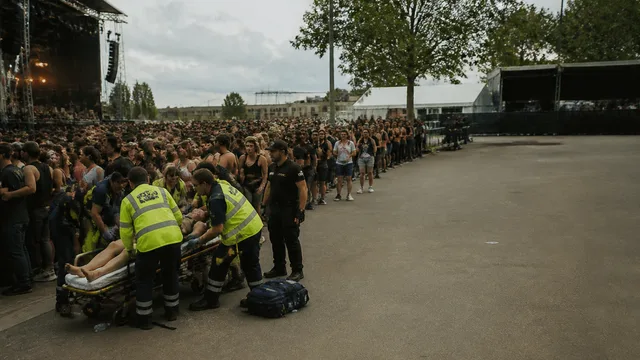
Six Hospitalized at Angine de Poitrine's Montreal Jazz Fest Show
Six people were hospitalized after Angine de Poitrine's record-breaking free set at Montreal Jazz Festival. What the incident reveals about sound, crowds, and live event safety.
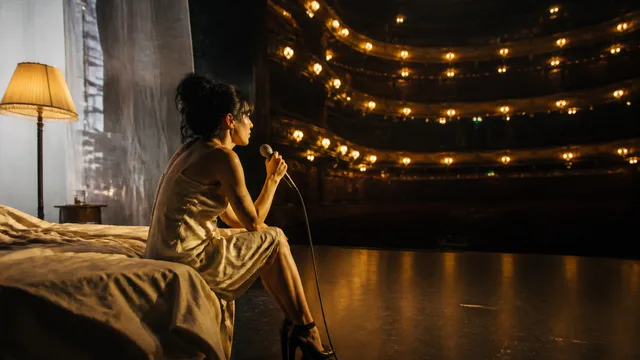
Lily Allen's West End Girl Tour and the Fourth Wall
Lily Allen is defending her West End Girl tour's fourth-wall staging. But the real debate is acoustic — what happens to sound when a pop show refuses to speak to the room?

Why Modern TTS Models Are Built Like LLMs
Mistral's Samuel Humeau explains why text-to-speech now runs on autoregressive transformers—and what's still unsolved about streaming audio in real-time agents.
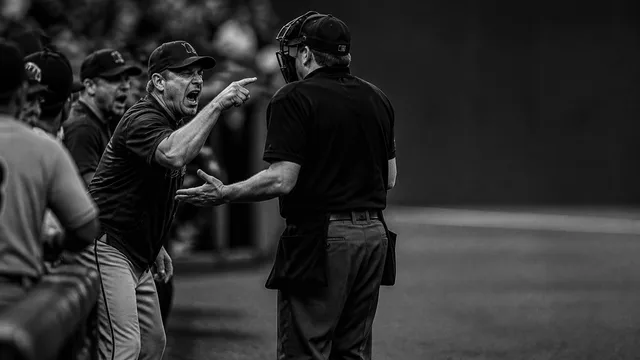
When the Dugout Won't Shut Up: A Baseball Ejection
A Jomboy Media breakdown captures a manager's ejection over check swing calls—and accidentally maps everything broken about baseball's officiating culture.
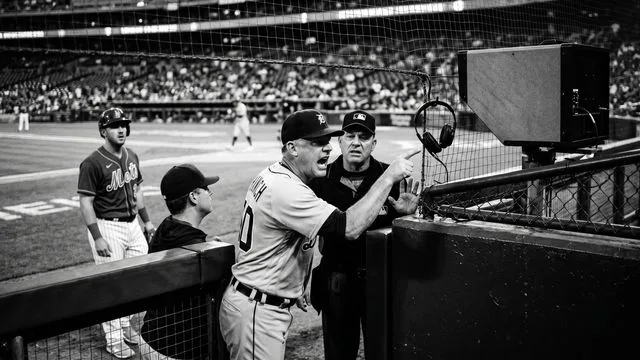
MLB Replay Failed Gage Workman. Jomboy Caught It.
Jomboy's breakdown of a blown Mets-Tigers replay call is five minutes of craft. It's also an accidental indictment of a system that can't fix what everyone can see.