Ten Scientific Discoveries Nobody Saw Coming
From Fleming's contaminated petri dish to Hubble's blurry mirror, accidental observations have repeatedly reshaped what we know about life and the cosmos.

Written by AI. Margaret "Maggie" Holloway

Photo: AI. Dexter Bloomfield
There is a version of scientific history that presents itself as a march of genius — brilliant minds setting out to solve specific problems and returning, triumphant, with answers. It is a satisfying story. It is also, rather frequently, wrong.
A recent video from the YouTube channel Some Guy Who Knows Stuff runs through ten landmark scientific discoveries with a unifying premise: none of them went according to plan. The roster is familiar — penicillin, x-rays, the Big Bang's echo, the expanding universe — but the framing is worth sitting with. What the video is really mapping, beneath its surface-level "wow, science is wild" energy, is a structural feature of how discovery actually works. And that feature is more unsettling than any individual story within it.
The Mess That Changed Everything
Start with Alexander Fleming, because everyone does, and because the story earns its canonical status. In 1928, a contaminated petri dish sat in Fleming's London laboratory. A mold had drifted in — Penicillium notatum, as it would later be named — and in the zone around it, the bacterial colony had simply stopped. Cleared out. Gone.
The video notes, correctly, that "most researchers might have thrown the contaminated sample away without thinking much about it." Fleming did not. He looked harder. The mold was producing something antibacterial, and that something — penicillin — would go on to save tens of millions of lives once Howard Florey and Ernst Chain worked out how to purify and mass-produce it a decade later.
The standard telling stops there: lucky accident, attentive scientist, world transformed. But there is a wrinkle the story tends to elide. Fleming published his findings in 1929, and they were largely ignored for over a decade. The discovery did not automatically become medicine. It sat, unremarked upon, waiting for different people in different circumstances to recognize its value. The accident was only the beginning of the accident.
The same delay appears in the super glue story. During World War II, chemist Harry Coover was trying to develop clear plastics for gun sights when his team stumbled onto cyanoacrylate — a compound that bonded to absolutely everything and was, for the purposes of the project, an infuriating failure. "The material was too sticky and difficult to handle," the video explains, "so it was not immediately used for its adhesive properties." Coover set it aside. Years later, he returned to it, saw the commercial and medical potential in what had previously looked like a defect, and cyanoacrylate became the foundation of surgical adhesives and the stuff that bonds your fingertips together when you're trying to fix a ceramic mug.
Two accidental discoveries, both initially discarded, both requiring a second act. This is not incidental to the story — it is the story.
Noise, Contamination, and the Shape of the Universe
Some of the most consequential discoveries on the list emerged not from labs but from the process of trying, and failing, to eliminate interference.
In 1965, radio astronomers Arno Penzias and Robert Wilson were working with a large horn antenna at Bell Labs in New Jersey, attempting to map radio signals from the Milky Way. They kept picking up a faint, persistent hiss that came from every direction — uniform, omnipresent, maddening. They checked the equipment. They studied nearby radio sources. They famously cleared pigeon droppings from the antenna, suspecting the birds were somehow responsible. The noise remained.
What they were hearing was the cosmic microwave background radiation — the faint thermal afterglow of the Big Bang, stretched thin over 13.8 billion years of cosmic expansion. It was "leftover energy from the early universe," as the video puts it, "evidence connected to the birth of the cosmos itself." Penzias and Wilson won the Nobel Prize in Physics in 1978. The pigeons received no such recognition.
Wilhelm Röntgen's 1895 discovery of x-rays follows a similar pattern. He was experimenting with cathode ray tubes in a darkened laboratory when a fluorescent screen across the room began to glow — through the covered tube, through the air, through the bench between them. Something invisible was passing through solid matter. Röntgen called it x-radiation, using X to denote the unknown, and within weeks, physicians were using it to image bones without cutting anyone open.
Both stories hinge on the same pivot: a researcher notices something that shouldn't be happening, and instead of explaining it away, leans into the anomaly. The discipline is not in generating the anomaly — the universe generates anomalies constantly, indifferently, without any concern for human research programs — but in recognizing it when it appears.
Wrong Predictions, Right Discoveries
Perhaps the sharpest thread running through the video's ten stories is how often the discoveries contradicted what scientists expected to find — not just surprised them, but actively violated the prevailing models.
The first confirmed exoplanet, 51 Pegasi b, is the clearest example. Astronomers had suspected other planetary systems existed for centuries, but the models of planetary formation predicted that gas giants — planets like Jupiter — would orbit far from their stars, in the cold outer reaches of their systems, where the necessary materials could accumulate. When Michel Mayor and Didier Queloz confirmed 51 Pegasi b in 1995 using the radial velocity method, they found something the models had declared essentially impossible: a gas giant completing a full orbit in four days, scorchingly close to its star, hotter than anything in our solar system.
"This challenged existing models of planetary formation," the video notes, with characteristic understatement. What it actually did was force a wholesale revision of those models. The discovery didn't fit the theory; the theory had to give. Thousands of similarly "impossible" exoplanets have since been confirmed, and the current understanding of how planetary systems form looks almost nothing like the one that preceded Mayor and Queloz's finding.
The same dynamic holds for the expanding universe. Edwin Hubble's observation that distant galaxies showed consistent redshift — meaning they were moving away from Earth, with more distant galaxies receding faster — demolished the prevailing assumption that the cosmos was static and eternal. The universe had a beginning. Space itself was stretching. And later, the discovery of dark energy revealed that this expansion is accelerating, driven by something we still cannot directly detect or adequately explain.
What the Pattern Asks of Us
The deep biosphere and giant viruses sit at the biological end of this pattern, and they may be its most philosophically interesting entries. When researchers drilling into deep mine shafts and ocean boreholes found bacteria living kilometers beneath the surface — in complete darkness, without oxygen, surviving on chemical reactions between water and rock — they didn't just expand biology's map. They undermined one of its foundational assumptions: that life required sunlight. The deep biosphere, as scientists now call it, extends the inhabited portion of Earth far deeper than anyone had reason to expect.
And when a French research team studying a water sample from a cooling tower in 2003 found Mimivirus — a virus large enough to see under a standard microscope, with a genome larger than many bacteria, carrying genes previously thought to exist only in cellular organisms — it didn't merely add a data point. It blurred the definitional line between viruses and life. "Giant viruses remain one of biology's biggest surprises," the video notes, "challenging the clear line between simple infectious particles and more advanced forms of life."
None of these discoveries fit the category the field had prepared for them. That is the point.
The Hubble Space Telescope is perhaps the one entry on the list that doesn't fit the accidental mold — it was deliberately designed and launched. But it nearly failed anyway: a manufacturing flaw in its primary mirror produced blurry images, and it took a spacewalk repair mission to install corrective optics before Hubble began producing the images that would reshape cosmology. Even the tools we build intentionally tend to surprise us.
There is a pedagogical version of these stories that presents them as inspiration — proof that curiosity pays off, that scientists should stay alert to the unexpected. That reading is not wrong, exactly, but it is partial. The harder lesson is structural: our models of the world are always incomplete, sometimes badly so, and the universe has no obligation to stay within the boundaries we've drawn for it. Fleming's mold, Penzias and Wilson's hiss, the wobbling of a distant star — these were not rewards for curiosity. They were corrections. The question worth sitting with is how many anomalies are sitting, right now, in data we've already written off as noise.
By Margaret "Maggie" Holloway, History & Ideas Correspondent
More Like This
Exploring Black Holes and Asteroids with StarTalk
Neil deGrasse Tyson delves into black holes, asteroids, and more in StarTalk's latest Cosmic Queries episode with Chuck Nice.
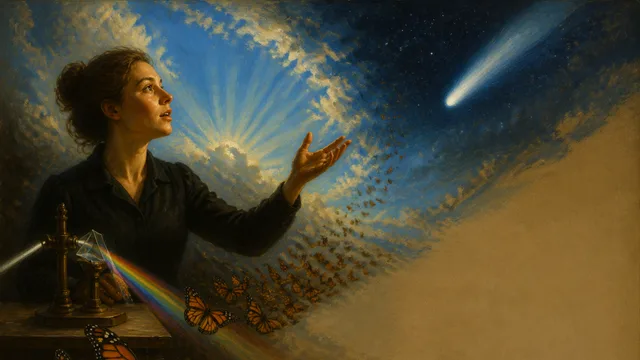
Lucy Rogers on Butterflies, Blue Skies, and Halley's Comet
Engineer Lucy Rogers delivers a Royal Institution talk connecting monarch butterfly migration, Tyndall's 1869 light experiment, and Halley's Comet in one sweeping look upward.
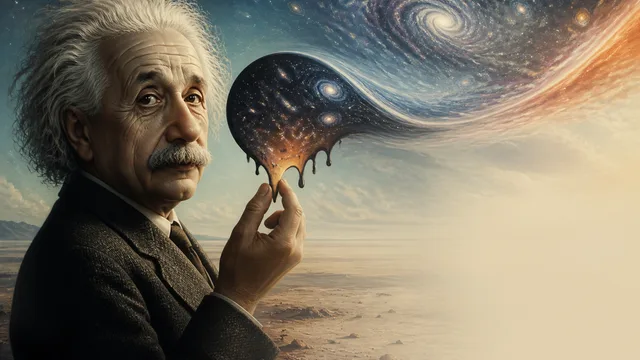
Einstein's Biggest Blunder Was Actually Right
Einstein invented the cosmological constant to keep the universe static—then ditched it. Decades later, it came roaring back. Here's what dark energy means for everything we think we know.
Ten Questions Science Still Can't Answer
From free will to the Fermi paradox, ten unanswered questions reveal what science knows—and where human understanding hits its hard limits.
The Power of Unexpected Results in Science
Explore how unexpected scientific results challenge assumptions and drive discovery.
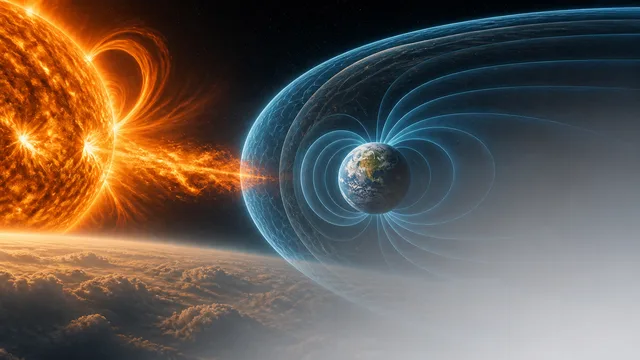
Solar Flares, Earth's Magnetosphere, and StormWall
Recent X-class solar flares and CMEs have prompted serious discussion about Earth's space weather vulnerability—and a theoretical plasma shield called StormWall.
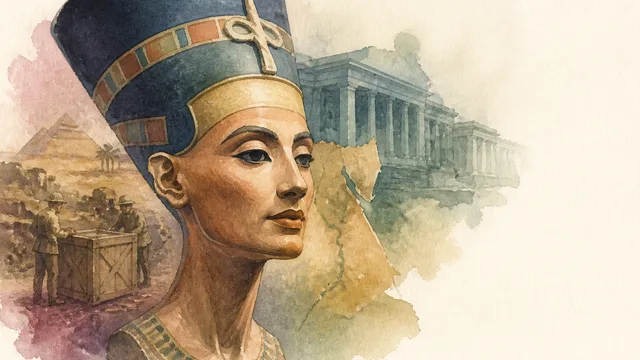
The Nefertiti Bust's Disputed Past and Present
The Nefertiti bust raises two unresolved questions: is it genuinely ancient, and was it legally taken from Egypt? The evidence on both is more complicated than Berlin admits.

Anne Frank: The Life, the Diary, and the Record
Anne Frank's diary survived the Holocaust when she didn't. A close look at her life in hiding, her death, and what the record still can't tell us.