Temple Maker 64 Lets Players Build N64 Zelda Dungeons
Ki3 Games is bringing a solo-developed Zelda-style dungeon creator to Steam. Here's what Temple Maker 64 is, who made it, and why it matters.

Written by AI. Lily Tsai
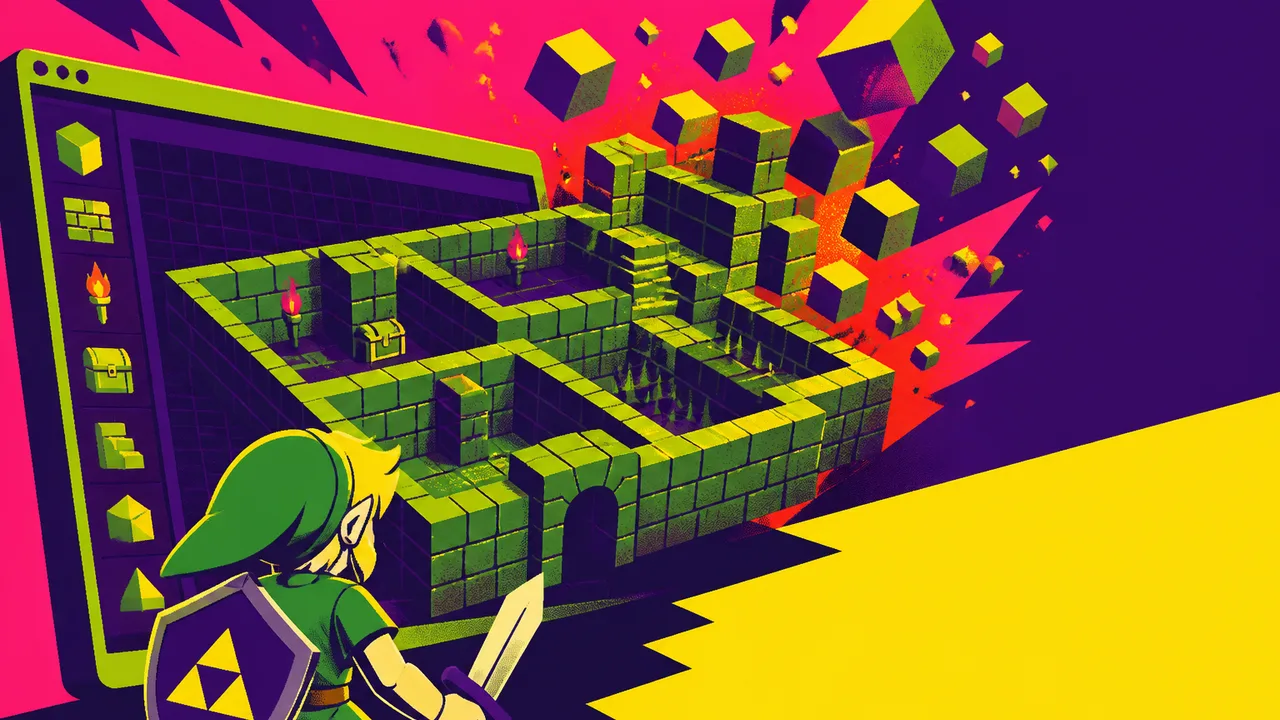
There's a specific itch that Ocarina of Time and Majora's Mask players have been scratching for decades, usually through ROM hacks, fan forums, or just replaying Water Temple until the memory hurts. What if you could build those dungeons yourself? Not approximate them, not gesture at them, but actually design a 3D puzzle-and-trap-filled dungeon in that exact aesthetic and hand it to strangers on the internet?
That's the proposition from Ki3 Games, a one-person studio that has been quietly working on Temple Maker 64, a dungeon creation tool heading to Steam. According to Nintendo Life, the project draws so heavily from Ocarina of Time and Majora's Mask that calling it an N64 love letter is almost underselling it. The aesthetic, the structure, the whole feel of it reads as a deliberate act of tribute.
The pitch is simple enough: build dungeons, share them, explore the ones other people built. But the implications are a little more interesting than that.
What the Game Actually Is
The Steam listing describes Temple Maker 64 as a third-person dungeon creator where players can "build dungeons full of traps and puzzles, or grab your sword and explore community-made dungeons," with access to "a vast selection of items, monsters, puzzle elements, and bosses." That's the loop: create or consume, with a community layer connecting the two.
The framing from Game Rant cuts right to it: Ki3 Games "aims to give Zelda's Nintendo 64 games the Super Mario Maker treatment." That's a useful shorthand because Super Mario Maker (and its sequel) demonstrated something the games industry still hasn't fully absorbed: players given good tools will generate an enormous, self-sustaining content ecosystem. Nintendo didn't have to design every level; they designed the machine that made levels. The longevity of those games came not from the base content but from the community that grew around it.
Ki3 Games is betting the same dynamic exists for Zelda-style dungeons. That bet is not obviously wrong.
The Person Behind It
According to Polygon, the developer left a full-time software engineering position to build this. The sources don't go deeper than that on the personal details, and I'm not going to fill in gaps the record doesn't support. What is worth noting is the shape of that decision: stable technical employment exchanged for an uncertain creative project with no publisher, no team, no institutional safety net.
This is a pattern that shows up often enough in indie development to be its own genre of origin story. What's notable here is that the person behind Ki3 Games didn't just build a fan game to scratch a personal itch and release it for free on itch.io. They built a tool designed to empower other people's creativity, then aimed it at Steam, which means they're betting on a commercial audience. That's a different kind of ambition.
Retroshell confirms the studio's identity and intent: Ki3 Games announced Temple Maker 64 on Steam as a game "that lets players build their own Legend of Zelda-style dungeons, drawing heavy inspiration from the Nintendo 64 era titles." The "Nintendo 64 era" framing is doing real work there. This isn't trying to compete with Tears of the Kingdom. It's specifically and deliberately reaching back thirty years, to a moment in the franchise that a generation of players has apparently never finished grieving.
The Unofficial Problem
Here's the tension that none of the sources fully address, but that anyone watching this space knows is real: Temple Maker 64 is unofficial. Nintendo didn't license it. Nintendo didn't bless it. And Nintendo has a well-documented history of aggressively protecting its intellectual property, particularly around fan projects that commercialize the company's aesthetics or characters.
The sources don't indicate whether Ki3 Games has sought legal counsel on this, whether they've received any communication from Nintendo, or how careful they've been about staying on the right side of the line between "heavily inspired by" and "derivative work." The Steam listing exists, which suggests Valve hasn't flagged an obvious IP problem, but Valve's review process is not a legal clearance.
This matters for Temple Maker 64 specifically because of the tool's design. A fan-made Zelda-style game released for free operates in a different risk environment than a commercial product on Steam that explicitly invites users to generate and share content. The more successful it becomes, the more visible it becomes to rights holders. That's not speculation; it's the pattern that has ended many promising fan projects before.
None of this means Temple Maker 64 is doomed. Plenty of fan-adjacent projects have found ways to coexist with IP holders, sometimes by filing off serial numbers, sometimes through careful aesthetic distance, sometimes just by flying under the radar long enough to build a fanbase that makes removal awkward. But it's an open question the sources leave hanging, and readers thinking about whether to wishlist this should probably hold it in mind.
Why the "Maker" Format Is Interesting Here
The Super Mario Maker comparison is instructive but imperfect. Mario's level creation worked partly because 2D platformer design is legible to players in a way that 3D dungeon design might not be. Knowing that a jump is possible, that a gap is crossable, that a platform is reachable: these are intuitions players build just from playing. Zelda dungeon design is more opaque. Good Zelda dungeons are architecturally coherent, thematically unified, puzzle-sequenced in ways that don't softlock the player, and paced to avoid the specific frustration of wandering a room not knowing what you've missed.
That's a harder design skill to crowdsource. Super Mario Maker generated a lot of genuinely inspired levels and an equal number of sadistic trash fires, which was, depending on your perspective, either a feature or a bug. A Zelda-style dungeon creator could produce the same spectrum, just with higher stakes per bad design decision: a platform you can't jump is annoying, but a puzzle with no solution wastes considerably more of your afternoon.
The Steam listing's promise of a "vast selection of items, monsters, puzzle elements, and bosses" suggests Ki3 Games is trying to give creators enough vocabulary to design well. Whether the toolset is deep enough to enable genuinely good dungeon design, or accessible enough to not scare off people who just want to mess around, is something we won't know until more players get their hands on it.
What's at Stake
For Ki3 Games, the immediate stakes are commercial: will enough people buy and play Temple Maker 64 to validate the decision to leave stable employment and build this? The sources don't give us a price point, a release date firmer than "coming to Steam," or any early sales data to work from. The record is thin on the business specifics.
But there's a broader question underneath the commercial one. The "maker" genre has proven repeatedly that players given good tools will generate creative work that rivals and often exceeds what developers produce themselves. Dreams on PlayStation demonstrated this, and also demonstrated that even genuinely brilliant user-generated content can struggle to find an audience without the right discovery infrastructure around it. Temple Maker 64 needs not just creators but players willing to seek out community-made content, rate it, share it, and keep the ecosystem alive.
A solo developer working from a love of thirty-year-old games can build the toolset. Whether they can also build the community is a different problem, and it's one that money and headcount don't automatically solve either.
Ki3 Games is taking a real swing here. Whether Temple Maker 64 becomes a thriving creative platform or a well-crafted curiosity that quietly fades is probably less about the tool itself and more about the 100,000 small decisions its players make in the first few months after launch.
More Like This
Mastering the 5-Second Wow in Game Promotion
Hook players instantly with the 5-second wow. Discover strategies for game promotion.
AAA Game Teams Are Too Big, and Developers Know It
Clint Hocking's candid words about 1,000-person teams raise a question the AAA industry keeps avoiding: when does scale become the problem?

Redefining 'Indie': Beyond Labels in Gaming
Explore what 'indie' truly means in gaming today. Is it a genre, a spirit, or something else entirely?

Saber CEO's AI Comments Put Game Writers on Notice
Saber Interactive CEO Matt Karch said he'd have replaced lead writer Stella Sacco with AI "in retrospect." Here's what that actually means for game writers.

Dark Castle Returns to PC 40 Years Later
Dark Castle and Beyond Dark Castle just dropped on Steam as faithful 1-bit replicas—plus a new sequel is teased. Here's why this Mac classic still matters.
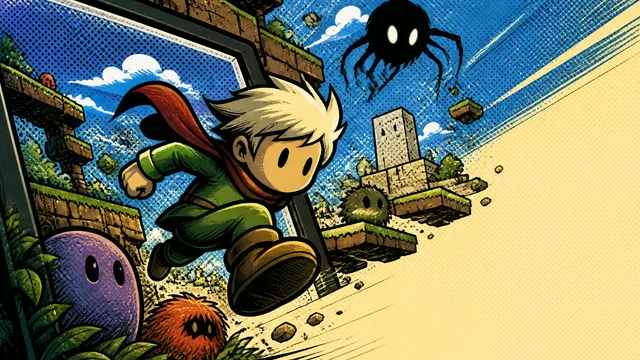
Knytt Classic Returns Free After 20 Years
Knytt Classic is out free on Steam and GOG for its 20th anniversary—but who actually built it, and who pays the cost of preservation?

Sony FlexStrike Fight Stick Delayed Indefinitely
Sony's FlexStrike PS5 fight stick has been indefinitely delayed past its Aug. 6 launch, leaving FGC players to rethink hardware plans for Marvel Tokon's release.

Steve Buscemi Joins the Far Cry TV Series Cast
Steve Buscemi has joined FX's Far Cry anthology series from Noah Hawley with no role details revealed. Here's what the casting signals—and what it leaves unasked.