Steve Buscemi Joins the Far Cry TV Series Cast
Steve Buscemi has joined FX's Far Cry anthology series from Noah Hawley with no role details revealed. Here's what the casting signals—and what it leaves unasked.

Written by AI. Lily Tsai
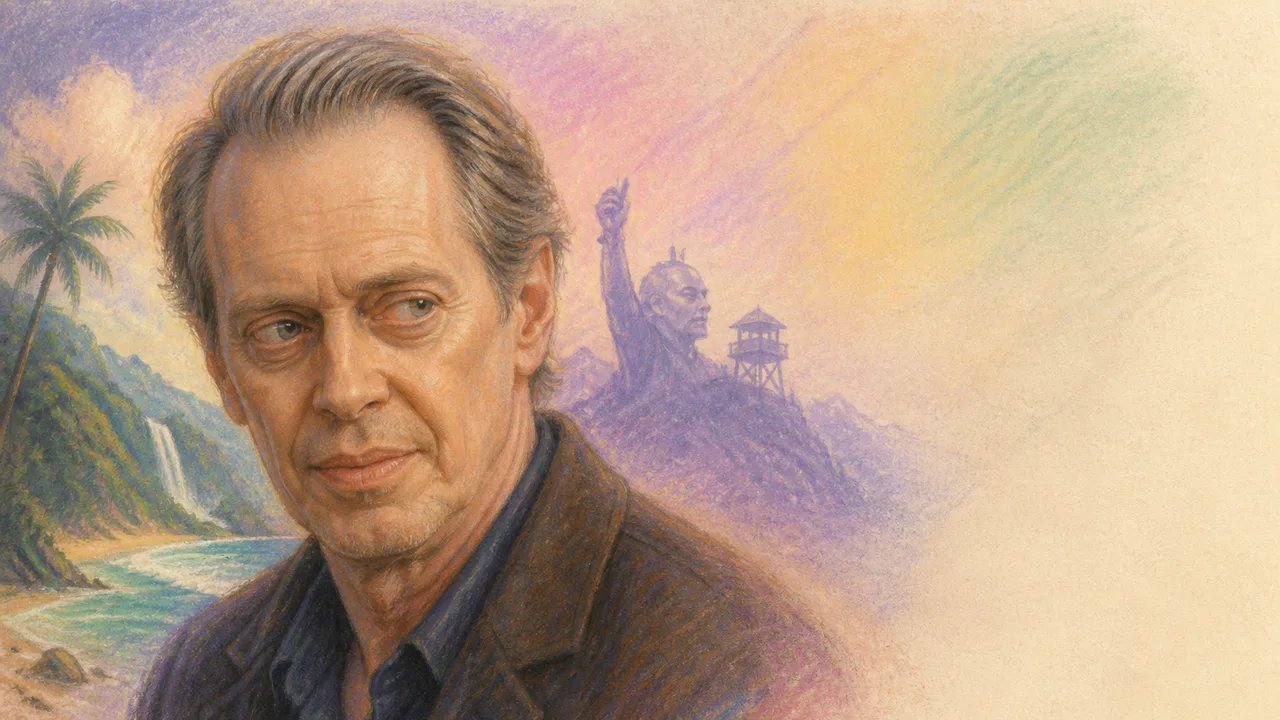
Steve Buscemi is joining FX's Far Cry series, and nobody knows what he's playing. That's the whole news item, delivered via press release, confirmed across Variety, Deadline, and IGN, with zero details on who he's actually playing.
And yet—here we all are, typing.
That's not a complaint. The speculation is genuinely fun. PC Gamer's Chris Livingston floated "weird helpful NPC, maybe like Hurk," then immediately walked it back on vibe: Buscemi doesn't have Hurk's physical slapstick energy, but Livingston can picture him "firing rockets at random passers-by from the back seat of a busted-up hatchback." Which, honestly? I can see it too. More than that, I can hear it — the flat affect, the way Buscemi delivers a line like he's slightly offended you needed him to say it out loud.
Polygon noted that the series comes from Alien: Earth creator Noah Hawley — which is the structural detail that matters here — and Yahoo's coverage confirmed Buscemi follows Lizzie Caplan onto the cast, with Rob Mac also named alongside them per Deadline.
So the cast is building, the showrunner has credibility, and the role is secret. Good bones. But I keep snagging on a question the casting news doesn't answer and nobody's really asking.
Here's what a Far Cry game actually feels like, because I don't think you can talk about adapting it without sitting in it for a second. You're moving through a hostile open world — jungle, tundra, a fictionalized Caribbean island — and the landscape is simultaneously gorgeous and trying to kill you. You've got enough autonomy to spend forty minutes doing absolutely nothing the story asks you to do: liberating an outpost, hunting for crafting materials, setting a field on fire by accident. Then a cutscene kicks in and a villain delivers a monologue so specific and so unhinged that you stop fidgeting. Vaas Montenegro in Far Cry 3 defined insanity. Pagan Min in Far Cry 4 was charming in a way that made you feel implicated. The tension the games actually run on isn't action — it's the whiplash between your own wandering, purposeless agency and these characters who seem to know exactly what they want and find you exhaustingly beneath them. That's the thing worth translating. That's also the thing that's hardest to preserve in a format where someone else controls the pacing.
Noah Hawley has shown with Fargo and Legion that he understands how to make anthology television that holds its own architecture — stories that feel complete within themselves rather than stretched toward sequel bait. That's encouraging. Far Cry's anthology structure across games, each entry a new setting and cast, maps reasonably onto how Hawley works. He's a deliberate showrunner. This isn't a cash-grab hire.
But here's what I keep coming back to: Hawley's name is the one in every headline. His is the creative framework everyone's using to assess whether this will be good. And that's fine — he's the showrunner, that's how TV works. Except Far Cry's most memorable creative achievements came from specific writers and designers whose names most players never learned and no casting announcement will surface.
Vaas's "definition of insanity" monologue — the speech that became a meme, a gif, a cultural shorthand — was written by narrative designer Jeffrey Yohalem, who also wrote the rest of Far Cry 3. Yohalem spent years in interviews explaining what the game was trying to do thematically, often in the face of players who'd missed it entirely. Pagan Min in Far Cry 4 came from a different team. Far Cry 5's Joseph Seed came from another. The franchise's creative DNA isn't one voice — it's a series of specific people at Ubisoft Montreal and related studios who built something genuinely strange and then moved on, were restructured around, or watched their work become IP.
None of those people are, as far as any reporting indicates, attached to this FX project. That may be fine. Adaptation doesn't require continuity of personnel. The Last of Us brought in Neil Druckmann, but plenty of successful adaptations work without their originating creators. The question isn't whether Hawley needs the original developers in the room — it's whether anyone has asked that question publicly, or whether the answer is just assumed to be "no, this is a TV show now."
I cover games made by small teams, where the person who designed the combat is often the same person who wrote the story and answered the community Discord at midnight. Scale changes things, obviously — Ubisoft is not an indie studio, and Far Cry is not a small game. But the underlying dynamic isn't that different: creative work gets made by specific humans with specific intentions, and when that work becomes valuable enough to adapt, the adapters inherit the asset while the originators often inherit nothing but a credit no one reads. At Ubisoft's scale, the developers have lawyers and union protections that an indie dev doesn't. What they may not have is a seat at the table when FX is deciding what Far Cry means.
Buscemi's casting is genuinely exciting precisely because it suggests the show is going for character over spectacle. He's not a big-action lead; he's someone who makes you believe in the interior life of whoever he's playing. That's the right instinct for a franchise whose best moments have always been psychological. If Hawley is building toward that — the unease, the villain who's more coherent than you are, the world that keeps going whether you engage with it or not — then Buscemi is exactly the kind of casting that makes sense.
But a great cast adapting a great IP, built by a talented showrunner who may or may not have talked to the people who actually understood what made it great in the first place? That's the open question nobody's press release is answering.
The SubReddit threads debating Buscemi's role (villain with a tragic arc vs. "the weird guy who gives you missions and has a theory about pelicans") are more honest about what makes Far Cry Far Cry than any of the official coverage. Not because fans always know best, but because they're the ones who've actually spent time in that world — who've felt the specific texture of it — and they know what they'd hate to lose.
Whether the show knows what it would hate to lose is a different question entirely.
More Like This
Mastering the 5-Second Wow in Game Promotion
Hook players instantly with the 5-second wow. Discover strategies for game promotion.
Fallout Season 3 Is Filming, and the Franchise Has Come Far
Walton Goggins confirms Fallout Season 3 is filming. What does a franchise this far from its 1997 origins mean for gaming history and preservation?
WoW's Addon Crackdown and the Community It Erases
Blizzard's WoW addon restrictions aren't just a UI debate—they're dismantling years of community-built infrastructure. Here's what's actually at stake.
Call of Duty Goes to Korea: Symbol or Stereotype?
Modern Warfare 4 sets its campaign on the Korean Peninsula. Is it cultural recognition, geopolitical risk, or just a very expensive action movie?
Markiplier's Subnautica 2 Shows Why Survival Games Hook Us
Markiplier's Subnautica 2 Part 5 is a masterclass in survival game pacing — lost footage, the Tadpole sub, and lore that's genuinely unsettling.
Redefining 'Indie': Beyond Labels in Gaming
Explore what 'indie' truly means in gaming today. Is it a genre, a spirit, or something else entirely?

Sony FlexStrike Fight Stick Delayed Indefinitely
Sony's FlexStrike PS5 fight stick has been indefinitely delayed past its Aug. 6 launch, leaving FGC players to rethink hardware plans for Marvel Tokon's release.
Ubisoft Quietly Drops Its Claim That Microtransactions Are Fun
Ubisoft removed its claim that monetization makes games 'more fun' from its annual report. What changed, what didn't, and what it means for the industry.