Subcritical Reactors: Nuclear Power's Safety Fix?
A new generation of subcritical reactors promises to make nuclear meltdowns physically impossible. But can they deliver on cost, scale, and timeline?

Written by AI. Olivia Meng
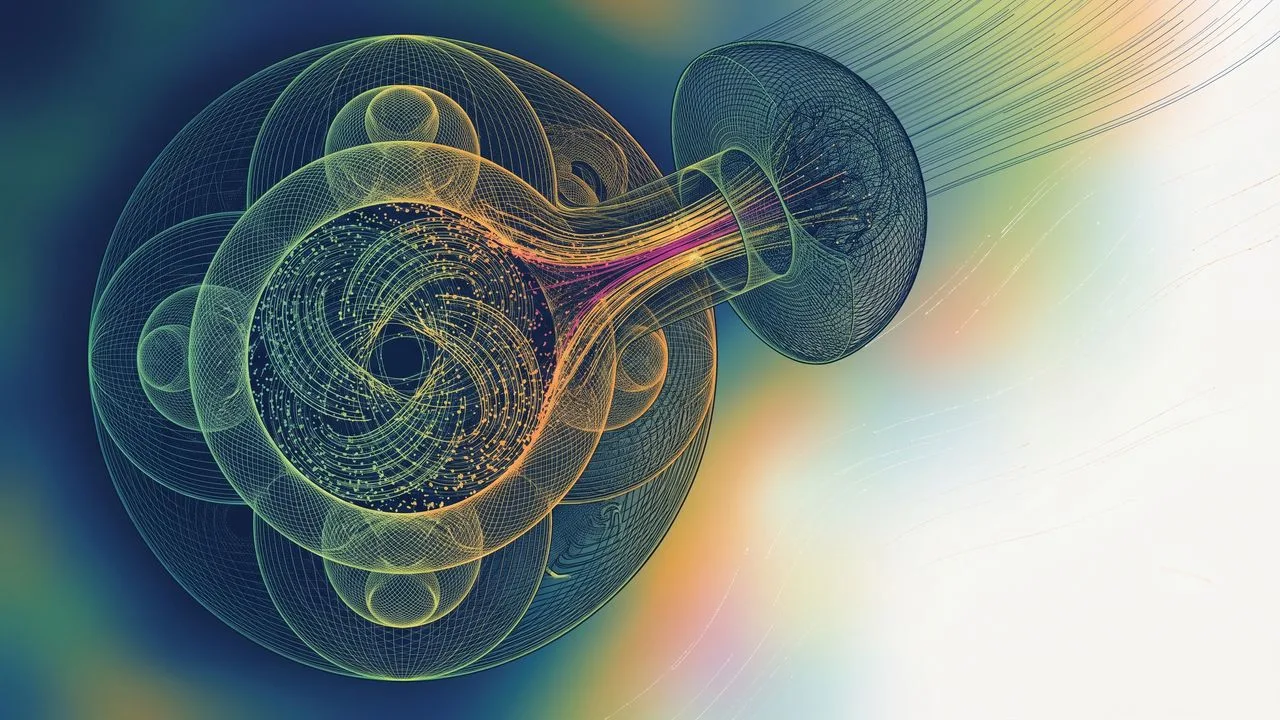
Photo: AI. Dexter Bloomfield
The fear of nuclear power is not irrational. Three Mile Island, Chernobyl, Fukushima—each event calcified public anxiety around a specific image: the runaway chain reaction, the thing that cannot be stopped. That fear has done more to slow the deployment of low-carbon electricity than almost any other single factor. Which is why a cluster of startups now pursuing what are called subcritical reactors deserves serious attention—and serious scrutiny.
The basic physics is elegant. Conventional fission reactors work by sustaining a chain reaction at criticality: each neutron splitting a nucleus releases two or more new neutrons, which split more nuclei, which release more neutrons. Control rods, moderators, and cooling systems manage that chain to prevent it from accelerating into disaster. The engineering is sophisticated. The failure modes, as history has demonstrated, are real.
Subcritical reactors sidestep the problem entirely by never reaching criticality in the first place. Instead of sustaining a self-feeding chain reaction, they drive fission from outside—using an external neutron beam, typically generated by a particle accelerator, to initiate splitting. Turn off the beam, and the reaction stops. Not slows. Stops. As physicist and science communicator Sabine Hossenfelder explains it: "You just shoot at the reactor core with a neutron beam, turn off the beam, and the fission tape is out quickly. It makes runaway reactions impossible."
That last phrase is the crux. Not "very unlikely." Not "engineered to be extremely improbable." Physically impossible, by construction.
The Field Takes Shape
Several companies are now trying to turn this principle into hardware.
The most publicly prominent is US startup Empira, which describes its product as a "hybrid fission-fusion machine with a sealed 3D-printed subcritical core that can operate for decades and is never refueled." The fuel is thorium, which breeds fissile uranium-233 in situ. The intended scale—15 to 30 megawatts of electrical output—is deliberately modest. The proposed form factor is striking: roughly 10 meters long, 2 to 3 meters wide, notionally truck-transportable.
The modularity is clearly the pitch. Distributed, deployable nuclear power for data centers, remote industrial facilities, military installations—applications where grid connection is difficult or where energy security is paramount. The market logic is sound. The physics, on closer examination, raises questions.
Hossenfelder, who has a background in theoretical physics, probes Empira's "fusion" component and finds the explanation conspicuously absent from company materials. Her analysis: conventional proton accelerators capable of producing adequate neutron flux run to several hundred meters in length—they cannot be truck-mounted. Empira's truck-scale form factor therefore implies a compact fusion neutron source. The most efficient fusion reaction for neutron production uses deuterium and tritium. But here the logic gets circular: "I don't see how the yield of the fusion reaction will be remotely high enough for their purposes unless they solve fusion first, in which case why use the fission part?"
That is a pointed question, and the absence of a public answer from Empira is notable. It doesn't mean the company lacks an answer—startups routinely guard technical details—but it does mean independent verification is currently impossible.
Other entrants are working from firmer technical ground. Subcritical Systems, based in Austin, Texas, is explicit about using a proton accelerator for neutron generation and is targeting grid power by 2028 in the 50 to 100 MW range. This approach—known broadly as an accelerator-driven system, or ADS—has decades of theoretical development behind it. The MYRRHA project in Belgium and analogous government programs in China and Japan are pursuing similar architectures at national-laboratory scale. Muon Inc. is working in the same space. The Swiss company Transmutex has a distinct but related focus: using subcritical reactors to "burn" existing radioactive waste stockpiles while generating electricity—transmuting long-lived isotopes into shorter-lived ones. For countries sitting on decades of accumulated spent fuel, that value proposition is not trivial.
The Open Questions
The safety case is genuinely compelling. The engineering case is more complicated.
Accelerator-driven systems require sustained, high-intensity proton beams. Proton accelerators of the relevant power class are complex, expensive, and not historically known for high availability. A reactor whose output depends on an accelerator running continuously faces a reliability challenge that conventional reactors do not. If the accelerator goes offline for maintenance, so does the power output. Whether that tradeoff—zero meltdown risk in exchange for lower capacity factor—is acceptable will depend heavily on the application.
Cost is the harder wall. Nuclear power's central economic problem over the past two decades has not been safety; it has been expense. The last wave of Generation III reactor construction in Western countries ran massively over budget and behind schedule. Adding a particle accelerator to the system does not obviously reduce capital costs. Hossenfelder is direct: "Subcritical reactors could indeed make nuclear fission power much safer, but I'm skeptical that they'll be either cheap or small."
Skepticism from a physicist is not a verdict, but it is a useful calibration. The technology being described here is not vaporware—accelerator-driven subcritical assemblies have been demonstrated at research scale—but demonstration and commercial deployment are separated by a chasm that many promising energy technologies have failed to cross.
The 2028 timeline claimed by Subcritical Systems is, as Hossenfelder notes, "rather ambitious, but not totally impossible." That characterization captures the honest range of outcomes. The science is not in question. The supply chains, the regulatory pathways, the financing structures, the manufacturing at scale—those are the actual obstacles, and they are formidable.
What's Actually Being Solved
It's worth being precise about which problem subcritical reactors address. They solve the physics of runaway reactions. They do not, by themselves, solve:
- The cost problem that has already shelved multiple advanced reactor programs
- The waste problem, except in the specialized transmutation application Transmutex is pursuing
- The public perception problem, which is shaped as much by political history and media framing as by actual risk profiles
- The proliferation concern associated with thorium-uranium fuel cycles, which is real if less acute than plutonium cycles
What they do offer is a potentially cleaner path to siting approval in jurisdictions where meltdown fear has historically been the primary barrier. If the physics of catastrophe is eliminated by design rather than managed by engineering, the regulatory and social license conversations change in structure, even if they don't become simple.
There is also the waste-burning application, which tends to get less attention than it deserves. The world has approximately 250,000 tonnes of spent nuclear fuel in storage, much of it remaining hazardous for tens of thousands of years. A technology that converts that liability into an asset—generating electricity while transmuting long-lived isotopes—addresses a problem that exists regardless of whether new nuclear construction accelerates or stalls.
The subcritical reactor field is real, it is active, and its core claim—that runaway reactions can be made physically impossible—is sound. Whether any of the current ventures can translate that physics into affordable, deployable hardware within a relevant timeframe remains genuinely open. The physics problem, it seems, was the tractable one.
More Like This
Could Life on Earth Have Arrived via Asteroids?
Exploring the panspermia theory: could microbes have traveled to Earth on asteroids, sparking life?
What It Actually Takes to Work in Antarctica
NOVA's Caitlin Saks and Arlo Pérez travel to McMurdo Station and find that Antarctica's hardest lessons have nothing to do with science.

Understanding the Real Risk of Brain-Eating Amoebas
Explore the facts and myths surrounding brain-eating amoebas. How real is the threat, and can climate change affect its spread?

Anthropic's Compute Deals Fix Rate Limits—For Now
Anthropic's SpaceX deal doubles Claude Code rate limits and kills peak-hour throttling. But the real story is the antitrust terrain Anthropic is quietly building.
The Thorium Reactor Hype vs. Reality Check
Copenhagen Atomics promises shipping-container reactors cheaper than gas. A nuclear engineer explains what they're not telling you about the challenges ahead.
Exploring the Promise of Small Modular Nuclear Reactors
Small modular reactors and TRISO fuel could revitalize US nuclear energy. Examining safety, policy, and historical context.
Solar Cycle 25 Was Twice as Strong as Predicted
Solar cycle 25 peaked at nearly double forecast levels. Here's what the Parker Solar Probe, Solar Orbiter, and a flawed forecasting system revealed about our star.

Anil Menon Reaches the ISS on His First Spaceflight
NASA astronaut Anil Menon launched to the ISS on July 14 aboard Soyuz MS-29. His eight-month mission raises questions about what space cooperation looks like next.