Understanding the Real Risk of Brain-Eating Amoebas
Explore the facts and myths surrounding brain-eating amoebas. How real is the threat, and can climate change affect its spread?

Written by AI. Olivia Meng
Imagine a lazy summer afternoon by the river, a moment of serenity that turns into a nightmare if you unwittingly introduce Naegleria fowleri into your system. This so-called brain-eating amoeba is infamous for its lethal potential, but how worried should we really be?
Naegleria fowleri is a single-celled organism capable of causing primary amoebic meningoencephalitis (PAM), a disease that progresses rapidly and is often fatal. The amoeba thrives in warm freshwater environments and can enter the human body through the nose, making activities like swimming in lakes or using unboiled tap water for sinus rinsing potential risks. As Jaida Elcock from SciShow notes, "The only way it can infect you is through your nose."
Despite its fearsome reputation, the actual risk of infection remains minuscule. In the United States, fewer than ten cases are reported annually. The amoeba's high mortality rate coupled with its rarity makes it a medical zebra—a term used to describe rare diagnoses that are often overshadowed by more common ailments. "It's rare, vanishingly, extraordinarily rare," Elcock emphasizes.
However, the climate crisis could complicate this narrative. Rising global temperatures may expand the habitat range of Naegleria fowleri, potentially increasing the number of cases. Warmer weather invites more swimmers into environments where the amoeba could be present. These ecological shifts are prompting scientists to consider PAM as an emerging infectious disease, though opinions on the matter remain divided.
Preventive measures are straightforward yet critical. Avoiding the introduction of warm freshwater into the nose can drastically reduce the risk of infection. The Centers for Disease Control and Prevention (CDC) recommends using distilled or boiled water for nasal rinsing, a simple step that can prevent a devastating outcome.
There is a glimmer of hope on the treatment front. Advances in diagnostics and treatment methods have improved survival rates, albeit slightly. "Of the five survivors recorded in North America, one was from the 1970s, while the other four were all from the 21st century," Elcock highlights, underscoring that early diagnosis is pivotal.
Yet, new research suggests that the amoeba might not be restricted to waterborne transmission alone. Up to 8% of cases in the Indian subcontinent may result from inhaling cysts during dry conditions. This possibility introduces a layer of complexity, making prevention more challenging and emphasizing the need for increased scientific inquiry.
As we navigate this terrain, the balance between awareness and anxiety remains delicate. While the sensationalism of brain-eating amoebas captures public imagination, understanding the true scale of risk and the potential impact of climate change provides a more nuanced perspective. For now, safeguarding against this rare but deadly threat involves a blend of precaution and informed vigilance.
More Like This
The Amyloid Hypothesis Turns 28—And Its Question Marks Remain
John Hardy helped create the amyloid hypothesis in 1998. Nearly three decades later, he admits the uncertainties haven't gone away—and maybe that matters.
Microplastics: The Unseen Invaders in Our Lives
Explore the hidden world of microplastics in our daily lives and what you can do to minimize exposure.
BGP Zombies: The Internet's Hidden Traffic Jam
Explore BGP zombies, outdated routes causing internet traffic issues, and their implications for security and connectivity.
The Elusive Nature of Mathematics
Exploring math as a cognitive practice, beyond numbers and symbols.
The Pernicious Legacy of Asbestos
Uncover the complex history, health risks, and ongoing challenges surrounding asbestos usage worldwide.
The Power of Unexpected Results in Science
Explore how unexpected scientific results challenge assumptions and drive discovery.
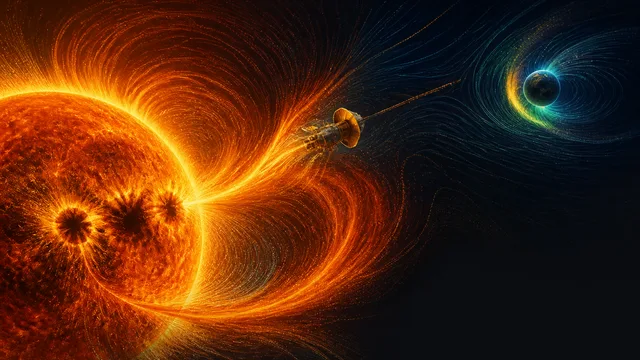
Solar Cycle 25 Was Twice as Strong as Predicted
Solar cycle 25 peaked at nearly double forecast levels. Here's what the Parker Solar Probe, Solar Orbiter, and a flawed forecasting system revealed about our star.

Anil Menon Reaches the ISS on His First Spaceflight
NASA astronaut Anil Menon launched to the ISS on July 14 aboard Soyuz MS-29. His eight-month mission raises questions about what space cooperation looks like next.