The Pernicious Legacy of Asbestos
Uncover the complex history, health risks, and ongoing challenges surrounding asbestos usage worldwide.

Written by AI. Olivia Meng
Asbestos, once hailed as a miracle mineral for its fire-resistant properties, has left a complex and hazardous legacy. Its history is woven into the fabric of industrial progress, yet the very qualities that made it invaluable have also rendered it a profound public health challenge.
In the 19th century, as cities grew and fire hazards loomed large, asbestos emerged as a solution. Its fibers, described as "a rock you can weave," were integrated into building materials to prevent the spread of flames. Henry Ward Johns, an early innovator, capitalized on its fireproof properties, leading to widespread adoption across the United States. By the mid-20th century, asbestos was ubiquitous, found in products from toasters to hair dryers.
However, the properties that made asbestos resistant to decay also made it insidiously dangerous. The fibers, when inhaled, lodge in lung tissue, leading to severe health conditions like asbestosis, lung cancer, and mesothelioma. As early as the 1920s, medical professionals like Dr. William Cook began documenting the devastating effects of these fibers on human health. Yet, despite mounting evidence, the asbestos industry fought to maintain its foothold.
Dr. Irving Selikoff, a pivotal figure in asbestos research, highlighted the grave risks in the 1960s, linking asbestos exposure to deadly cancers. His findings, though initially resisted by industry-funded groups, eventually catalyzed a shift in public perception. By the 1970s, awareness of asbestos's dangers had grown, yet regulatory responses lagged.
A striking contradiction in asbestos's history lies in its continued use. Despite the known health risks, some countries still import asbestos, and it remains present in older buildings worldwide. The video from Veritasium underscores this ongoing challenge, noting that "by 2035, nearly 2.8 million people might die because of it."
The regulatory landscape for asbestos has been inadequate at best. While some nations have implemented bans, others, including the United States, have only partial restrictions. This patchwork approach has often left workers in industries such as construction and shipbuilding vulnerable to exposure.
The environmental impact of asbestos can't be overlooked. Its persistence in the environment poses long-term risks, as seen in the aftermath of catastrophic events like the collapse of the World Trade Center, where asbestos fibers were released into the air, affecting thousands.
Public awareness and education are crucial in addressing the asbestos crisis. As the video suggests, "People aren't just eating it and breathing it, they're mainlining it," highlighting the pervasive nature of exposure. Efforts to mitigate risks must consider both historical legacies and future implications.
Asbestos's story is a cautionary tale of technological triumph turned tragedy. It prompts us to question how society can balance innovation with safety and what lessons can be drawn to prevent similar crises in the future.
More Like This
Understanding the Real Risk of Brain-Eating Amoebas
Explore the facts and myths surrounding brain-eating amoebas. How real is the threat, and can climate change affect its spread?

The Elusive Nature of Mathematics
Exploring math as a cognitive practice, beyond numbers and symbols.

The Power of Unexpected Results in Science
Explore how unexpected scientific results challenge assumptions and drive discovery.
How a Single Hack Nearly Crippled the Internet
A 2021 hack nearly exposed millions of servers, highlighting the risks in open-source software's reliance on individual contributors.

Can Space Data Centers Beat the Heat?
Exploring the challenges of cooling data centers in space, balancing physics with environmental impact.
The Odyssey of Reunion's Coastal Road Megaproject
Reunion's new coastal road faces engineering challenges, environmental concerns, and public opposition, revealing deeper tensions.
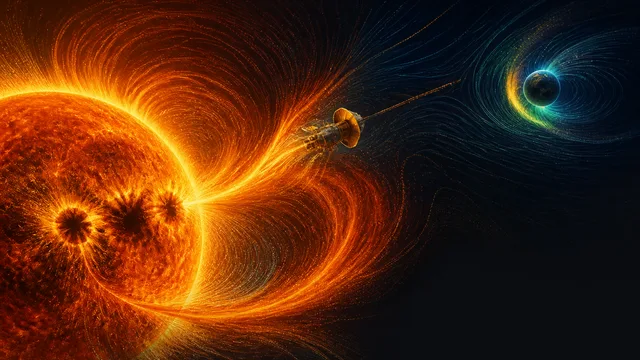
Solar Cycle 25 Was Twice as Strong as Predicted
Solar cycle 25 peaked at nearly double forecast levels. Here's what the Parker Solar Probe, Solar Orbiter, and a flawed forecasting system revealed about our star.
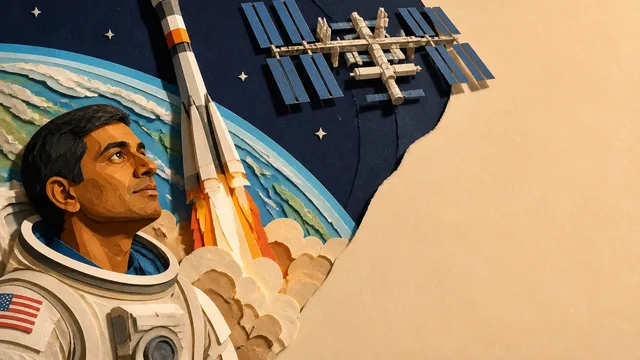
Anil Menon Reaches the ISS on His First Spaceflight
NASA astronaut Anil Menon launched to the ISS on July 14 aboard Soyuz MS-29. His eight-month mission raises questions about what space cooperation looks like next.