Exploring Acoustic Waves in Cellular Mechanics
Understanding the impact of acoustic waves on microtubules and potential therapeutic applications.

Written by AI. Olivia Meng
In the intricate world of cellular mechanics, the dance between external forces and internal structures tells a story both ancient and cutting-edge. Jack Tuszynski, in a recent presentation at Tufts University, delves into this narrative, focusing on the effects of acoustic waves on microtubules and the broader implications for potential therapeutic applications.
The Resonance Within
At the heart of Tuszynski's exploration is the concept of mechanical resonance within cells. Resonance, a phenomenon where a system vibrates at a particular frequency, is not just an abstract concept but a tangible force that could influence cellular behavior. Tuszynski explains, "When you extend it to the cell, there's a lot of structures at different scales with different mechanical properties, leading to various resonances." This insight is pivotal because it suggests that cells are not merely passive entities but dynamic structures responsive to external mechanical energies.
Microtubules, the rigid cytoskeletal elements of cells, play a crucial role here. They are not just structural components; they are dynamic participants in cellular processes. The idea that microtubules respond to external mechanical energies is supported by research showing their critical role in cellular mechanics and their response to forces, as discussed in Nature Reviews Molecular Cell Biology (Dumont et al., 2009).
Ultrasound: Beyond Diagnostics
Ultrasound, typically known for its diagnostic capabilities, emerges as a potential therapeutic tool in this context. The non-thermal effects of ultrasound, such as tissue repair and cellular reorganization, offer exciting possibilities. "Ultrasound can induce non-thermal effects that may aid in tissue repair and cellular reorganization," Tuszynski notes.
The discussion veers into speculative territory when considering ultrasound's role in arresting cancer cell division. Tuszynski references studies, albeit anecdotal, suggesting ultrasound's potential in treating pancreatic cancer. However, these claims demand rigorous scientific validation. The studies he mentions from the Czech Republic and China highlight ultrasound's clinical application but lack the statistical robustness necessary for broad acceptance.
Tensegrity: The Architecture of Life
Tensegrity theory, introduced by Donald Ingber, provides a framework for understanding cellular stability. The theory posits that cells maintain their integrity through a balance of tension and compression. This concept is reminiscent of Buckminster Fuller's architectural designs, where stability arises from the interplay of forces.
Tuszynski underscores the intricate arrangement of cellular structures, stating, "There's a tension and compression that stabilizes these structures." This perspective offers a lens through which we can view cells as more than their molecular components, seeing them instead as sophisticated systems engineered for resilience.
A Broader Context
While the focus here is cellular, the implications extend beyond biology. The exploration of acoustic waves and cellular mechanics invites us to consider broader environmental and systemic issues. How might our understanding of these processes influence fields like bioengineering or environmental science? Could the principles of tensegrity be applied to sustainable architecture or the design of resilient systems in our own environments?
In an era where we seek solutions to complex global challenges, the intersection of biology and technology offers a fertile ground for innovation. The study of cellular mechanics through the lens of acoustic waves not only enriches our understanding of life at the microscopic level but also challenges us to think systemically, integrating insights across disciplines to foster resilience in both natural and engineered systems.
More Like This
Brain-Computer Interfaces: Bridging Biology and Technology
Explore the potential of brain-computer interfaces to merge biology with tech, restoring lost functions and expanding human capabilities.
Ultrasound's New Role in Engineering Safety
Explore how ultrasound tech uncovers hidden structural flaws, preventing disasters in engineering.
The Elusive Nature of Mathematics
Exploring math as a cognitive practice, beyond numbers and symbols.

The Power of Unexpected Results in Science
Explore how unexpected scientific results challenge assumptions and drive discovery.

Can Machines Truly Think? A Deep Dive into AI Consciousness
Exploring AI consciousness through quantum physics and biology with Penrose, Pasterski, and Tegmark.
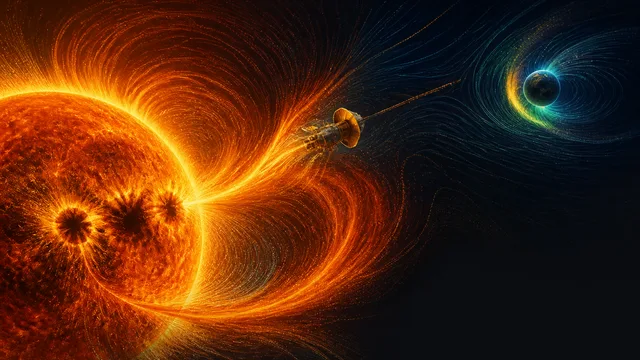
Solar Cycle 25 Was Twice as Strong as Predicted
Solar cycle 25 peaked at nearly double forecast levels. Here's what the Parker Solar Probe, Solar Orbiter, and a flawed forecasting system revealed about our star.
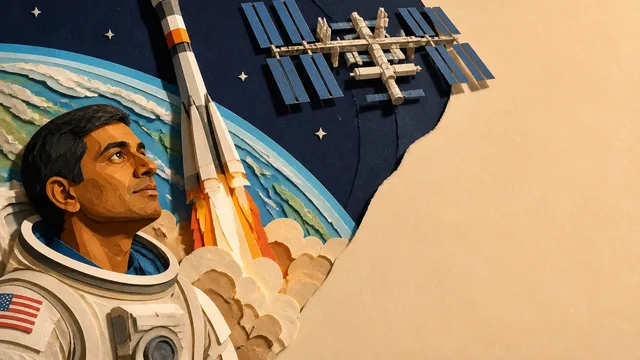
Anil Menon Reaches the ISS on His First Spaceflight
NASA astronaut Anil Menon launched to the ISS on July 14 aboard Soyuz MS-29. His eight-month mission raises questions about what space cooperation looks like next.