Neural Foundations of Language and Theory of Mind
Exploring how human brain specializations for language and theory of mind impact our societal evolution.

Written by AI. Olivia Meng
In the labyrinth of human evolution, the brain stands as both architect and archive of our unique journey. James Rilling, a Professor of Psychology at Emory University, delves into the neural specializations that underpin our abilities in language and theory of mind—two pillars of what it means to be human.
Language, a marvel of human cognition, is more than just a communication tool; it's the bedrock of cultures and societies. At the heart of this capability lies the arcuate fasciculus, a fiber tract linking Broca's and Wernicke's areas, facilitating a symphony of linguistic functions. "The arcuate fasciculus is involved in a wide range of high-level linguistic functions including word repetition, naming, complex syntax, speech fluency, and word and sentence comprehension," Rilling notes. Its complexity is not just a matter of size but of connectivity, extending beyond textbook illustrations to reach the lateral temporal cortex.
This neural pathway’s significance stretches into the societal realm. As our communication networks evolve, so does our ability to solve complex problems collaboratively. Consider how the extended connectivity of the arcuate fasciculus might enhance our capacity for innovation and collective problem-solving. In a world grappling with systemic challenges like climate change, such cognitive prowess could be indispensable.
Yet, the human brain's story is not solely about language. Theory of mind—the ability to infer others' thoughts and intentions—relies on the brain's default mode network. This network is not just a resting state curiosity; it's a complex web of regions more active during introspective and social cognition tasks. "The network reflects our tendency to think about the mental states of both ourselves and others when at rest," Rilling explains.
The implications of these neural intricacies ripple through societal dynamics. A heightened theory of mind could enhance empathy, a critical trait for fostering collaborative societies. But it also raises questions: How do these abilities affect our capacity for social cohesion in an era marked by digital communication and diminished face-to-face interaction?
While our closest primate relatives, such as chimpanzees, exhibit rudimentary forms of these networks, the human brain's expanded connectivity suggests a leap in cognitive evolution. "The cortical regions of the human default mode network have expanded more than cortical regions belonging to other networks," Rilling observes, highlighting the uniqueness of our neural architecture.
These findings invite us to consider the broader systems they influence. The connectivity within our brains mirrors the networks we build in society—each neuron a node, each pathway a conduit for shared knowledge and culture. As we stand at the intersection of biology and societal evolution, understanding these neural foundations could be key to navigating future challenges.
In the end, the study of our brain's specializations is not just about mapping neural pathways but about understanding the very essence of our humanity. How we use this knowledge to shape the societies of tomorrow remains an open question, one as complex and interconnected as the neural networks that define us.
Olivia Chen
More Like This
Brain-Computer Interfaces: Bridging Biology and Technology
Explore the potential of brain-computer interfaces to merge biology with tech, restoring lost functions and expanding human capabilities.
The Elusive Nature of Mathematics
Exploring math as a cognitive practice, beyond numbers and symbols.
The Power of Unexpected Results in Science
Explore how unexpected scientific results challenge assumptions and drive discovery.
What Color Is Monday? Inside the Brain That Sees Time
Synaesthesia isn't imagination—it's perception. Cognitive psychologist Mary Jane Spiller explains how some brains create colors, tastes, and shapes most of us never see.
How the Brain Perceives and Distorts Time
Neuroscientist David Eagleman explains why time warps in emergencies, why childhood summers felt endless, and what all of it reveals about consciousness.
Free Will, Psychopathy, and the Neuroscience of Self
Sam Harris, Roger Penrose, and Sophie Scott debate free will, consciousness, and whether neuroscience should reshape how we assign moral responsibility.
Solar Cycle 25 Was Twice as Strong as Predicted
Solar cycle 25 peaked at nearly double forecast levels. Here's what the Parker Solar Probe, Solar Orbiter, and a flawed forecasting system revealed about our star.
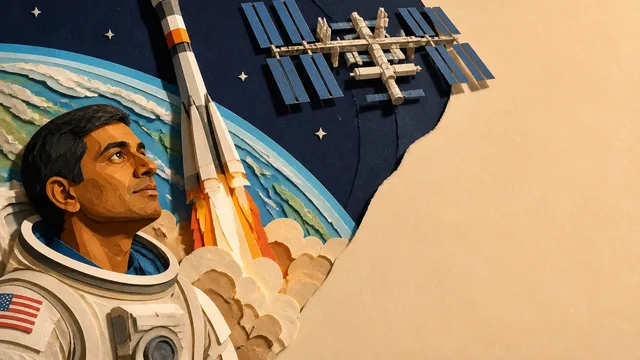
Anil Menon Reaches the ISS on His First Spaceflight
NASA astronaut Anil Menon launched to the ISS on July 14 aboard Soyuz MS-29. His eight-month mission raises questions about what space cooperation looks like next.