Steam Frame at $1,059: Valve's Bet on Flexible VR
Valve's $1,059 Steam Frame pairs standalone freedom with PC streaming. Reviewers are impressed; the question is who buys a hybrid VR headset in 2026.

Written by AI. Mike Wierzbicki
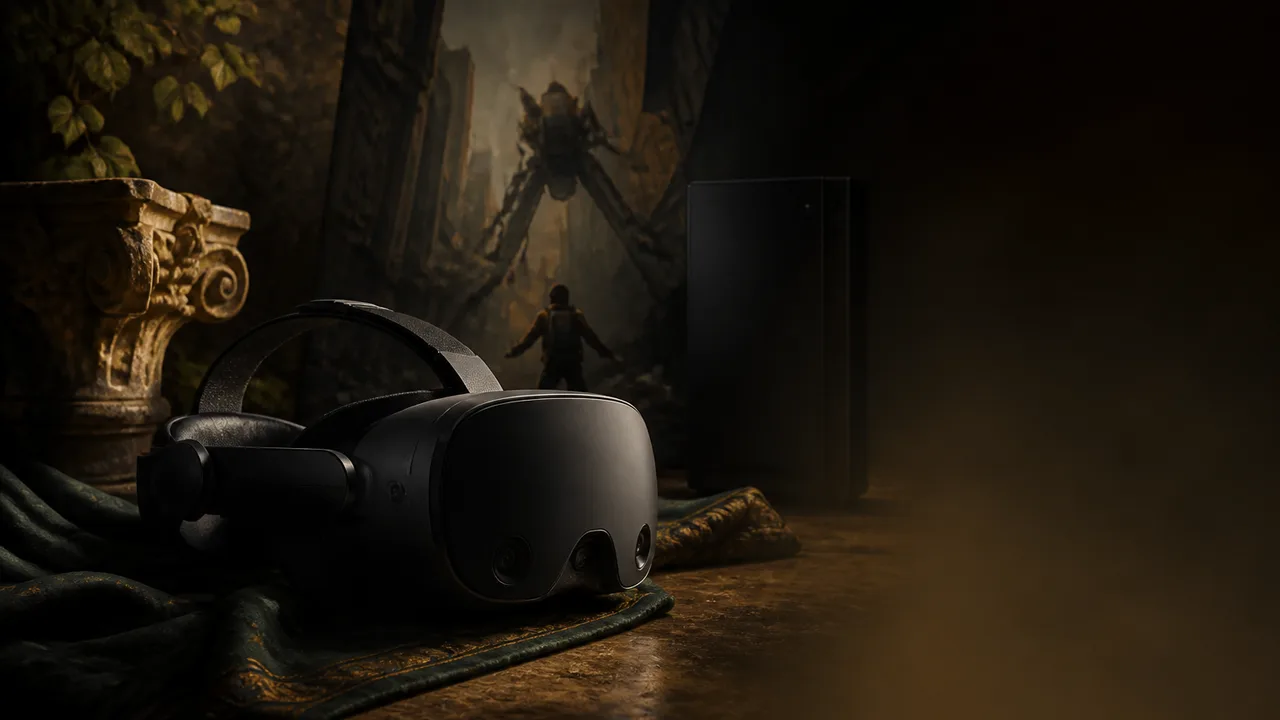
Valve's second in-house VR headset costs $1,059, ships with Half-Life: Alyx, and is currently available through a waiting list rather than an ordinary purchase. That ordering process, reported by GamesIndustry.biz and Video Games Chronicle, is a small detail that says a lot about how Valve is handling this launch: no mass retail push, no opening-day stampede, just a queue for people who already know what they want.
The reviews suggest those people exist in numbers large enough to matter. Coverage has been unusually warm for a VR product in 2026, with Eurogamer describing the Steam Frame as a hybrid that combines a lightweight design, upgraded specs, and PC-to-headset streaming alongside standalone functionality. Aftermath argues it is more than just another VR headset. IGN and PC Gamer both ran full reviews of a device that, on paper, solves VR's oldest compromise: you buy one headset and choose, per session, between untethered convenience and the full power of a gaming PC.
What the Hybrid Pitch Buys You
The Steam Frame's core trick is refusing to pick a lane. Standalone headsets like the Quest line made VR easy to set up but capped visual fidelity at what a mobile chipset can render. Tethered PC VR delivered the fidelity and demanded a cable, base stations, and patience. Valve's answer is a headset that is light enough to wear for long sessions, has enough onboard compute for standalone play, and can stream your entire Steam library from a PC when the game deserves it.
The pricing decision is the tell for how seriously Valve took that pitch. Rock Paper Shotgun reports that Valve considered cutting specs to hold the price down and decided against it, with the company concluding that gutting the specs to avoid a price rise was not "the right product choice." Dexerto pegs the starting price at $1,059. Valve chose capability over accessibility, and priced accordingly.
That choice has a history behind it. The Steam Frame leak coverage ahead of launch centered on the ARM client, the software layer that lets the headset tap into Steam's back catalog, including decades of games never designed for VR or for ARM chips. Compatibility is the quiet killer feature here. A headset that can run old PC games alongside native VR titles is making an argument about the PC ecosystem, not about a VR platform.
Who is This for, Actually?
Kotaku's headline is the most useful piece of skepticism in the stack: "I Tested Valve's New $1,000+ VR Headset And I Have No Idea Who It's For In 2026." The reviewer's confusion, laid out in the full piece, deserves an honest hearing. The Steam Frame requires, for its best experience, a gaming PC capable of streaming high-fidelity VR. The person who owns such a PC and wants VR already had options. The person who does not own one is paying over a thousand dollars for a device whose headline feature they cannot use.
That is a real segment analysis problem, and Valve has not publicly answered it. The waiting-list ordering model hints that the company knows this too: it is sizing demand before committing to retail scale.
The counterargument comes from the reviewers who like the thing. If the hardware is good enough that existing VR-curious PC gamers finally have a device that removes the friction, the addressable audience is everyone who bounced off tethered VR's setup ritual or standalone VR's visual ceiling. Eurogamer's framing captures this: the Steam Frame treats VR as another way to reach a PC games ecosystem rather than a separate destination with its own walled garden.
The Problems Hardware Cannot Fix
A $1,059 headset enters a market with structural issues that no spec sheet addresses.
Software first. Half-Life: Alyx remains, nearly six years on, the showcase title Valve bundles with the device. When the pack-in game is from 2020, that says something about the pace of flagship VR development. The medium's library problem is unchanged: a handful of landmark titles, a long tail of tech demos, and a development community that watched Meta fund and then defund entire studios.
Labor second, and this is where my usual beat intersects. VR's boom-and-bust funding cycle has chewed through developers. Studios built on platform-holder money have been shuttered when the metrics underwhelmed. Valve's low-key launch, waiting list, no retail blitz, looks disciplined from a business standpoint, but it also signals modest expectations. Modest expectations mean modest third-party investment. Developers do not build ambitious VR games for a platform the platform-holder itself hedges on.
Comfort third. Reviewers praise the Frame's light weight, which matters, because headset comfort is the reason many owners use their devices for a week and then shelve them. But weight is one variable in a long list that includes heat, battery life during streaming, and the basic ergonomics of strapping a computer to your face. The reviews are positive on this front; the longer-term data does not exist yet.
The Open Questions
Three things will determine whether the Steam Frame matters beyond a warm review cycle.
First, post-launch support. Valve's hardware history is inconsistent. The Steam Deck got years of software iteration; other Valve hardware projects got silence. The Steam Frame's streaming client and ARM compatibility layer will need continuous work, and Valve's track record on sustained platform investment is mixed.
Second, the price elasticity question. $1,059 buys a very good monitor, a mid-tier GPU, or most of a console plus games. Valve bet, per its own comments to Rock Paper Shotgun, that buyers want the right product over the cheap product. The waiting list will answer whether that bet was correct.
Third, whether the hybrid model spreads. If the Frame sells well enough, expect the next Quest to lean harder into PC streaming, and expect PC VR, which has been a shrinking niche, to get a second look from publishers. If it flops, the lesson the industry takes may be that VR at premium prices is dead, which would be the wrong lesson but the likely one.
The Steam Frame is the most interesting VR hardware argument in years precisely because it declines to argue that VR is the future. It argues that a good screen on your face with your existing library behind it is a product today. Reviewers largely agree the execution holds up. Whether a $1,059 answer to a question most people stopped asking can rebuild an audience is the part no review can settle.
Mike Wierzbicki covers game development and industry business for Buzzrag.
More Like This

Sunderfolk Is Free on Xbox — Here's What That Means
Sunderfolk is free to play on Xbox for a limited time. We dig into what this trial reveals about indie co-op marketing, Secret Door's origins, and the game's unusual design.

Alpha Dog Games Re-emerges as Independent Studio
Alpha Dog Games, the Mighty Doom developer shut by Microsoft in 2024, has quietly re-emerged as an independent studio—the latest in a string of Xbox departures.

Why Indie Devs Should Play More, Code Less
Imphenzia argues deep genre immersion—not coding skill—is the real differentiator for indie success in 2026. Here's what that argument gets right, and where it gets complicated.
Valve Steam Frame VR Headset Leaks Ahead of Launch
Leaked Steam Frame setup content reveals Valve's VR headset is close. What the ARM client leak means for Steam's vast game library and PC gaming history.

Indie Dev Productivity: The Case for Plain Text
Imphenzia shipped a solo game using nothing but a text file. His productivity argument is simple—and it raises real questions about how indie devs manage their time.

Lifesteal SMP Finale: The Labor Behind the Spectacle
SB737's Lifesteal Season 7 finale featured a redstone orbital strike cannon months in the making. What does that prep work actually cost — and who pays?