Polyarc, Studio Behind Moss, Shuts Down After 12 Years
Polyarc, the acclaimed developer of the Moss VR adventure series, is shutting down after 12 years. What its closure says about the VR development business.

Written by AI. Derek "D-Block" Washington
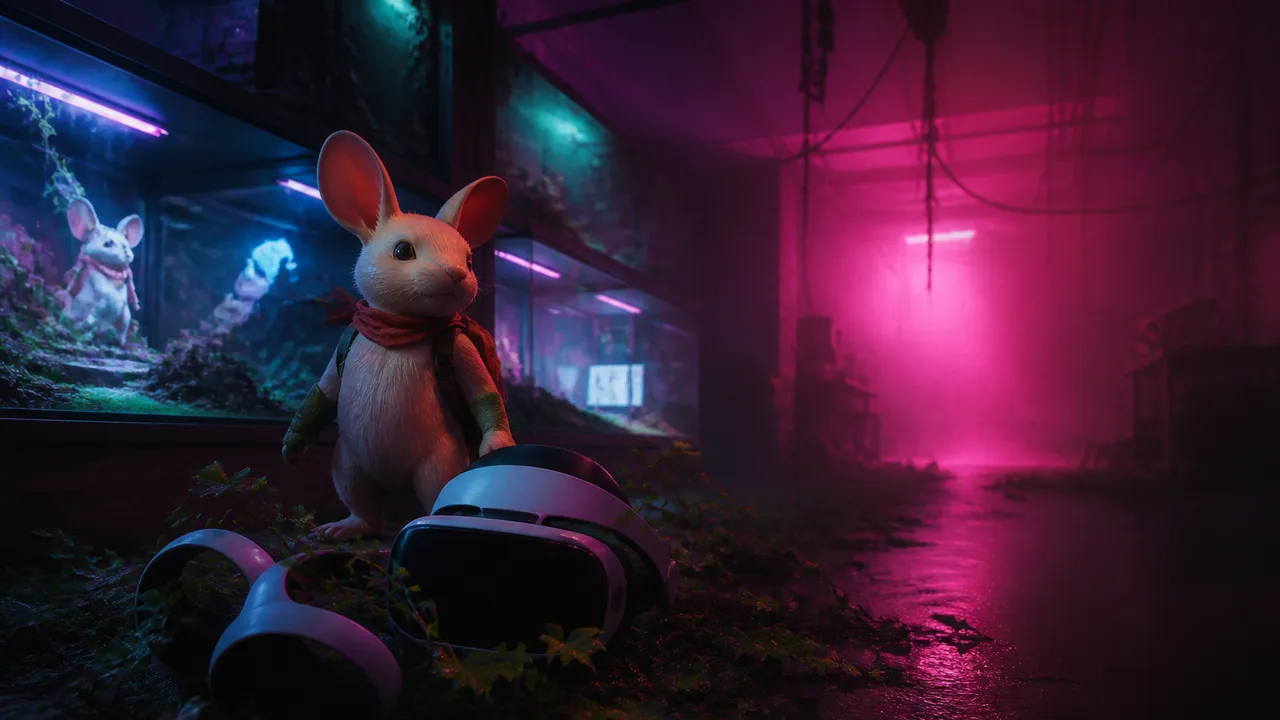
Polyarc, the Seattle studio behind the Moss VR adventure games, is shutting down after roughly 12 years in business, according to PC Gamer, which quotes the team as saying "We are saying our farewells to each other." TheGamer reports the shutdown as official, and Noisy Pixel frames it as the studio winding down game development after nearly a dozen years.
For a studio whose first game made a mouse in a tiny cloak the most emotionally credible character in VR, ending would have been on brand. Ending at all is the news that stings.
What Moss Proved
Moss launched in 2018 on PlayStation VR and did something the early VR library badly needed: it treated the headset as a stage for a traditional third-person adventure rather than a tech-demo gimmick. You watched Quill the mouse navigate dioramas from a fixed vantage point, reaching into the world to manipulate switches and fight alongside her. The scale was small. The emotional payoff was not.
The 2022 sequel, Moss: Book II, expanded that formula, and Polyarc ported both games to newer platforms, including PSVR2, as Push Square notes in its obituary for the studio.
That body of work matters because VR spent its first decade oscillating between two failure modes: shovelware built around a single motion gimmick, and expensive experiments that treated the medium as an engineering challenge instead of a storytelling one. Polyarc's answer was almost conservative in the best sense. Take a proven genre. Rebuild its camera, its input, and its sense of scale for the headset. Let the character work carry it. Critics responded accordingly; the Moss games sit among the most decorated VR titles ever made.
The Pattern the Closure Fits
IGN frames the closure as another blow to ambitious VR development, and the framing holds up under inspection. A studio can ship well-reviewed work and still not clear the bar of a VR business model, because that bar involves expensive development, a fragmented hardware install base, and consumer demand that has never stabilized at the level console or PC studios can plan around.
Moss is, honestly, the cleanest test case the medium ever produced. It was accessible to people who don't usually like VR. It ran on the cheapest and widest VR hardware of its era. It was short in a way the press mostly forgave. If a game that checks every commercial box VR can currently offer still couldn't sustain the team that made it, the problem was never game quality.
Eurogamer places Polyarc among the latest casualties of what it calls a brutal year for VR, and 2026 has indeed been unkind to the segment. Studios attached to major VR platforms have been shut down or absorbed in waves since 2023, a pattern that includes some of the medium's most respected teams. The consistent thread is that platform-holder funding and niche sales can carry a VR studio through one cycle, but rarely through two.
The Open Questions
Here's where I'll flag the limits of the record rather than paper over them. None of the reports I've seen detail the exact circumstances of the shutdown: no headcount, no severance specifics, no statement on whether the Moss intellectual property has a future owner. Gematsu and Nintendo Everything cover the news, but the reporting is consistent on the fact and thin on the aftermath. That's normal for a story this fresh, and anyone selling you certainty about severance packages or IP rights is filling silence with speculation.
What I can say with confidence is what the workers lose regardless of paperwork. VR specialization is real expertise: comfort design, stereo rendering pipelines, the craft of making a person feel present rather than nauseated. When a studio like Polyarc folds, that expertise disperses. Some of it will land at bigger shops. Some of it exits the industry entirely, because there are fewer VR jobs to hold than there were a year ago.
What Nobody Has Solved
The business-model problem VR has, in plain terms: the audience is a fraction of the flat-screen market, split across headsets with incompatible storefronts, so the revenue pool for any premium VR title is small, while development costs approach flat-screen scale. Better games don't fix that. Better games were supposed to fix that, and Moss was one of the better games.
The strongest counterargument belongs to the platform holders. Meta, Sony, and Valve have subsidized VR content for a decade on the theory that the install base would eventually compound into a self-sustaining market. Ten years in, the evidence is mixed at best, and closures like this one are the annual reminder of what the theory costs the people working inside it.
The immediate thing to do is simple: if Quill mattered to you, say so, loudly. Studios read the receipts. And whoever ends up holding the Moss IP inherits a character with real goodwill attached. Whether anyone builds her a third book depends on whether VR's next chapter has more economic footing than this one did.
Quill survived a collapsing kingdom by being small, careful, and stubborn. The studio that made her managed the same for twelve years. The headset business has not learned to reward that yet.
More Like This
Star Wars Zero Company's Titanfall Origins and Studio Furloughs
Star Wars Zero Company began as a Titanfall pitch. Then most of its developers were furloughed before launch. The full story is more complicated than either headline.
GTA 6's $100 Ultimate Edition Is Outselling the $80 Version
GTA 6's $100 digital-only Ultimate Edition is topping PS Store charts in nine markets. Here's what the pre-order data actually tells us—and what it doesn't.
Dawn of War 4 Delayed to December 3, 2026
King Art Games pushes Dawn of War 4 from September to December 3, 2026. Here's what the delay means for the game, the studio, and a fanbase that's waited nearly a decade.
Xbox Takes Over Physint From Sony: What the Kojima Deal Changes
PlayStation stepped away from Kojima's Physint and Xbox picked it up. We break down the deal, the platforms, and what it means for players everywhere.
How to Pick the Right Art Style for Your Indie Game
Imphenzia's framework for choosing an indie game art style covers 15+ options and four must-pass tests. Here's what it gets right — and what it leaves open.
Valve Steam Frame VR Headset Leaks Ahead of Launch
Leaked Steam Frame setup content reveals Valve's VR headset is close. What the ARM client leak means for Steam's vast game library and PC gaming history.
Dragon Quest Monsters: The Withered World Revealed
Square Enix's Dragon Quest Monsters: The Withered World drops December 3. Here's what the new creatures, Synthesis system, and platform bet actually mean.
Zelda Ocarina of Time Remake: Confirmed and Coming
Nintendo confirmed an Ocarina of Time remake for Switch 2 in 2026—but the rumor cycle that got us here reveals something about how gaming communities process hope.