Xbox at Gamescom 2026: Big Lineup, Bigger Questions
Xbox arrives at Gamescom 2026 with 25 playable titles including Fable, Alien Isolation 2, and Gears of War: E-Day — but player trust is the harder problem to demo.

Written by AI. Mike Wierzbicki
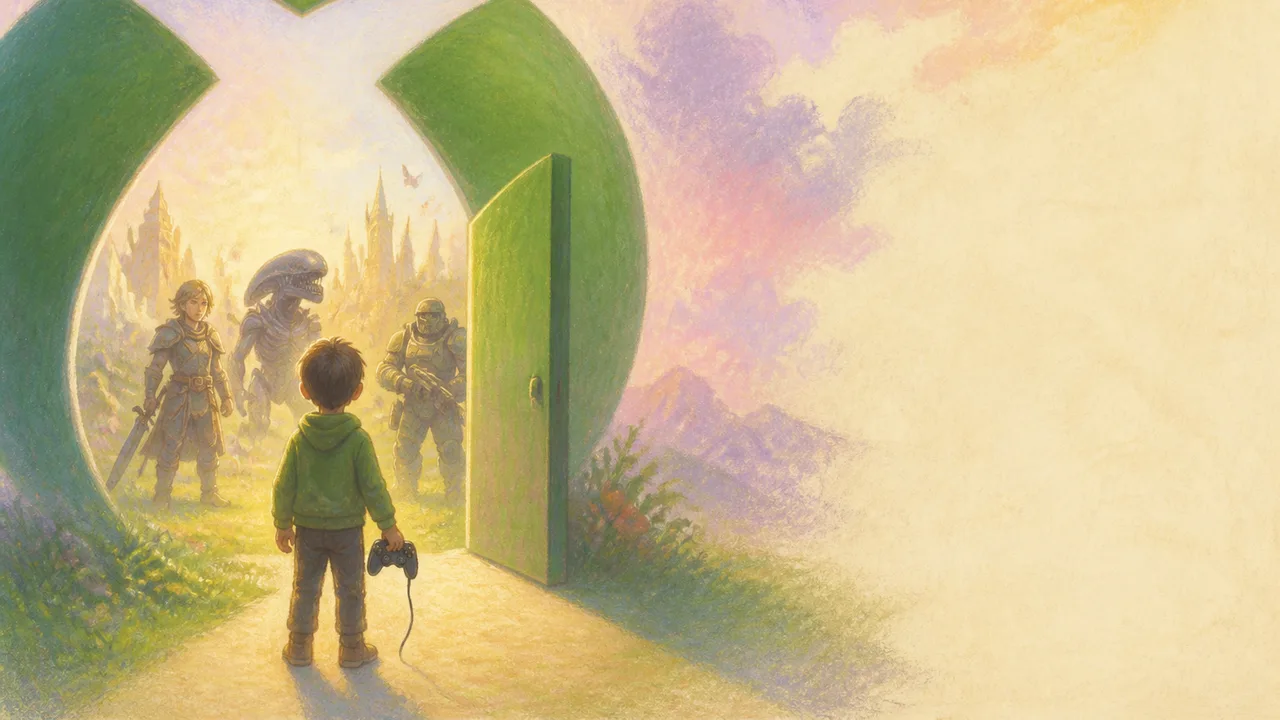
Microsoft knows how to fill a show floor. For Gamescom 2026, Xbox is arriving in Cologne with 140 gaming stations, 25 playable titles, and enough franchise firepower to generate a week's worth of preview coverage — a setup that Animation Xpress describes as a "25-year victory lap." The anniversary framing is deliberate. Xbox launched in 2001, and the 2026 Gamescom appearance is clearly designed to read as institutional milestone, not just product showcase.
The lineup itself is hard to dismiss. Xbox Wire confirms first-party and partner titles including Fable, Gears of War: E-Day, Halo: Campaign Evolved, Forza Horizon 6, Call of Duty: Modern Warfare 4, Metro 2039, Minecraft Dungeons II, and Microsoft Flight Simulator 2024. Windows Report adds Alien: Isolation 2, Stranger Than Heaven, Star Wars Zero Company, Turok: Origins, and The Blood of Dawnwalker to the playable slate. EGW.news notes that titles like Alien: Isolation 2, Castlevania: Belmont's Curse, and Resonance: A Plague Tale Legacy are confirmed through Xbox partnerships rather than direct publishing — a distinction worth keeping in mind when counting the house.
Polygon confirms what most observers already suspected: Fable, Alien: Isolation 2, and Stranger Than Heaven are the marquee draws. That's a fantasy reboot with years of fan anticipation behind it, a sequel to one of the genuinely great horror games of the last decade, and a new IP that hasn't yet had to carry the weight of its own expectations. As a spread, it covers distinct audiences without obvious redundancy — which is a more coherent showing than Xbox has managed at some recent events.
The Games Are Not the Problem
Here's where the coverage gets interesting. Notebookcheck observes that the games themselves aren't drawing the criticism — the excitement around Fable, Gears of War: E-Day, and Alien: Isolation 2 is genuine. The skepticism is directed at Microsoft as a platform holder and publisher.
That skepticism has a documented basis. Microsoft closed its $69 billion acquisition of Activision Blizzard — the scale of which was reported by Financier Worldwide — and then spent the following years executing studio closures that cut against the stated logic of buying all that creative capacity in the first place. Tango Gameworks, which made Hi-Fi Rush — a game that according to Levvvel's sales data sold over two million copies and won multiple industry awards — was shuttered in 2024. Arkane Austin went with it. The Redfall situation, whatever your read on that game's quality, demonstrated that Xbox's quality-control pipeline had real gaps even after the Bethesda acquisition.
What Xbox players absorbed from that period wasn't just disappointment about individual games. It was a pattern: announcements that implied long-term investment, followed by decisions that suggested shorter time horizons than the marketing implied. When Microsoft says "we're committed to delivering great games," the audience has context for what that commitment has sometimes been worth.
What the Floor Presence Is Actually Arguing
The 140 gaming stations and 25 playable titles aren't just logistics — they're a counterargument. Xbox is making the case with physical presence and hands-on access that these games are real, far enough along to be played, and not vaporware placeholders on a slide. That's a meaningful distinction from a stage presentation or a trailer reel. A player who spends forty minutes with Fable in Cologne and comes away with genuine impressions is a different kind of proof point than a two-minute cinematic shown at a press conference.
The 25th anniversary framing serves a similar function: it's an attempt to anchor the current moment in continuity rather than crisis. We have been here before, it says. We are still here. The franchises being shown — Halo, Forza, Gears — are precisely the ones that define what Xbox has meant to its audience over two decades. Putting them on the floor in Cologne alongside a rebooted Fable is a deliberate argument about identity.
Whether that argument lands depends on which version of Microsoft the audience chooses to weigh. The version that built those franchises and cultivated those studios, or the version that closed Tango and handed players a period of relative silence after some expensive acquisitions.
The Partner Portfolio Question
One piece of the Gamescom story that's easy to breeze past is the breadth of the partner titles on the floor. Blood of Dawnwalker, Turok: Origins, Castlevania: Belmont's Curse, Resonance: A Plague Tale Legacy, Star Wars Zero Company — these aren't Microsoft first-party games. They're titles appearing under an Xbox partnership arrangement, which historically has covered everything from Game Pass deals to co-marketing agreements to timed exclusivity windows.
That distinction matters for a few reasons. It inflates the apparent size of the lineup when you're counting games rather than distinguishing publishing relationships. It also means the fate of those titles isn't entirely within Microsoft's control — a developer can have a great Gamescom showing under the Xbox banner and still ship on PlayStation six months later. The portfolio looks more unified on the show floor than it is in practice.
None of that makes the individual games less interesting. Blood of Dawnwalker, in particular, has generated real curiosity, and Turok: Origins is the kind of nostalgia-adjacent revival that tends to draw a crowd. But it's worth understanding what the floor presence is actually composed of before treating it as a statement about Xbox's first-party pipeline.
What Gamescom Will Actually Tell Us
The question Gamescom will answer — or at least begin to answer — isn't whether Xbox can assemble a compelling lineup. They clearly can. The question is whether the hands-on experience with these titles reinforces or complicates the expectations players are bringing.
Fable carries the heaviest weight. The Playground Games reboot has been in development long enough that the community's patience is a finite resource. A strong showing in Cologne — one where previews reflect genuine progress, coherent tone, and a development trajectory that looks like it leads somewhere specific — would do more for Xbox's credibility than anything a marketing announcement could accomplish. A showing that reads as "we need more time" would land differently in 2026 than it would have in 2023.
Alien: Isolation was, by any honest accounting, a better game than anyone expected when it shipped in 2014. A sequel carries all the goodwill of that original plus all the risk of disrupting what made it work. The original succeeded partly because it was disciplined — one alien, one ship, sustained dread. How the sequel handles scope will tell you a lot about whether the team understands what they're following up.
Microsoft is celebrating 25 years. The party is in Cologne. What happens after the party ends — whether these titles ship, whether the studios making them stay intact, whether the Game Pass economics hold together long enough for players to actually play them — that's the story that doesn't fit in a press release.
By Mike Wierzbicki, Buzzrag
More Like This
GTA 6's $100 Ultimate Edition Is Outselling the $80 Version
GTA 6's $100 digital-only Ultimate Edition is topping PS Store charts in nine markets. Here's what the pre-order data actually tells us—and what it doesn't.

Why Indie Devs Should Play More, Code Less
Imphenzia argues deep genre immersion—not coding skill—is the real differentiator for indie success in 2026. Here's what that argument gets right, and where it gets complicated.
Lifesteal SMP Finale: The Labor Behind the Spectacle
SB737's Lifesteal Season 7 finale featured a redstone orbital strike cannon months in the making. What does that prep work actually cost — and who pays?
Gaming Media Veterans Bet on Old-School Web Revival
Two games media veterans are launching a classic multi-format gaming website in 2026. Can lean, reader-supported journalism survive where ad-driven outlets collapsed?
Xbox Cuts 3,200 Jobs and Guts Its Best Studios
Xbox's 'Great Reset' means 3,200 layoffs, five studios gone, and id Software decimated. Here's what actually happened and what it means.
Exploring Minecraft Capes and Player Engagement
A deep dive into Minecraft capes, their history, and how they shape player engagement and community culture.

Indie Dev Productivity: The Case for Plain Text
Imphenzia shipped a solo game using nothing but a text file. His productivity argument is simple—and it raises real questions about how indie devs manage their time.
Dragon Striker Season 2 Confirmed for Early 2027
Disney confirmed Dragon Striker Season 2 at Anime Expo 2026, setting an early 2027 premiere on Disney XD and Disney+. Here's what the renewal signals.