Sports Illustrated Bets on Fan Data With New Digital Framework
Sports Illustrated's Digital Fandom Quadrant and FanOS platform promise to help teams turn fan data into revenue. Here's what the framework actually does—and what it doesn't say.

Written by AI. Elena Vasquez-Moreno
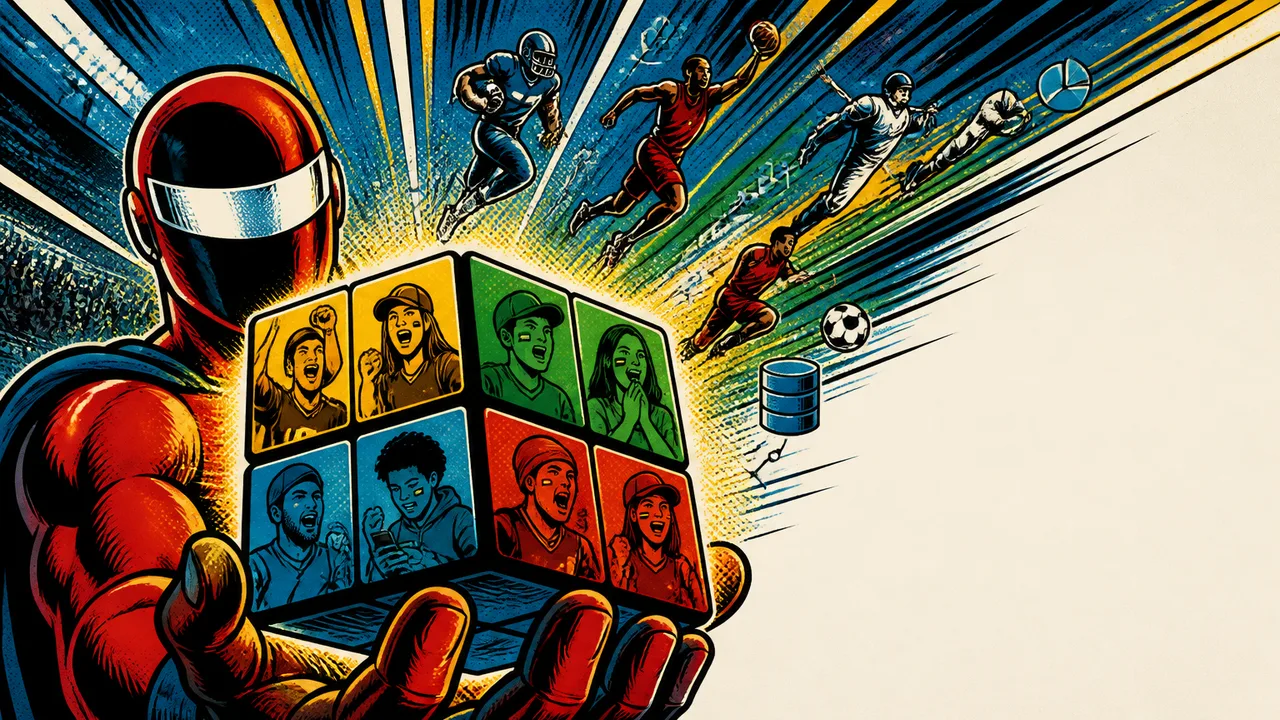
Sports Illustrated—the brand that spent decades telling you which athlete to put on your wall—would now like to tell your favorite sports franchise which fans are worth chasing online, and how hard to chase them.
That's the commercial pitch underneath the Digital Fandom Quadrant, a new analytical framework SI unveiled at a fan engagement masterclass, according to SportsPro. The tool is designed to let teams, leagues, and federations assess their own digital maturity—essentially a diagnostic that scores how well a sports organization actually knows its audience and converts that knowledge into durable revenue. The framework sits alongside a companion product: FanOS, described by SportsPro as "a modular operating system designed to help sports organisations build scalable digital solutions from a portfolio of enterprise-grade products that combine off-the-shelf efficiency" with customizable infrastructure.
Take a moment to let that sentence breathe. What it describes, stripped of the product-launch vocabulary, is a software suite built to help rights holders stop renting their fan relationships from social platforms they don't control, and start owning the underlying data themselves.
That's not a small ambition. And it lands at a moment when the sports industry is actively reckoning with how to make it real.
The Actual Problem This Is Trying to Solve
The fan-data problem in professional sports is structural, not technical. For the better part of two decades, teams handed their audience development to social platforms—Facebook, Instagram, Twitter/X, TikTok—in exchange for reach. The platforms got the data. The teams got engagement metrics and, if they were lucky, ticket conversions they couldn't fully attribute.
First-party data changes that equation. When a fan registers for a team's app, buys merchandise through a team-owned storefront, or streams a game through a league's own platform, the rights holder captures the identity, behavior, and preferences directly. No intermediary. That data can then power targeted offers, personalized content, and sponsor activations that are measurably more valuable than a generic impression.
The catch: building that infrastructure takes investment, organizational buy-in across marketing and IT departments, and a willingness to be patient about payoff timelines. Most sports organizations—even well-resourced ones—have been slow to get there. The Digital Fandom Quadrant is premised on the idea that a maturity assessment is the right starting point: before you build, figure out where you actually are.
Flockler's analysis of digital fan engagement notes that digital sponsorship activation is a key feature of effective strategies, and that the clearest revenue upside comes from integrating fan data with commerce—not just content. That framing is useful here. SI is not just selling a measurement tool; it's positioning itself as an end-to-end partner for organizations trying to close the loop between fan identity and fan spending.
What SI Is Actually Selling
The branding language around FanOS gestures toward enterprise software: modular, scalable, "off-the-shelf efficiency" paired with custom depth. That's a product positioning designed to appeal to both resource-constrained mid-tier clubs and more sophisticated operations that want flexibility.
What we don't know yet—and the sources don't make clear—is pricing, adoption numbers, or which specific organizations have signed on. The masterclass format suggests this is still in a sales-and-awareness phase rather than a broad deployment. The announcement establishes category intent more than it demonstrates category dominance.
That's not a knock; it's just where the evidence sits. Framework launches often precede the proof points by 12 to 18 months. The more instructive question is whether the framework itself captures something the industry hasn't already figured out on its own.
The Academic Corner
It's worth noting that the commercial sector isn't the only place this conversation is happening. Wharton's Mack Institute for Innovation Management has a live initiative on innovation in sports fan engagement, anchored in Philadelphia and aimed at connecting researchers and students with teams, leagues, media companies, merchandisers, startups, and investors. An academic program designed to generate frameworks, case studies, and talent pipelines around the exact same question SI is commercializing.
The parallel timing isn't coincidental—it reflects how much capital and intellectual energy is currently flowing toward solving the fan-data problem from multiple angles simultaneously. When Wharton is running a dedicated initiative on something, you're past the early-adopter phase. The question has crossed into mainstream business strategy.
Deloitte Digital's perspective on social media and fandom lands in similar territory: social media transformation and creator strategy are becoming core to how brands—including sports organizations—build durable audience relationships. That's the consulting-world equivalent of the same thesis SI is running with its Digital Fandom Quadrant.
The Honest Complexity
Here's what makes this framework genuinely interesting to analyze: the problem it addresses is real and unsolved, but the solution is more complicated than any single tool can capture.
Fan engagement in 2026 is not a linear funnel. The Deloitte 2026 Digital Media Trends report frames the challenge around "always-on fandom"—the idea that modern sports audiences don't simply show up for the game and disappear until next season. They exist in content ecosystems between events, consuming highlights, commentary, fantasy data, merchandise, and community interaction year-round. Monetizing that continuous presence requires infrastructure that most rights holders are still building.
The maturity-quadrant format—placing organizations on a two-axis grid based on capability and performance—is a consulting-world staple. Gartner built an entire business model on it. The format works because it's legible: executives can see where their organization sits, understand what "moving up the quadrant" requires, and build a roadmap. Whether SI's specific methodology captures the variables that actually drive fan revenue—or whether it's a well-packaged entry point to a longer engagement with SI's product suite—is something only implementation data will answer.
There's also a harder question lurking here about who controls the fan relationship when a sports organization buys into a third-party operating system. FanOS is, by design, infrastructure that SI provides and likely maintains. That introduces its own form of platform dependency, just one step removed from the social media dependency teams are trying to escape. Trading a Facebook algorithm for a FanOS algorithm is a different arrangement, but rights holders who've been burned before should probably be reading the contract terms carefully.
SI's Strategic Bet
Zoom out from the product launch, and what you're actually watching is a legacy sports media brand repositioning itself as a B2B technology company. The Sports Illustrated of swimsuit issues and longform profiles has been through enough ownership turbulence that its current incarnation needs a revenue model more stable than display advertising. B2B fan-engagement infrastructure—sticky, subscription-like, with cross-sell opportunities—is a credible strategic pivot.
Whether SI has the organizational depth and technical credibility to execute it at scale is the question the masterclass didn't answer and probably couldn't. Announcing a framework is not the same as building one that works at the speed and data volume of a major league team's digital operation.
The Digital Fandom Quadrant is a statement of intent from a brand trying to matter in a part of the sports industry it never historically touched. The sports organizations evaluating it should bring the same skepticism they'd bring to any vendor who walks in with a 2x2 grid and tells them it will change everything.
Sometimes it does. More often, the grid is the beginning of a much longer—and more expensive—conversation.
More Like This

Dodger Stadium's 4th of July Fan Experience Reviewed
A Dodgers fan vlog captures rock climbing, a $22 burger, commemorative coins, and a Yamamoto gem against the Padres on Independence Day.

NFL Season Fuels a Sports Betting Industry Arms Race
As the NFL season approaches, gambling operators are escalating marketing wars for customer share. Here's what the competitive pressure actually looks like—and who bears the cost.
Jeff Bezos Eyes a $1.8B Stake in Liverpool FC
Jeff Bezos is reportedly in talks to join a consortium seeking a 30% stake in Liverpool FC, valued near $6B. Here's what the deal structure reveals.

Collectr Scaled to 8M Users With Two Engineers
Collectr grew from 5K to 8M users with just two engineers. Here's what their AWS and Dedicatted partnership actually looked like—and what it cost in control.

MLB Proposes Five-Year Contract Cap in New CBA Talks
MLB's latest CBA proposal caps free agent contracts at five years and raises minimum salaries—but the fine print reveals a much bigger ask from the league.
Fan Data Strategy Is Reshaping Sports Revenue
How teams like the Minnesota Twins are building revenue engines beyond ticketing through data fluency, fan segmentation, and loyalty programs.

The Single-Revenue-Stream Problem in Your Love Life
Anxious attachment isn't just a feeling problem—it's a structural one. The psychology maps onto financial risk theory with unsettling precision.

Tampa City Council Stalls $2.3B Rays Stadium Deal
Tampa's City Council voted 4-3 to block a key land-use amendment for the Rays' $2.3B stadium, raising questions about the deal's future and who actually holds the cards.