Fan Data Strategy Is Reshaping Sports Revenue
How teams like the Minnesota Twins are building revenue engines beyond ticketing through data fluency, fan segmentation, and loyalty programs.
Written by AI. Marcus Tate
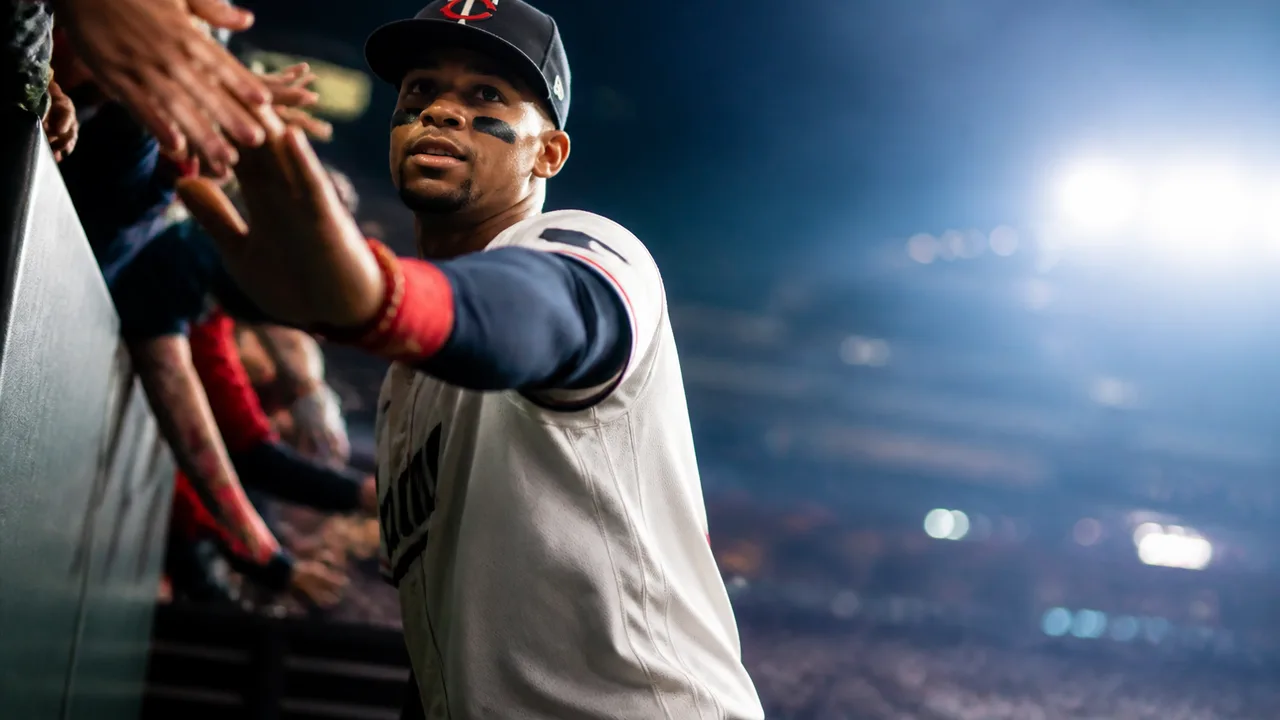
Photo: AI. Lev Zolotov
The ticket is no longer the product. For most sports organizations, it has become something closer to a data collection event — one touchpoint in a much longer commercial relationship that teams are only beginning to learn how to manage.
That reframing was the animating premise of a recent SBJ Live session featuring Will Clayton, Head of Strategy and Commercial Operations for the Minnesota Twins, and Andy Zielman, CEO of WMT Digital. The conversation covered a lot of territory — fan segmentation, data architecture, loyalty design, second-screen monetization, AI — but the through line was consistent: teams that do not understand their fans as data subjects, not just ticket buyers, are leaving the bulk of their addressable revenue untouched.
Fans Are Not Comparing You to Other Teams
Clayton's opening diagnosis is worth sitting with. Fans, he argued, have already recalibrated their expectations — and the reference class they are using is not rival franchises.
"Fans are comparing us to Uber, to DoorDash, to Prime Video," Clayton said. "The entertainment has blurred, and in order for us to create these fast, highly curated, frictionless experiences that fans expect of us today, it's essential for us to meet them well before they enter our ballparks or our stadiums and well after they leave the games."
This is a structural problem, not a marketing one. Uber and Prime Video have made the kind of sustained infrastructure investment in personalization — as Tom's Hardware has reported, big tech collectively surpasses $1 trillion in AI infrastructure spending — that allows them to surface the right offer to the right person at the right moment with near-zero friction. Sports organizations, operating with lean front offices and a decade's worth of unconsolidated vendor relationships, are trying to compete with that on dramatically thinner resources. The gap is real, and pretending it will close through enthusiasm alone is not a strategy.
Clayton's framing also has demographic weight. A family of four navigating parking, concessions, and a four-hour game window wants an entirely different set of assurances than a 26-year-old professional who views the ballpark as a social venue. The Twins are actively mapping those profiles and testing products at both ends of the spectrum — all-inclusive, low-barrier offers on one side; premium VIP configurations on the other — using surveys, focus groups, and behavioral data to identify gaps between what exists and what fans actually want.
The Knot Nobody Wants to Unwind
Zielman's contribution to the session was largely diagnostic, and he was candid about the scope of the problem. Most sports organizations, he argued, have spent a decade acquiring point solutions — a ticketing platform, a marketing automation tool, a food-and-beverage system, a merchandise operation — each selected to solve a discrete problem rather than contribute to a collective data architecture. Every application sits in its own repository. Every dataset speaks its own language. Connecting them is not a software problem; it is an organizational one, and it compounds with tenure.
The challenge gets harder, not easier, the longer a franchise has been operating. Legacy franchises carry legacy infrastructure, and that infrastructure represents real capital commitments that ownership is not going to abandon. So the path forward is not starting over — it is, as Zielman described it, unwinding the knot incrementally: cleansing a portion of the data, visualizing it in dashboards, building trend reporting, and establishing proof-of-concept activations that justify the next phase of investment.
"It is not something that most organizations are going to flip a switch overnight and become data experts, data fluent, and be able to do zero to 60 within a season," Zielman said. "It's got to be a building block approach."
The crawl-walk-run framing is practically useful, but it also raises a question the session did not fully resolve: what is the cost of moving slowly? Teams that are still in the cleansing-and-visualization phase are competing for sponsorship dollars, merchandise revenue, and digital engagement against organizations — and platforms — that are already operating at the personalization layer. The gap between phases is not static.
Data Fluency Is a Cultural Condition, Not a Technical One
Perhaps the most substantive concept Clayton introduced was "data fluency" — and the definition he offered is worth unpacking, because it is not what most people assume when they hear the phrase.
Data fluency, in Clayton's framing, is not about technical sophistication. It is about organizational alignment. It is the condition in which every function — marketing, sponsorship, ticketing, food and beverage, procurement — understands what its key performance indicators are, how those KPIs connect to adjacent verticals, and where the connective tissue between them generates real outcomes. Engineers building AI workflows is not data fluency. A sponsorship manager who understands why foot traffic data matters to their renewal conversation is.
"Using your intuition, your experience as a hypothesis that can be tested with data is modeling the behavior that you want the rest of your organization or front office to use," Clayton said, describing how leadership at the Twins approaches institutional knowledge — not as a conclusion, but as a starting point for empirical testing.
This is a meaningful shift in how sports organizations traditionally operate. Front-office culture has historically rewarded gut instinct and relationships. The data-fluency argument is not that instinct is wrong — it is that instinct untested against evidence is a liability when you are trying to build repeatable revenue.
Zielman extended the fluency argument into an area that often goes unexamined: procurement. Every time a team negotiates a concessionaire contract, a merchandising partnership, or a media rights arrangement without explicitly addressing data access and data sharing, it is giving away an asset. Social media engagement is the most visible version of this trade-off. Teams have spent years building audiences on platforms owned by Meta and Google — driving engagement, accumulating reach — while the underlying fan data flows back to those platforms rather than into the organization's own infrastructure. The cost of that arrangement is diffuse and slow-moving, which is precisely why it persists.
The Invisible Fan Problem
One of the more productive tensions in the session was the concept of the "invisible fan" — the person sitting in seats two, three, and four of a ticket group whose identity the team never captures because they are not the purchaser of record. Ticketing data, Zielman noted, is extraordinarily rich, but most organizations are only activating on the account holder, not on the full group that attended.
The implications are significant. If a team can identify and engage every person in a ticket group — not just the buyer — the addressable audience for loyalty programs, merchandise offers, and sponsorship activations expands substantially. The mechanics of doing that are not trivial. It requires connecting ticketing data to digital behavior, mobile app activity, and potentially third-party foot traffic and purchasing data to build a probabilistic profile of who else was in that section on a given night.
Clayton illustrated the near-term vision for this kind of real-time activation: a Byron Buxton home run generates a contextual merchandise prompt — a jersey offer, an autographed item — pushed to the phones of everyone in the surrounding seats, not just the account holder. The technology to do this exists. The data infrastructure to do it accurately and at scale, for most organizations, does not yet.
"It's about understanding the customer insights, getting them to reveal their preferences through things that really matter to them, and then delivering frictionless experiences when the moment strikes," Clayton said.
Loyalty Programs and the Starbucks Reference Problem
No conversation about fan loyalty programs in 2025 gets through thirty minutes without invoking Starbucks, and this one was no exception. Zielman was direct about tempering expectations: the Starbucks Rewards model is a useful inspiration, but wholesale adoption is not the point. What Starbucks built is a behavioral loop — spend, earn, redeem, return — engineered over years around a product with daily consumption frequency. A baseball team plays 81 home games. The loop mechanics have to be designed for a fundamentally different engagement cadence.
What Zielman emphasized instead was intentionality in design. A loyalty program has to be built around specific behavioral outcomes: retaining a fan who engages heavily during a winning season but might lapse during a rebuild; activating a first-time attendee before the novelty wears off; bridging the offseason with enough digital touchpoints to preserve the connection. Each of those objectives implies a different reward structure, a different communication cadence, a different definition of success.
The cross-brand loyalty model Clayton described for the Twins — where consumption at a sponsor's retail location generates points in the team's rewards ecosystem, and vice versa — is a more sophisticated version of this. It turns the sponsorship relationship into a behavioral data loop rather than a static logo placement. Whether that model scales across a full sponsor portfolio, and whether fans actually engage with it in sufficient numbers to move the revenue needle, are questions that active testing will have to answer.
Synthetic Proxies and the A/B Testing Problem
The session closed on forward-looking territory, and Clayton's observation about synthetic data deserves more attention than it typically receives in sports business discussions.
Conventional A/B testing in a sports context is expensive and slow. Running a split campaign to determine whether a push notification during the third inning drives more jersey sales than one sent at final out requires real campaigns, real fans, and real dollars — and the sample sizes available to most teams are limited by their actual audience, not by their analytical ambition. Mistakes have financial consequences.
Clayton's argument is that synthetic data — AI-generated proxies that model fan behavior with sufficient fidelity — could eventually allow teams to simulate campaigns, test capital investment scenarios, and stress-test loyalty program designs without spending physical dollars or irritating real fans. "We will have a good understanding of those fans and we won't need to test in the real world," he said. "We'll be able to test campaigns, capital investment projects, all within a closed simulated environment."
The gap between that vision and current practice is substantial. Synthetic data is only as reliable as the training data underlying it, and most sports organizations do not yet have the clean, consolidated fan data that would make synthetic modeling credible. It is a second-order capability that depends entirely on solving the first-order problem — the fragmented, un-cleansed, siloed data infrastructure that both speakers spent most of the session describing.
Which is, in the end, why the conversation keeps returning to foundations. The future that Clayton and Zielman sketched — real-time personalization, synthetic testing environments, cross-brand loyalty loops, second-screen experiences tuned to individual fan preferences — is coherent and plausible. The path there runs directly through the unglamorous work of data governance, vendor negotiation, and organizational culture change that most front offices have not yet fully started.
The question worth asking is not whether the technology will get there. It will. The question is which organizations will have built the data infrastructure to use it when it arrives.
More Like This
Impressions Don't Pay the Bills. Mars's CMO Agrees.
Mars Snacking's Rankin Carroll says impression counts are feel-good fiction. What he's building instead has lessons for any business spending on ads.

NFL Season Fuels a Sports Betting Industry Arms Race
As the NFL season approaches, gambling operators are escalating marketing wars for customer share. Here's what the competitive pressure actually looks like—and who bears the cost.

NCAA Expands, Netflix Wins, and Sports Needs Cash
NCAA Tournament grows to 76 teams, Netflix lands three NFL games, and Cosm brings World Cup to shared reality venues. The week's sports business, mapped.
AI in Marketing: Science Should Serve the Art
Retention strategist Tom Burrell and media expert Chris Morris explain why AI's real marketing power lies in reading behavioral drift — not generating content.

Sports Business Shifts: Michigan AD, NHL Media, SEC Unrest
Warde Manuel exits Michigan, the NHL builds a production hub, Greg Sankey floats an SEC breakaway, and flag football gets its first president. July 21, 2026.

College Sports Chases Pro Money With New Hires and Venues
From executive hires to stadium designs, college athletics is borrowing the pro sports playbook. Here's what the latest moves tell us about where the money flows.

World Cup Ratings, MLB Labor, and Apple TV's F1 Problem
USMNT draws 23M viewers, MLB floats a cornerstone player clause, and Apple TV puts the Austrian GP in front of the paywall. The business of sports, June 26.
Alan Stein Jr. on Kobe Bryant, Discipline, and Elite Performance
Performance coach Alan Stein Jr. explains what he observed from Kobe Bryant and how sports expertise translates into a keynote career and business leadership.