Solving Geometry Puzzles: A Mindful Approach
Explore the intersection of geometry puzzles and critical thinking for broader problem-solving skills.

Written by AI. Olivia Meng
Solving Geometry Puzzles: A Mindful Approach
In a world inundated with complex challenges, from climate change to global inequality, the seemingly simple act of solving a geometry puzzle can offer profound insights into problem-solving. The latest video from MindYourDecisions, "Only 1% Can Solve This Geometry Puzzle," poses a deceptively intricate problem involving a rectangle and semicircles, challenging viewers to determine the area of a shaded region. But beneath its geometric veneer lies a broader lesson in critical thinking and systems understanding.
The Puzzle Dynamics
The puzzle, initially published in a Mensa magazine, presents a rectangle, a quarter circle, two semicircles, and a larger semicircle. The task is to find the area of the shaded region between these shapes. At first, the problem seems unsolvable due to a perceived lack of information. Yet, as Prewalker demonstrates, a careful step-by-step analysis reveals that there is just enough information to unlock the solution. This sequence of deduction mirrors the meticulous process needed in fields like climate science, where incomplete data often challenges researchers to find patterns and solutions.
Breaking Down Complexity
One of the video's key messages is the power of breaking a problem into smaller, more manageable parts. Prewalker sets dimensions to the rectangle, assigning variables to the sides and expressing the areas of the geometric shapes in terms of these variables. This approach is not unlike how scientists break down complex environmental systems into components—such as carbon emissions, deforestation rates, and ocean currents—to better understand the broader climate system.
"If you work through it carefully, it is remarkable there is just enough information to solve this problem," Prewalker notes, highlighting the importance of thorough analysis.
This method of disassembling complexity to find clarity is a critical skill in both mathematics and environmental science. It underscores the necessity of patience and precision, qualities that are indispensable when dealing with the intricate web of factors contributing to climate change.
Visualizing Solutions
The puzzle also illustrates the importance of visualization in problem-solving. By focusing on the geometric relationships and visualizing how the shapes interact, the solution becomes clearer. This technique is equally valuable in environmental science, where visual models help to simulate climate scenarios and predict future impacts.
"Visualizing geometric relationships is crucial in solving puzzles effectively," Prewalker asserts, a sentiment that resonates with anyone who has relied on data visualization to communicate scientific findings.
Connecting Puzzles to Environmental Challenges
The exercise of puzzle-solving offers more than just intellectual satisfaction; it sharpens the cognitive tools necessary for addressing global challenges. As we grapple with environmental issues that require systemic change, enhancing our ability to think critically and visualize complex systems becomes increasingly vital.
While the geometry puzzle is a microcosm of problem-solving, it serves as a metaphor for the broader challenges we face. Just as the puzzle can be solved with the information at hand, so too can we address environmental issues with the knowledge and resources available—provided we approach them with the same rigor and creativity.
The intersection of geometry and critical thinking in this puzzle encourages us to refine our analytical skills, fostering a mindset that could be pivotal in tackling the pressing issues of our time. Solving puzzles might not directly mitigate climate change, but the cognitive agility it fosters is an invaluable asset in any field.
More Like This
Cracking the 9-Minute Puzzle with Two Hourglasses
Explore how two hourglasses can measure exactly 9 minutes—a logical puzzle posed in tech interviews.
Unveiling the Trench Effect: Lessons from King's Cross
Explore the King's Cross fire, the trench effect, and vital fire safety reforms reshaping public infrastructure.
The Elusive Nature of Mathematics
Exploring math as a cognitive practice, beyond numbers and symbols.
The Colossal Machines Shaping Our Future
Explore the world's largest machines redefining engineering limits and their systemic impacts.

The Power of Unexpected Results in Science
Explore how unexpected scientific results challenge assumptions and drive discovery.
When Math Tests Break: The Question That Had No Answer
A geometry problem given to Indian students was impossible to solve—because the testing agency made a mistake. What happens when the adults get it wrong?
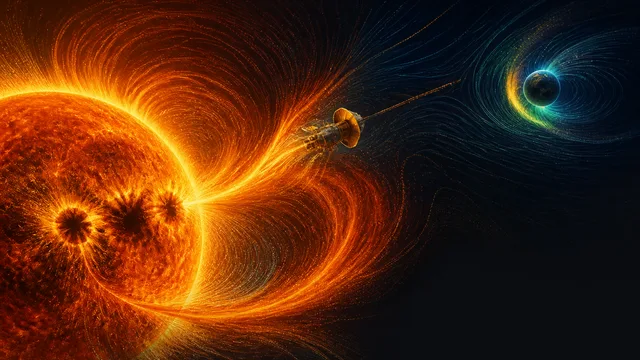
Solar Cycle 25 Was Twice as Strong as Predicted
Solar cycle 25 peaked at nearly double forecast levels. Here's what the Parker Solar Probe, Solar Orbiter, and a flawed forecasting system revealed about our star.
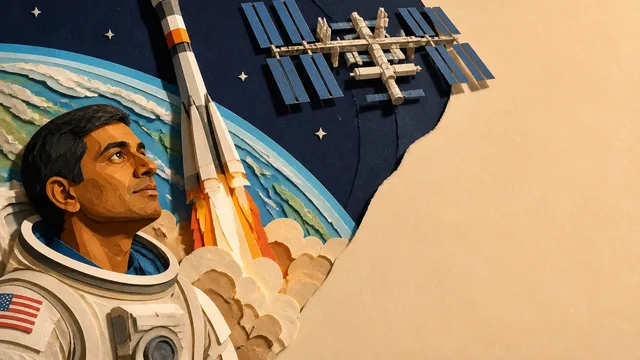
Anil Menon Reaches the ISS on His First Spaceflight
NASA astronaut Anil Menon launched to the ISS on July 14 aboard Soyuz MS-29. His eight-month mission raises questions about what space cooperation looks like next.