When Math Tests Break: The Question That Had No Answer
A geometry problem given to Indian students was impossible to solve—because the testing agency made a mistake. What happens when the adults get it wrong?

Written by AI. Nadia Marchetti
There's a particular kind of confusion that happens when you're taking a test and something doesn't add up. Not the problem—the test itself. You check your work once, twice, three times, convinced you're missing something obvious. The adults wrote this question. They must know what they're doing.
Except sometimes they don't.
Grade 10 students across India recently encountered a geometry problem that became the subject of heated discussion among math educators and students alike. The question involved two circles, tangent lines, and a series of measurements. It looked solvable. It had that familiar architecture of a well-constructed problem: multiple parts building on each other, specific measurements provided, clean geometric relationships.
But buried in those measurements was a contradiction that rendered the entire question mathematically impossible.
The Problem That Ate Itself
The question presented a figure with two circles—one with center M, another with center N—connected by tangent lines TP and TQ from an external point T. Students were given specific measurements: MQ = 13 cm, NB = 8 cm, BQ = 35 cm, and critically, TP = 80 cm.
The first two parts were straightforward: identify the quadrilateral MQBN (a right trapezium), and determine whether MN is parallel to PA (it's not—the radii are different lengths). Standard geometry fare.
Part three asked students to find the length of TB. This is where things broke down.
Using similar triangles—a technique any geometry student would recognize—you can set up a proportion. The ratio of corresponding sides in similar triangles must be equal, which gives you 13/(35 + x) = 8/x, where x is the length of TB. Cross-multiply, solve, and you get x = 56 cm.
Except there's another geometric principle at play: tangent segments from an external point to a circle must be equal in length. If TQ is a tangent from point T, and TP is also a tangent from the same point T to the same circle, then TQ must equal TP.
TQ = 35 + x. We're told TP = 80. Therefore: 35 + x = 80, which means x = 45.
The problem just gave you two different answers: TB is both 56 cm and 45 cm.
"We have a contradiction because we have two different values of TB from the given information in the problem," explains Presh Talwalkar, who analyzed the question on his YouTube channel MindYourDecisions. "So clearly something is wrong in the question as stated."
The Mistake That Shouldn't Have Been There
What likely happened, according to Talwalkar and others who've examined the problem, is that someone at the testing agency added the detail about TP = 80 cm incorrectly. It wasn't needed for any other part of the question. In fact, it makes the third part trivial if you just use the tangent-segment theorem and ignore the similar triangles entirely.
"It was probably just a mistake that someone put in for some reason," Talwalkar notes. Without that single measurement, the problem works perfectly. TB = 56 cm, solved through similar triangles. Clean, elegant, solvable.
But that's not what students got. They got a question that punished them for doing exactly what they were supposed to do: apply multiple geometric principles and check their work.
When Authority Makes Mistakes
Here's what interests me about this situation: How many students assumed they were wrong?
We're trained from early education to trust that test questions have answers. That if we can't solve something, we haven't studied enough or we're missing a key insight. The infrastructure of standardized testing depends on this assumption—that the test-makers are infallible arbiters of knowledge.
But testing agencies are run by humans, and humans make mistakes. Sometimes those mistakes are small—a typo that doesn't affect solvability. Sometimes they're catastrophic, turning an assessment into a psychological stress test where students second-guess their own mathematical reasoning because it doesn't match an impossible prompt.
Talwalkar suggests the testing agency should give full marks to all students on this question, which seems like the bare minimum response. But what about the students who spent precious test time trying to reconcile an irreconcilable problem? What about the ones who did get both answers and then crossed one out, convinced they'd made an error?
"This could be a gentle reminder that when you get a test, you can't always assume that every question is solvable and that all the multiple choice answers are the only possible options," Talwalkar observes.
That's a useful lesson, though not one that helps during a timed exam. In the real world, we should absolutely question whether the problem we've been given is stated correctly. But education systems don't typically reward that kind of questioning. They reward compliance with the format, trust in the process.
The Geometry of Trust
What makes this particular mistake more interesting than a simple typo is how elegant the problem should have been. Remove one number—just one—and you have a genuinely nice question about similar triangles, tangent properties, and the Pythagorean theorem. The testing agency was 95% of the way to a solid assessment.
That remaining 5% matters enormously.
Math education, at its best, teaches precision. It teaches that details matter, that you can't hand-wave contradictions, that rigor means rigor. When the testing agencies themselves fail at precision, they undermine that entire pedagogical framework.
I don't know if the Indian testing agency that created this question has issued a correction or acknowledgment. I don't know if students received their full marks, or if some are still convinced they failed because they couldn't reconcile the irreconcilable.
But I know this: somewhere, a student looked at this problem, got two different answers, and correctly concluded that the question itself was broken. That student learned something more valuable than geometry—they learned that their mathematical reasoning could be trusted more than institutional authority.
That's not the lesson the test was designed to teach. But given the alternative—learning to doubt yourself when you're actually right—I'll take it.
More Like This
Adobe and Nvidia Just Made 10 Million Sparkles Run at 280 FPS
Adobe Research and Nvidia developed a rendering technique that simulates millions of reflective particles in real-time without destroying your frame rate.

ALS Gene Therapy Hits Multiple Targets At Once—Finally
UC San Diego researchers developed a gene therapy that can target up to nine disease pathways simultaneously in ALS, solving a problem that's plagued the field.
The Most Sensitive Dark Matter Detector Might Find Nothing
LUX-ZEPLIN sits a kilometer underground, waiting for dark matter. But success might look like silence—and that would tell us something huge.
Dunkin' Donuts' Math Contest: A Sweet Challenge
Explore Dunkin' Donuts' math contest, featuring the Fibonacci sequence and Pigeonhole Principle, blending marketing with mathematics.
1973 UFO Incident: Aliens or Optical Illusion?
Explore the 1973 UFO encounter with Captain Coin's crew. Was it alien control or just an illusion? The debate continues.
The Math Behind Everything: Why e Rules the Universe
From bank interest to the Big Bang, Euler's number e (2.718...) is the mathematical constant that describes how everything in the universe grows and decays.
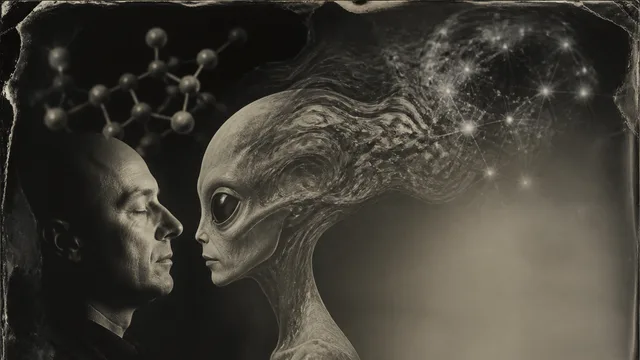
Do DMT Entities Point to Alien Consciousness?
Cognitive scientist Donald Hoffman claims DMT entities may be real alien minds. The math is real. Whether it proves anything about consciousness is a different question.
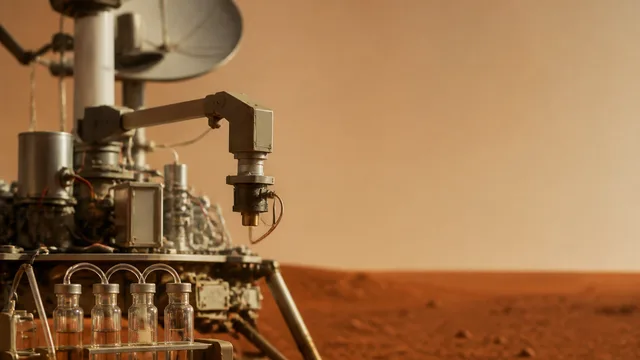
Viking Landers and the Unsolved Mars Life Debate
Fifty years after Viking landed on Mars, one experiment's positive result remains unexplained. Here's what the science actually shows—and what we've learned since.