Silver Lake and PIF Reportedly in Talks to Buy Unity
Silver Lake and Saudi Arabia's PIF are reportedly in talks to buy Unity after the EA deal. Developers face questions about pricing, access and engine's future.

Written by AI. Sarah O'Brien
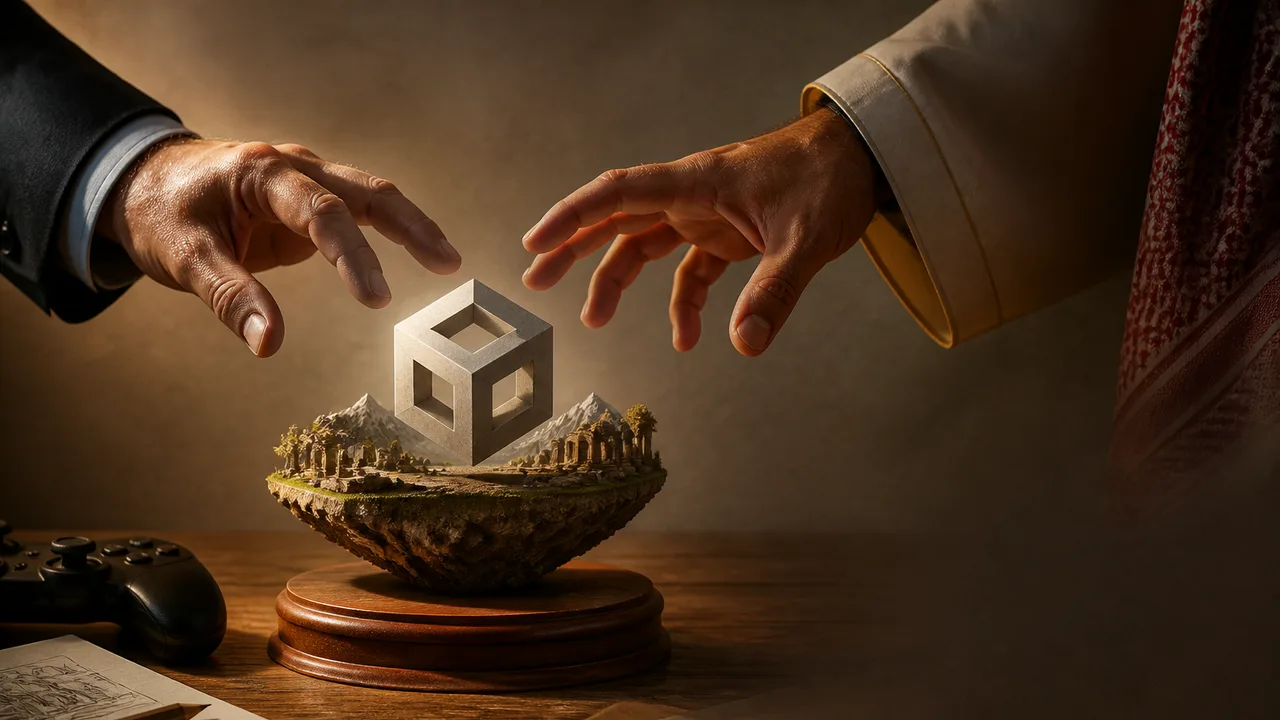
Silver Lake and Saudi Arabia’s Public Investment Fund have held talks to acquire Unity. The interest follows their involvement in the purchase of Electronic Arts. No Unity acquisition agreement or plan for the platform has been confirmed.
EA publishes games. Unity makes tools that other people use to build them. That difference puts a potential Unity deal in the working lives of developers who have no relationship with EA. A studio may choose a publisher for one project; choosing an engine can shape years of production, from the first prototype through updates after release. For a team already building in Unity, a new owner’s decisions about prices, product support or access could become production decisions.
Talks alone change none of those terms. They do, however, bring a familiar question back to developers: how much control should a studio cede to a platform whose business priorities it cannot set?
Why an Engine Purchase Reaches Beyond Its Owner
Unity serves studios of many sizes. Its value to them lies partly in the work already built around it: projects, team skills, production routines and knowledge of how to solve problems inside that engine. Those investments make switching costly even when another engine is available. Rebuilding a project elsewhere can mean revisiting code, assets and testing rather than selecting a new tool from a menu.
That gives engine ownership a different significance from ownership of a game catalogue. A publisher can decide what to do with its own titles. An engine company sets conditions for customers whose games may compete with one another and whose commercial fortunes are separate from its own. If Silver Lake and PIF acquired Unity, developers would have reason to examine whether the platform continued to serve that varied customer base on the same terms.
The strongest business case for an acquisition is straightforward. A widely used development platform gives an owner a position across many game projects rather than a stake in the success of individual releases. Investment could support tools, maintenance and service for developers. Ownership of both EA and Unity would not, by itself, show that EA had gained special access to Unity’s technology or that rival studios had lost it. Those outcomes would depend on choices made after any deal.
The corresponding concern is also practical. A platform owner can change prices, decide which features receive attention and determine how long older workflows remain supported. A large studio may have people assigned to evaluate and manage such changes. A smaller studio may have to absorb them while trying to ship a game. The effect of a policy change is uneven even when the policy applies to everyone.
The 2023 Pricing Dispute Still Shapes the Question
Unity’s controversial pricing-policy reversal in 2023 damaged trust among some customers. The lesson developers took from that episode need not be that every future proposal will resemble it. The more durable concern is that a project can commit to an engine under one set of commercial expectations and face a different set later, when moving has become expensive.
That history gives any potential buyer a demanding audience. Developers would want to know how Unity intends to set prices, how it communicates changes and what assurances apply to projects already in development. A pledge to invest in the engine would answer only part of that. A studio planning several years of work needs enough predictability to budget for those years, including the period after launch when it may still be updating and supporting the game.
Ownership could pull in more than one direction. Investors might favor dependable terms that keep developers on the platform for the long haul. They might also seek changes to revenue or costs. Developers can assess the eventual terms; they cannot build a production schedule around guesses about them.
EA’s place in this picture raises another question: would a company that owns major games businesses also own a tool used by their competitors? The concern does not require an assumption of misconduct. Engine customers need confidence that product decisions reflect the needs of a broad developer community. If ownership changes, the way Unity handles support, pricing and access for studios outside EA’s orbit will offer a clearer answer than the identity of its shareholders alone.
What Preservation Adds to the Calculation
An engine is part of a game’s historical record as well as its production pipeline. A finished release tells us what players received. The project files, engine version, plugins, documentation and build process can tell us how that release was made and whether anyone can rebuild it later. Preserving the game and preserving the ability to work on it are related tasks, but they are not identical.
That distinction becomes concrete when an old project needs a repair. A developer may still have the game’s assets and source code, yet need an older engine version or a compatible tool to produce a working build. Newer software may change how parts of the project behave. Updates to the machine or operating system used for development can add another obstacle. None of those problems requires a change of ownership; they come with maintaining software over time. Ownership decisions can affect whether the necessary tools and documentation remain accessible.
The same issue reaches well beyond collectors or archives. A studio may want to patch a game, bring it to new hardware or investigate a bug years after release. If it can no longer reproduce its own build, an ordinary support task becomes an expensive reconstruction job. For smaller teams, continuity of tooling can be as important as access to new features. For larger ones, the archive may be extensive, but the cost of keeping older projects usable still has to go somewhere.
A prospective Unity owner could choose to support that continuity. It could make older versions easier to retain, communicate support windows clearly and give customers time to plan migrations. It could also prioritize current products and leave older workflows with less attention. Those are questions to put to an actual ownership plan, should one emerge, rather than outcomes to attach to the reported talks.
The next useful developments would be a concrete offer, a response from Unity or a public account of what the interested buyers intend for the platform. Until then, studios can identify which of their projects depend on which Unity versions and which policy terms would change their plans. If a deal advances, the first test for developers will be whether they can still budget, build and maintain games under terms they understand.
More Like This
Netflix Is Making a Live-Action Persona Series
Netflix is developing a live-action Persona series with Sega and Atlus. Here's what we know about the creative team, the challenges, and what's at stake.
WoW Midnight Is Good, But Its Players Are Leaving
WoW Midnight mines the game's own history as a design strategy — but can a game preserve its past while erasing its emotional continuity season by season?
Mass Effect Petition Puts EA's Next Decision in Focus
After BioWare's closure, the #SaveMassEffect petition asks EA to fund a new game or license the franchise. What would either route require of EA and developers?
Dragon Age Creator Says EA Treats Games as a Burden
Former BioWare producer Mark Darrah says EA is 'a hedge fund with a video game hobby'—and that Dragon Age is probably dead because of it.
Destiny 2 Modder Unlocks the Content Vault
A modder called stanuwu is rebuilding access to Destiny 2's vaulted content—raising hard questions about live-service games and who owns the past.
Sion Abbey: The Lost Medieval Giant Beneath Sion House
Archaeologists uncovered Sion Abbey's vast church and cloisters beneath Sion House parkland—a Bridgetine monastery that rivalled Salisbury Cathedral in scale.