Sacha Baron Cohen Defends Ali G and Satire’s Right to Offend
Sacha Baron Cohen says Ali G exposes prejudice. His new film raises a harder question: who is the joke aimed at, and can audiences tell as it travels online?

Written by AI. Ryan Kowalski
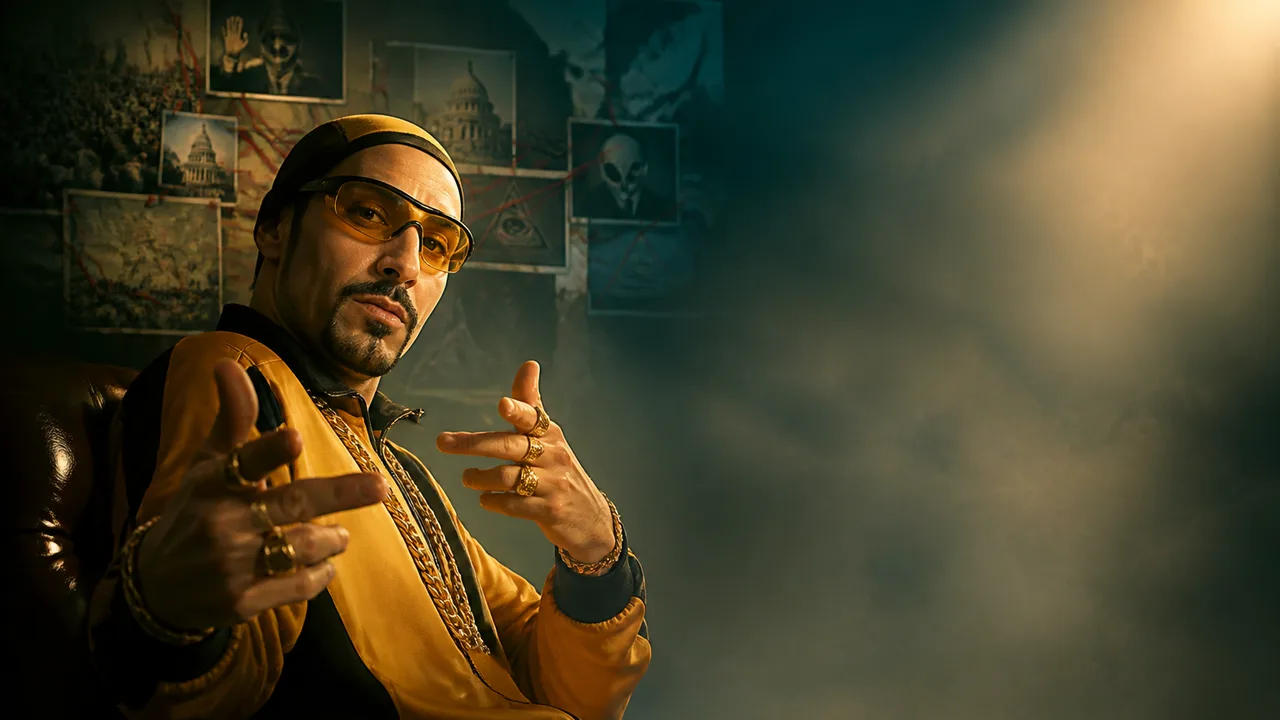
Sacha Baron Cohen is bringing Ali G back to make a case for satire that offends. Discussing the new film Ali G: Who Iz I?, he has described the character as a way to expose prejudice, bias and stupidity. He says the project also aims to confront fanaticism and conspiracy theories.
That is a serious ambition for a comic character built to make people uncomfortable. It also gives viewers something more useful to ask than whether they personally found a joke funny: Who is meant to look foolish, and can an audience tell?
Baron Cohen’s defense rests on a recognizable mechanism. A satirist presents an absurd or objectionable idea, then lets someone’s response reveal what they are willing to accept. The audience laughs at the prejudice the encounter uncovers. It is an argument for allowing a joke enough room to become unsettling before its point comes into focus. If every offensive line must explain itself on contact, that mechanism has little room to work.
The difficulty is that a joke can have more than one audience. A viewer might recognize the prejudice being exposed. Another might enjoy the same moment without questioning it. Baron Cohen can explain what Ali G is designed to do; he cannot determine what every viewer takes away.
Who Gets the Joke?
Baron Cohen has defended the revived character as “designed to expose” prejudice. That describes an intended target, and it is a stronger argument than a blanket demand that comedians be free to say anything without criticism. Satire often needs to put a bad idea where an audience can see it. Merely declaring the idea unacceptable would leave the people who believe it comfortably outside the frame.
Intent, though, cannot do the audience’s work. The test comes in the construction of the joke: what the setup leads viewers to expect, whose reaction supplies the laugh, and whether the payoff makes the prejudice look absurd. A character can be ridiculous in one scene and still give an audience the wrong person to laugh at in another. Calling the character a vehicle for exposure sets a standard for the film rather than settling its reception in advance.
The defense is that “the joke is on him”, meaning Ali G. That could change the power calculation. If the character’s own ignorance is the punchline, the audience is invited to see through him instead of accepting his performance.
Think of the difference between laughing at a person who voices a conspiracy theory and laughing at someone the theory targets. The same exchange could contain both people. Editing, timing and context determine where the audience’s attention goes. Those choices belong to the filmmaker, while the people caught up in the joke do not all get an equal chance to explain themselves afterward.
That concern does not make offense a reliable measure of failure. A person whose prejudice has been exposed may be offended for an excellent reason. Someone else may object because a caricature makes them the easy laugh. Treating those reactions as interchangeable would protect weak satire and blunt sharp satire at the same time. The useful question is what produced the offense, and who bears its cost.
When Backlash Becomes Part of the Plot
Baron Cohen has reportedly considered folding his own cancellation into the project. He wanted to get canceled in real life and include it in Ali G: Who Iz I?. Club reported. That would make public reaction part of the film’s comic machinery, rather than only something that happens after people see it.
The idea has comic potential. A character built to provoke could reveal something about how quickly people make judgments, including judgments about a work they have not seen. It also creates an accountability puzzle. If criticism becomes material for the next joke, how can a critic tell whether Baron Cohen is hearing the objection or simply using it? An objection may be uninformed, perceptive or both in different respects. Turning every objection into evidence that the act worked would spare the act from having to answer the perceptive ones.
Baron Cohen has also spoken about a “trend of Jews being portrayed in certain ways and trying to be silenced” amid the Ali G backlash. His concern deserves to be taken as a claim about who faces pressure to speak and how they are depicted. It does not require treating every criticism of Ali G as an attempt to silence a Jewish performer. Those are separate claims about separate people, and collapsing them would make the dispute harder to understand.
The same care applies to the word canceled. It can refer to criticism, a lost opportunity, a campaign to shut down a project or an artist’s own description of a hostile response. Those outcomes have different stakes. A person arguing that a joke misses its target is participating in public debate, just as a comedian defending the joke is. If a reaction is to become part of the film, viewers should be able to see what reaction is being depicted and why.
The Conspiracy Theory Problem
Baron Cohen says the new project aims to confront conspiracy theories and fanaticism. Satire has an advantage here: it can show the social appeal of a bad idea without delivering a lecture. A confident fool can say something outrageous and reveal how readily others accommodate it. Comedy can make that accommodation visible to viewers who might tune out a direct warning.
Conspiracy narratives also complicate that approach. They can borrow a comic tone, retreat into “just joking” when challenged and still leave a claim in circulation. A satirical scene about a conspiracy therefore asks the audience to keep track of several things at once: the false idea, the person repeating it and the person the film wants them to judge. If the punchline depends entirely on viewers already knowing which claims to reject, some will miss it.
A film has ways to guide that reading. It can return to a claim and show its consequences, give the people targeted by it room to answer, or make the believer’s reasoning collapse under its own weight. It can also choose to leave viewers uncertain, though uncertainty is a risk when the subject is a theory people may already encounter as persuasion. The issue is not whether a satirist must attach a warning label to every line. It is whether the finished joke gives its audience enough to recognize the target.
For Ali G’s return, Baron Cohen has put both the purpose and the burden on the table. He wants a character whose offenses reveal other people’s assumptions. Viewers will have to judge where the laugh goes when the film asks them to laugh, and whether the people carrying the cost of the joke are the people it means to expose.
More Like This

Kane Parsons on the Backrooms Film and YouTube Filmmaking
Kane Parsons, described as 20 years old in his BBC Newsbeat interview, made a Backrooms feature film from a YouTube series. Here's what that path actually required.

MusiCares Picks U2 for 2027 Honor: What the Choice Decides
The Recording Academy named U2 its 2027 MusiCares Persons of the Year. Here is what the pick rewards, what the archive shows, and what the gala must prove.

Yayoi Kusama Dies at 97: What Her Legacy Reveals
Yayoi Kusama died at 97. Beyond the obituaries, her legacy raises real questions about who art is actually built for—and who gets left outside.
Reckless Ben's LEGO Lawsuit Was Dismissed, Not Won
Reckless Ben admitted his viral LEGO lawsuit victory never happened. Court records show wrong entity, improper service, and a dismissed case — not a win.

Exploring Conspiracies and Wolves: Reality vs. Belief
Dive into conspiracy theories and the impact of reintroducing wolves, with insights from Joe Rogan and Andrew Wilson.
Gamers Are Fighting the EU Over Digital Ownership
The Stop Killing Games movement reached 1.25M signatures and an EU hearing. Here's what's actually at stake—and why it's bigger than gaming.

UK Doctors Say Social Media Harms Kids. Now What?
UK's top doctors say social media harms kids like smoking harmed adults. Here's what that actually means for schools, clinics, and parents right now.