Exploring Conspiracies and Wolves: Reality vs. Belief
Dive into conspiracy theories and the impact of reintroducing wolves, with insights from Joe Rogan and Andrew Wilson.

Written by AI. Nadia Marchetti
In the latest episode of the Joe Rogan Experience, host Joe Rogan and guest Andrew Wilson navigate the intricate world of conspiracy theories and wildlife ecology. It's a conversation that attempts to unravel the bizarre and often misunderstood intersections of human belief and natural ecosystems.
The Many Faces of Conspiracy Theories
Conspiracy theories, as Rogan and Wilson discuss, have a curious way of escalating from the plausible to the absurd. Wilson points out how some individuals, entrapped in their own narratives, feel compelled to outdo their previous claims, leading to increasingly outlandish assertions. As he mentions, "Well, Candace has painted herself into a weird corner where everything has to be a wild conspiracy."
This hit home for me, reminding me of my own encounters with fervent conspiracy theorists during my investigations into UFO sightings. The fervor with which some cling to their beliefs can be both fascinating and frustrating, particularly when these beliefs lack credible evidence.
Wolves and the Dance of Ecosystems
On the topic of ecology, the conversation pivots to the contentious issue of reintroducing wolves into certain ecosystems, like Aspen. Rogan and Wilson discuss how these efforts, despite good intentions, can lead to unforeseen consequences. "They relocated them to Aspen where they're killing cattle," Wilson says, highlighting the problematic nature of such interventions.
In my research, I've found that the reintroduction of wolves in Yellowstone, for instance, has been celebrated for restoring ecological balance. Yet, similar attempts elsewhere, like in Colorado, have led to clashes with local ranchers. It's a reminder of how complex and context-dependent ecological interventions can be.
Between Fact and Fiction
As Rogan and Wilson wade through these topics, a theme emerges: the tension between reality and perception. Whether it's the fantastical tales spun by conspiracy theorists or the challenges of wildlife management, the line between fact and fiction can be razor-thin. Wilson captures this complexity when discussing the disappearance of people in national parks: "You could start imagining that there's some grand conspiracy, some watcher in the woods that's consuming people."
A Cautious Curiosity
Listening to their exchange, I'm reminded of the importance of maintaining a balance between open-mindedness and skepticism—a principle I hold dear in my work. Whether pondering the mysteries of the universe or the intricacies of ecosystems, the path to understanding requires both a willingness to explore and a commitment to evidence.
In the end, these discussions are more than just musings on the fantastical and the natural. They challenge us to question our assumptions and consider the broader implications of our actions and beliefs. As we navigate these narratives, the question remains: how do we discern the truth amid the noise?
More Like This
Bradley Cooper on Memory, Media, and Meaning
Bradley Cooper and Joe Rogan discuss media's impact on memory and meaningful content.
The Amyloid Hypothesis Turns 28—And Its Question Marks Remain
John Hardy helped create the amyloid hypothesis in 1998. Nearly three decades later, he admits the uncertainties haven't gone away—and maybe that matters.

Adobe and Nvidia Just Made 10 Million Sparkles Run at 280 FPS
Adobe Research and Nvidia developed a rendering technique that simulates millions of reflective particles in real-time without destroying your frame rate.
Unraveling Time and Reality with Sean Carroll
Explore time, black holes, and reality with Sean Carroll, as science and philosophy intertwine in our understanding of the universe.
The Most Sensitive Dark Matter Detector Might Find Nothing
LUX-ZEPLIN sits a kilometer underground, waiting for dark matter. But success might look like silence—and that would tell us something huge.
Exploring Bigfoot's Legacy in Washington Forests
Dive into the legend of Bigfoot in Washington's forests and its impact on culture and history.
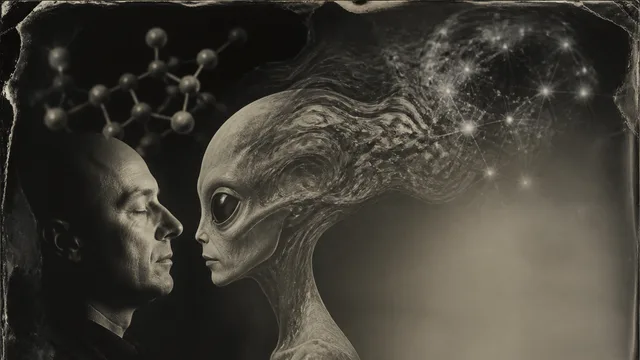
Do DMT Entities Point to Alien Consciousness?
Cognitive scientist Donald Hoffman claims DMT entities may be real alien minds. The math is real. Whether it proves anything about consciousness is a different question.

Viking Landers and the Unsolved Mars Life Debate
Fifty years after Viking landed on Mars, one experiment's positive result remains unexplained. Here's what the science actually shows—and what we've learned since.