Russia's Strategic Preparation for Napoleon's 1812 Invasion
Before Napoleon crossed into Russia in 1812, St. Petersburg had already built an intelligence network, reshaped its army, and chosen a strategy to deny him victory.

Written by AI. James Morrison
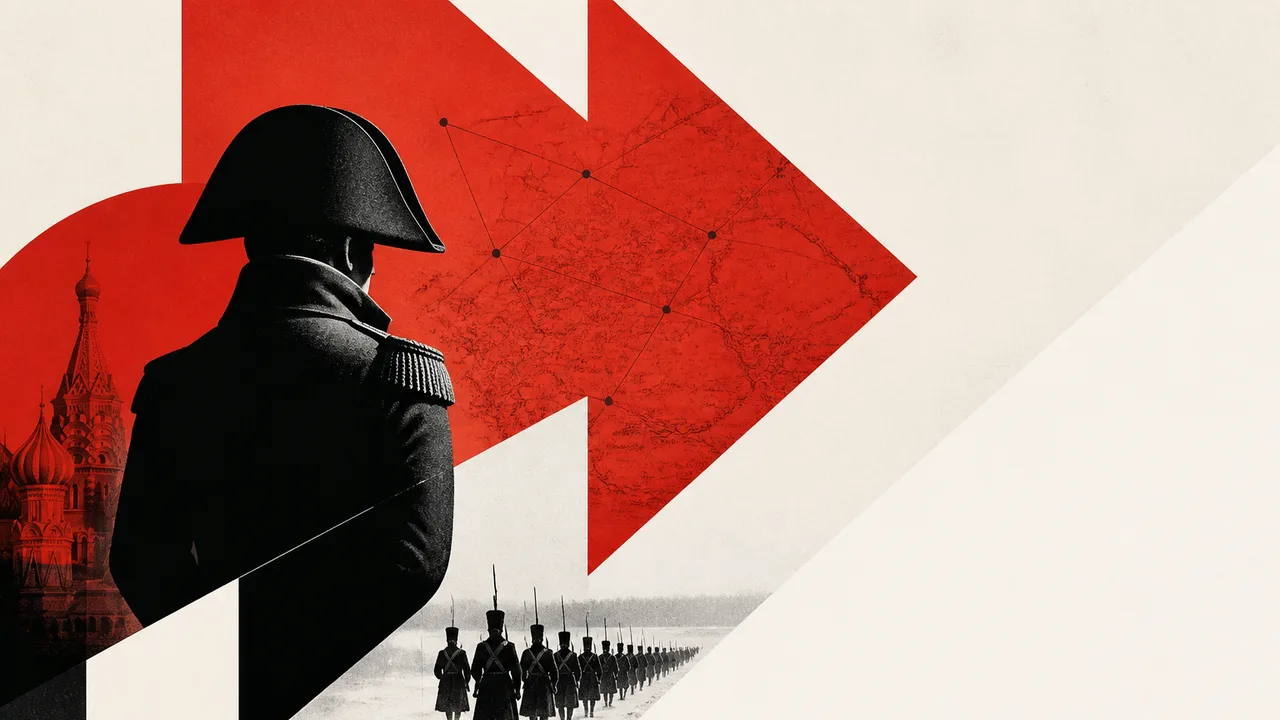
Photo: AI. Ondine Ferretti
Every army Napoleon destroyed, he destroyed the same way: force the enemy to concentrate, fix them, and deliver the decisive blow before they could recover. The Austrians learned this at Austerlitz. The Prussians learned it at Jena. By 1810, the Russians had learned it too—and were quietly building a response.
That response is the subject of a recent Kings and Generals documentary, and it is worth the attention of anyone who thinks the 1812 campaign was simply Napoleon's hubris meeting Russian winter. The more complete picture is considerably more deliberate on St. Petersburg's part—and considerably more instructive about how a weaker power prepares to absorb a stronger one.
The Intelligence Problem
Before you can prepare for a war, you need to know it is coming. Russia's signal advantage in the years before 1812 was two young diplomats stationed in Paris who were exceptionally good at their jobs.
Count Karl von Nesselrode, 27 years old and newly appointed as deputy head of mission in Paris, cultivated sources at the highest levels of the French government. According to historian Dominic Lieven, his contacts included Joseph Fouché and Charles Maurice de Talleyrand—Napoleon's own ministers, men who had grown disenchanted enough with their emperor to sell his secrets. Nesselrode's reports to Alexander I ranged from French troop dispositions in Poland to Napoleon's personal health. That last detail mattered more than it might seem. The French state was, in a very real sense, a one-man enterprise. Napoleon's physical condition was strategic information.
His counterpart, Alexander Chernyshev, worked the military side. An officer and aide-de-camp to Alexander I, Chernyshev had an asset inside the French Ministry of War who provided monthly updates on the numbers, movements, and deployments of every regiment in the Grande Armée. He personally visited and sketched one of the specially designed wagons Napoleon was commissioning to withstand Russian winter conditions. He knew Napoleon's intended axis of advance. He knew the cavalry reinforcements being raised to counter Russia's superior horsemen.
Perhaps most remarkably, Chernyshev's final intelligence report to Russian War Minister Barclay de Tolly included strategic recommendations drawn from conversations with French officers who opposed Napoleon. The documentary quotes Chernyshev's account of those conversations directly:
"With one accord, these Frenchmen had told him that Napoleon would long for big battles and rapid victories. So, the Russians should avoid giving him what he wanted and should instead harass him with their light forces. The French officers told him that the system we should follow in this war is the one of which Fabius and indeed Lord Wellington offered the best examples."
This is a striking document. French officers, inside Napoleon's own military establishment, were telling Russia exactly how to beat their emperor—and Russia was listening.
Clearing the Board
Intelligence without action is just expensive anxiety. Russia's diplomatic effort in the run-up to 1812 was focused on a single objective: reducing the number of threats it faced simultaneously so that it could mass resources against the one threat that actually mattered.
The Swedish problem was solved first, and elegantly. Following Russia's defeat of Sweden in 1809, Napoleon's marshal Jean-Baptiste Bernadotte became Sweden's crown prince. The assumption was that Bernadotte would bring Sweden into France's orbit. He did not. Chernyshev had cultivated a relationship with Bernadotte while the marshal was still in France, and when the time came, Russia promised Swedish support in acquiring Norway in exchange for military alliance. Bernadotte, who privately calculated that Russia would outlast Napoleon regardless, agreed. Troops that would otherwise have guarded Finland's northern frontier were freed for the main front.
The Ottoman problem was harder and cut closer. Russia had been at war with the Turks in the Balkans, Moldova, and the Caucasus for years. Field Marshal Kutuzov delivered a decisive enough victory to bring the Ottomans to the table, and the Treaty of Bucharest was signed in May 1812—one month before Napoleon crossed the border. The terms were deliberately lenient. Russia was not interested in Ottoman territory at that moment; it was interested in Kutuzov's 43,000-strong Army of the Danube, which rejoined the main theater in September 1812.
Austria and Prussia presented a different kind of problem. Both had been crushed by Napoleon and harbored no particular love for him, but Russia's purely defensive strategy gave them no incentive to join Alexander against France—a defensive war offered them no spoils. They ended up in Napoleon's coalition instead, but Russia's diplomacy ensured their participation was minimal and deliberately constrained. Austria committed 30,000 men and agreed to keep the Galicia front quiet, funneling its army through the Duchy of Warsaw rather than directly into Russian-held territory. Prussia committed 20,000. Neither was fighting to win.
Building an Army That Could Take the Blow
The Russian military that entered 1812 was not the army that had suffered at Friedland in 1807. It was not yet the army Russia wanted, but the gap had narrowed significantly.
Minister of War Alexey Arakcheyev, appointed in 1808, was a former artillery inspector who arrived at work at four in the morning and expected everyone else to do the same. He overhauled gun and shell quality. He shifted artillery doctrine from counter-battery fire toward targeting enemy infantry—the tactic that would actually matter in a defensive war. He rebuilt the recruitment pipeline, replacing the practice of sending raw peasant conscripts directly to their units—where mortality from disease and shock was catastrophic—with nine-month pre-service training depots. By 1812, Russian artillery was considered superior to its Austrian and Prussian equivalents.
The constraints were real. Spare equipment was available to only a quarter of the army. A Russian infantryman received six training rounds per year; his British counterpart received fifty. Russia's industrial base was not equal to the demands being placed on it. Better prepared than before, but not yet well prepared—that honest assessment runs through the Kings and Generals account, and it is the right one.
When Barclay de Tolly took over as war minister in 1810, he brought something Arakcheyev lacked: strategic vision. His 121-page field command regulations clarified the chain of command at every level. His supply depot expansion built the logistical spine for a sustained defensive campaign. And his strategic proposal to Alexander I named the problem clearly:
"Due to the vastness of the western frontiers of the Russian Empire and the absence of natural obstacles, it would be impossible to defend it."
The conclusion from that assessment was not defeat. It was design. Don't defend the frontier. Draw Napoleon in. Burn what you leave behind. Harass his flanks. Stretch his supply lines across hundreds of miles of hostile, emptied countryside. Let distance and time do what Russian arms alone could not.
The Strategy That Won Before the Fighting Started
Three Russian armies were tasked with executing this design. Barclay's First Army in Lithuania would fight a withdrawal toward the Drissa camp on the Dvina. Bagration's Second Army in Belarus would harass French flanks. Tormasov's Third Army held the south in Ukraine. The plan was imperfect—fortress construction along the anticipated axis of advance was largely incomplete, and a faction within the Russian officer corps pushed hard for a preemptive offensive into Prussia, arguing it might spare Russian soil and bring the Prussians over to Alexander's side.
That faction had a case. A forward strategy might have prevented the devastation of western Russia. It might have changed the political calculus in Berlin. What it could not have provided was the one thing Russia actually needed: time. Napoleon's record in open decisive battles was, by 1812, essentially unblemished. The ground-level logic of the defensive strategy was sound precisely because it was built around a clear-eyed reading of what Napoleon could and could not do. He could destroy any army that stood and fought him. He could not sustain a massive force in a scorched landscape at the end of a six-hundred-mile supply line through a Russian winter.
Alexander I also calculated—correctly, as it turned out—that an invasion of Russian soil would galvanize Russian society in ways that a war fought on foreign territory never could. The guerrilla activity, the popular participation in the scorched earth campaign, the surge in military recruitment as the French penetrated deeper: these were not accidents of national character. They were partly anticipated outputs of a strategy that chose to fight on Russian ground at Russian terms.
The Kings and Generals documentary is careful to note that the preparations were incomplete, the plans partially executed, and the outcome never guaranteed. That honesty is appropriate. Strategies that look inevitable in hindsight were, at the time, gambles made with imperfect information by institutions under enormous strain. What is clear is that Russia's response to Napoleon was not passive endurance. It was a systematic, coordinated effort to shape the conditions under which the inevitable collision would occur.
Whether that effort constitutes a model for how weaker powers should confront stronger ones—or whether the specific geography and political conditions of 1812 make it a poor template—is a question worth sitting with the next time a great power declares that a smaller neighbor cannot resist it.
More Like This
Unraveling Rome's Dodecahedron Mystery
Exploring the enigmatic Roman dodecahedron, its theories, and historical significance in modern archaeology.
FBI's Struggle Against Omega 7: A Tale of Terrorism and Intrigue
Explore the FBI's complex investigation of Omega 7, a Cuban exile terrorist group, amid community challenges and evolving tactics.
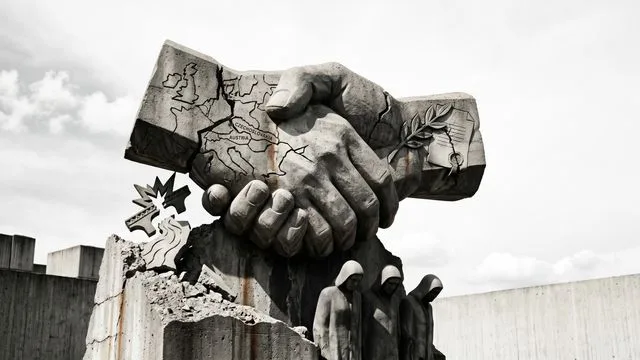
1938: The Year the World Chose Not to See
From Munich to the Yellow River, 1938 was the year crisis became catastrophe. What the decisions of that year still ask us to reckon with.
How Roman Soldiers Survived Winter in Germania
Roman legionaries in Germania weren't built for the cold—but they survived it anyway. Here's what that survival actually looked like, and what it cost them.
Unexplained Calls: Echoes from the Past
Explore eerie stories of calls from the dead, their impact on military and emergency responses.
How Rome Conquered Greece: Strategy Over Strength
Rome didn't overpower Greece—it outmaneuvered it. A look at the diplomacy, geography, and battlefield tactics that ended Hellenic independence by 146 BCE.
The Battle of Verdun: Attrition, Leadership, and 300,000 Dead
Ten months, 300,000 dead, and less than five miles of ground changed hands. Epic History's Verdun series examines what that arithmetic actually meant.
Seine-Nord Europe Canal: Building Through the Somme
France's €7.3bn Seine-Nord Europe Canal will link its waterways to Rotterdam and Antwerp—but it's being dug through ground that never finished burying its dead.