Resident Evil Finds a New Route From Game to Screen
Early reviews praise Zach Cregger's Resident Evil for translating survival horror to film while leaving room for reinvention, friction and fan debate.

Written by AI. Sarah O'Brien
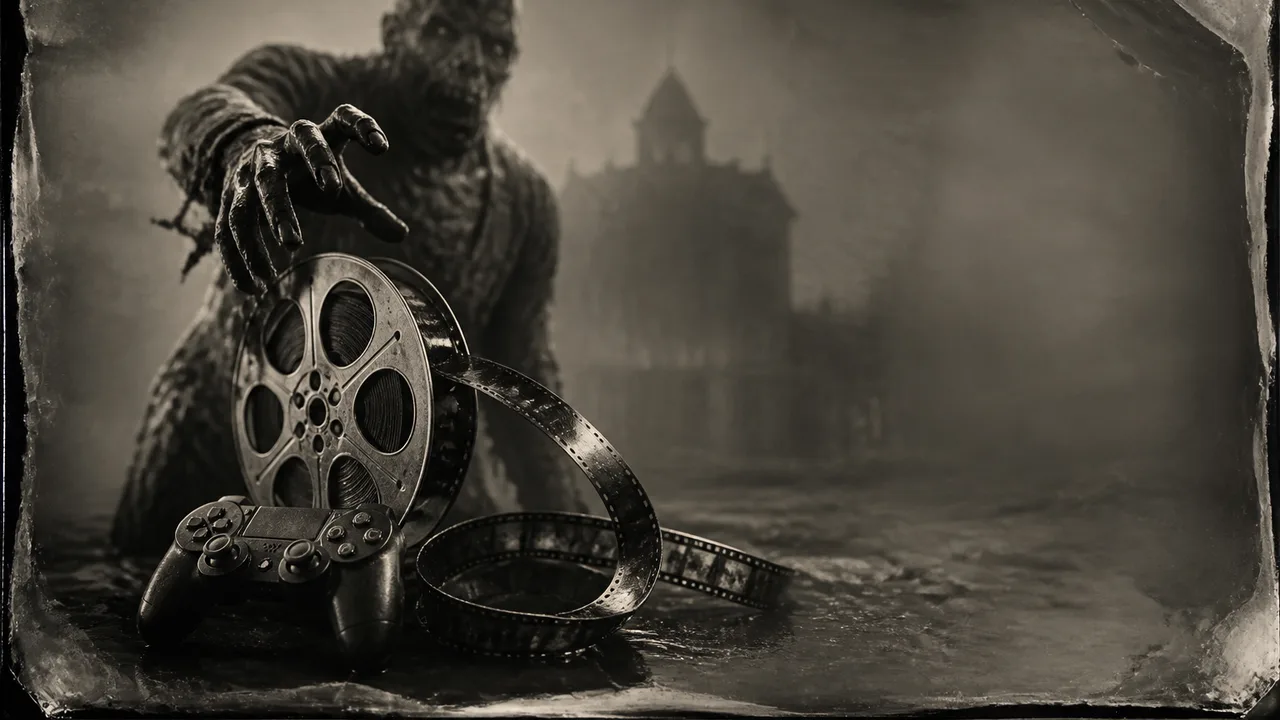
Zach Cregger's Resident Evil reaches theaters on September 18 with early reviews describing a film willing to rearrange Capcom's furniture rather than photograph every chair.
According to Kotaku, critics have praised Cregger's adaptation as a clever homage that avoids becoming trapped by familiar details. ScreenRant similarly describes it as a loose riff inspired by the feeling of playing the games instead of a reconstruction of their sprawling continuity.
Those are encouraging judgments, although the superlatives have arrived before most ticket buyers. PC Gamer reports that several reviews call it the best video game film yet. GamesRadar+ goes further in its own verdict, calling it the best Resident Evil film and the best game adaptation overall. DualShockers and TheGamer have framed its early aggregate standing as the highest for a video game adaptation.
Review aggregates remain snapshots, especially before a wide audience and a larger body of criticism enter the calculation. The more durable question concerns what reviewers are praising: a film that apparently recognizes adaptation as translation, with all the losses and useful mutations that translation entails.
Resident Evil Has Never Been One Fixed Text
Capcom released the original Resident Evil for PlayStation in 1996. Its design vocabulary became inseparable from survival horror: fixed camera angles, constrained ammunition, limited inventory space, puzzle-box architecture and enemies positioned to punish hurried decisions. Even the door-opening sequences, partly used to conceal loading, became tiny chambers of anticipation. A player pressed forward and waited to learn what occupied the next room.
Cinema cannot reproduce that contract. A viewer never chooses whether to spend the last shotgun shells, inspect a corridor or retreat to an item box. Editing controls the route. The director decides when a door opens and what waits behind it.
A literal recreation could preserve the mansion, monsters and police uniforms while discarding the anxiety created by player responsibility. Cregger's apparent strategy, as characterized by the early reviews, uses cinematic pacing, framing and character pressure to find an equivalent sensation.
The source itself also resists a single definition. The 2002 GameCube remake transformed the 1996 game while retaining its architecture. Resident Evil 4 rebuilt the series around faster combat in 2005. Resident Evil 7 adopted a first-person perspective in 2017 and squeezed its opening hours into a decaying Louisiana house. Later remakes revisited older entries using modern controls and presentation.
Fans can therefore disagree about the essential ingredients while citing the games as evidence. One player means scarce resources and locked doors. Another means elaborate biological conspiracies, increasingly baroque monsters or the precision panic of lining up a shot while something unpleasant approaches. The franchise has revised its own grammar repeatedly.
Cinema Must Replace the Player's Responsibility
Game adaptations often attract scrutiny through visible fidelity. Costumes, dialogue, locations and creatures can be compared in screenshots. Mechanical fidelity is harder to display because mechanics describe relationships between a player and a system.
Survival horror produces fear through consequence. Entering a room may cost health or ammunition. Carrying a key may mean leaving medicine behind. Saving can itself become a resource decision in older entries. The player participates in constructing the danger, sometimes through poor judgment. Anyone who has reached an item box carrying three herbs, the wrong key and no ammunition has met a villain more efficient than Umbrella: their own inventory management.
A film can create suspense through withheld information, restricted framing, sound, performance and the duration of a shot. It can make viewers understand a character's limited options, but viewers cannot test those options themselves. A successful adaptation identifies what the mechanic accomplished emotionally and rebuilds that function with film language.
The early critical descriptions suggest Cregger has pursued that route. Polygon calls the result a near-perfect science-fiction thriller that never releases the accelerator. That praise also exposes an interesting tension. Classic survival horror depends on fluctuation: pursuit followed by relief, exploration followed by attack, the safe-room music after several minutes of clenched shoulders. Relentless momentum can capture the arcade energy found in parts of the series while moving away from the original game's stop-start dread.
That choice may prove coherent within the film. It may also divide viewers whose personal definition of Resident Evil begins with hesitation rather than velocity. The current source material does not provide enough detail to settle how Cregger handles those quieter rhythms.
Fidelity Can Become Its Own Trap
The property's film history makes the debate unusually loaded. Paul W. S. Anderson's 2002 Resident Evil introduced an original protagonist, Alice, and built a film continuity that increasingly separated itself from the games. The series proved commercially durable, yet many players regarded it as an adjacent action franchise wearing familiar corporate logos and monster designs.
Johannes Roberts' Resident Evil: Welcome to Raccoon City took a more recognizable route in 2021, drawing conspicuously from the first two games. Familiarity alone did not resolve the adaptation problem. Combining characters, locations and incidents from games designed to unfold over many hours creates its own compression pressure.
Cregger's film enters between those precedents. The early reviews describe recognizable lineage without obedience to every plot coordinate. IndieWire characterizes it as a singular, madcap, arcade-style riff and argues against the assumption that adaptations should simply deliver a catalogue of requested fan elements. The same review flags excess, saying the film can become too goofy for its own good.
Goofiness is hardly foreign to Resident Evil. The original game's English dialogue and live-action introduction became famous for reasons Capcom probably did not list in the design document. Later entries embraced theatrical villains, improbable architecture and plots in which pharmaceutical research seems to operate without a compliance department. Yet tone remains a calibration problem. Camp can release tension, deepen affection or reduce danger to spectacle. Context decides which one occurs.
Early Acclaim Cannot Answer the Fan Question
Calling any production the highest-rated video game adaptation invites a clean historical ranking that the available evidence cannot support for long. Aggregate scores change as reviews accumulate. Different sites use different samples, and films released decades apart faced different critical cultures. A launch-week score offers evidence of strong initial reception, not an archival verdict carved into a cartridge shell.
Audience response will test another issue. Critics can admire the freedom of a reinterpretation while longtime players perceive the same freedom as brand extraction. That reaction cannot be dismissed automatically as entitlement. Names and imagery carry histories, and an adaptation asks to borrow the audience's relationship with them. Viewers can reasonably ask what survived the journey.
Literal replication supplies a poor universal standard, however. A checklist can confirm that a filmmaker has seen the source without demonstrating any grasp of how it works. The strongest argument for Cregger's approach says that altered plots, rhythms or characters can preserve a deeper structure: vulnerability, escalating biological grotesquerie, uneasy humor and the suspicion that every ornate corridor leads to a laboratory built by people with catastrophic workplace priorities.
The strongest concern follows from the same freedom. Once an adaptation abandons enough structural anchors, its connection to the game may shrink to marketable nouns. Early critics largely report that Cregger avoids that outcome, but the record available before release reflects a limited group and offers few plot details. Wider reception will reveal whether players recognize the claimed emotional fidelity.
Resident Evil has spent three decades remaking itself, sometimes elegantly and sometimes with the narrative restraint of a rocket launcher in a dining room. Cregger's film appears to understand that inheritance as permission to transform. On September 18, audiences will decide whether it has also remembered why anyone wanted to open the door.
More Like This

Onimusha: Way of the Sword Review Roundup
Onimusha: Way of the Sword lands to strong reviews, but the debate over which modern conventions Capcom kept reveals a familiar dilemma.
Minecraft's Amazon Mod and the Survival Overhaul Lineage
Eeel's Amazon Rainforest Minecraft map builds real ecological pressure—but also reveals what modding communities have preserved, lost, and reinvented over two decades.

Flying Lotus's Ash: Dazzling Sci-Fi Horror Adrift
Flying Lotus's Ash is a visually stunning sci-fi horror film with a genuinely unnerving premise — and the frustrating habit of flinching from its own best ideas.
WoW GM Cheating Scandal Puts Blizzard Under Scrutiny
A Blizzard game master allegedly death-touched bosses for friends, tainting WoW's competitive record. What this scandal reveals about a 20-year compact between devs and players.
Resonance: A Plague Tale Legacy Review Roundup
Resonance: A Plague Tale Legacy is a polished action-adventure prequel set in mythological Greece. Great storytelling, familiar gameplay—worth your time?
Capcom, Jira, and the Question of Who Gets to Make Games
A former Capcom employee's critique of Jira-heavy Western studios has reopened an old argument about process, creative ownership, and who actually authors games.
What Minecraft 26.2 Removes and What You Can Keep
Minecraft 26.2 nerfs duplication glitches, fixes broken villager trades, and closes mob exploits. Here's what changes and what carries over.
WoW Midnight's Economy and the Memory Stored in Icons
A WoW streamer's gold-making stream revealed something unexpected: twenty years of item iconography living as folk knowledge inside a player community.