Qantas A350 Distance Record Tests Project Sunrise's Limits
Qantas's A350 set a commercial-aircraft distance record, but its 13-person test flight leaves fare, fuel and scheduling questions open for Sydney-London.

Written by AI. Tomas Reyes-Kim
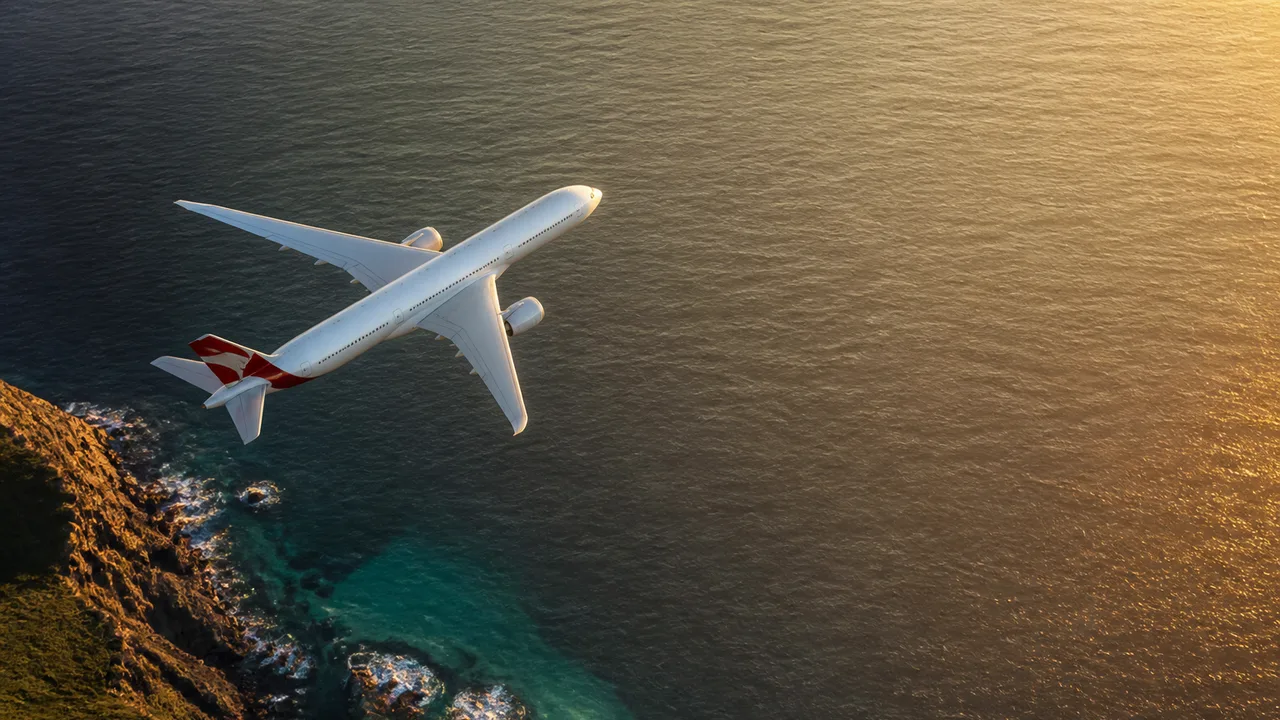
An Airbus A350-1000ULR built for Qantas flew 12,503 nautical miles from Melbourne to Toulouse in July, spending 24 hours and 24 minutes in the air. The development flight has since been recognised as a distance record for a commercial aircraft. It carried 13 people, including five pilots, and a representative of the International Aeronautical Federation was aboard to monitor the flight data.
For anyone eyeing a nonstop ticket from Sydney to London, the number to hold onto is 13. Qantas plans to sell 238 seats on that route. Flying an aircraft an enormous distance with a test crew establishes something important about its range. Filling it with paying passengers, their bags and the fuel required under varying conditions is the next assignment. Nobody got to book seat 42A on the record flight.
Qantas calls the larger undertaking Project Sunrise. The airline plans to launch nonstop Sydney–London service in October 2027, subject to aircraft certification and regulatory approvals, and Sydney–New York service in mid-2028. Its existing London flight via Singapore is set to continue under different flight numbers. That leaves travelers with a choice Qantas will have to price: pay to skip the stop, or keep the one-stop itinerary.
The Record Has an Older Sibling
In November 2005, a Boeing 777-200LR called Baby Blue 2 left Hong Kong for London the long way around, flying east over the Pacific, North America and the Atlantic. It covered 11,664 nautical miles in 22 hours and 42 minutes, Boeing said in its contemporaneous announcement. Boeing also described an in-service range of up to 9,420 nautical miles for that aircraft with 301 passengers and baggage. Its record distance and its stated passenger-service range answered different questions, even in the manufacturer’s own announcement.
The A350’s July flight went 839 nautical miles farther than Boeing’s 2005 flight. Both aircraft flew extraordinary routes for record or development purposes; neither flight was a scheduled, full-cabin service on the route it was designed to help an airline sell. Baby Blue 2 carried 35 people, while the A350 carried 13. The routes, aircraft and loads differed, so the extra miles measure the reported record distances, not an improvement in the range available to every ticket holder.
That history also explains why record categories deserve their full names. Boeing’s 2005 announcement noted that an earlier 777-200ER record remained standing in a lighter weight category despite Baby Blue 2 flying farther. A distance record for a commercial aircraft is impressive. It is a lousy substitute for a timetable or a fare quote.
A Very Long Flight Needs a Very Particular Cabin
The A350-1000ULR gets additional reach in part from a rear centre fuel tank with capacity of up to 20,900 litres, plus changes to its fuel system and structure. Those modifications are part of the aircraft developed for Project Sunrise. Airbus says the July test campaign needed a sector with a 23-hour block time for Qantas’s planned service. That target concerns the aircraft handling a long operating day, including time beyond cruising, rather than reproducing the Melbourne–Toulouse route with a cabin of vacationers.
Qantas has ordered 12 A350-1000ULRs. The planned 238-seat layout has six first-class suites, 52 business-class suites, 40 premium-economy seats and 140 economy seats. Its 98 seats above economy give Qantas more opportunities to sell a higher-priced cabin, while leaving fewer economy seats than a denser layout would. The bet still requires enough customers willing to pay for those cabins and for a nonstop journey.
That can be attractive to a passenger facing a connection, a second boarding and another stretch of airport waiting. The Singapore-stop London service remains an alternative, especially for travelers whose first question is the fare. Qantas plans to open sales for the new route in February 2027, so the price of avoiding that stop is not yet a decision travelers can calculate for Sydney–London.
Fuel complicates the airline’s calculation as well. Carrying enough for the final hours means lifting that fuel through the early ones. Stronger headwinds or a longer routing can require more fuel and leave less weight for passengers, bags or freight. More physical space for cargo does not guarantee that cargo can travel on every longest-range departure. The test flight demonstrated that this aircraft could complete its test route with its test load; the recurring passenger-and-payload calculation will happen flight by flight.
Qantas already has an example of that constraint in its own network. Its Perth–London nonstop began in 2018. Qantas’s case study says payload restrictions limited passengers and cargo before a Singapore stop was introduced in 2026 to maintain a full passenger load during airspace disruption, Airways said. Perth–London uses a Boeing 787-9, and its route, aircraft and disruption differ from the planned Sydney service. It shows the practical choice an airline can face: preserve the nonstop and restrict what goes aboard, or add a stop and carry more.
The Number on the Investor Slide
Qantas expects Project Sunrise to add about A$400 million a year in earnings before interest and tax once the program reaches scale. That is a forecast for more than new Sydney departures. It also encompasses replacing 787-9s on existing ultra-long-haul routes, redeploying those aircraft and growing freight. Reading the whole figure as projected Sydney–London profit would give one route credit for work elsewhere in the fleet.
The airline has a reason to pursue the premium. Qantas says its Perth–London nonstop earned a revenue-per-available-seat-kilometre premium above 20% over its one-stop comparator across fiscal years 2019 to 2025, Airways said. That indicates stronger route revenue per seat of capacity, but it does not establish that individual passengers paid higher fares. Sydney–London asks whether enough travelers will buy seats at the fares and frequency needed for a 238-seat aircraft on a longer, different route. Perth supplies a precedent for route revenue, not a price guarantee for Sydney.
The timetable poses its own test. Qantas plans to move its QF1 and QF2 flight numbers from the Singapore-stop London service to the new nonstop; the one-stop flights are due to become QF5 and QF6. The first A350-1000ULR is expected in April 2027, ahead of the planned October launch. The airline is preparing more than 360 pilots and 1,200 cabin crew for the new fleet. Those preparations, certification and aircraft deliveries still have to line up before QF1 can operate as planned. A record flight gets one departure and one arrival. A bookable service has to make the next one, too.
More Like This

Luxury Train Journey Across Australia: Worth the Cost?
Explore a luxurious 80-hour train journey across Australia and its opulent offerings.

Night Trains at InnoTrans 2026: Privacy and Space Redefined
Sleeper car concepts at InnoTrans 2026 promise privacy and smarter layouts, but rolling stock alone cannot fix night train economics. What to know before boarding.

HyLight's €13 Million Raise Tests Its Airship Fleet Plan
HyLight wants to grow from four inspection airships to as many as 15 operating at once. Its €13 million raise puts manufacturing, demand and costs to the test.

Qantas Sydney to New York Nonstop Tests 20-Hour Flying
Qantas plans nonstop Sydney-New York flights for 2028. What 18 to 20 hours aboard, a possible fare premium and no Auckland stop could mean.

How Four Pilots Share an 18-Hour Flight to New York
Four pilots share cockpit duties on an 18-hour New York flight. How rest, handovers and fatigue rules keep the journey covered from departure through arrival.
Qantas A350 Flies 24 Hours Nonstop: What It Means for You
A Qantas Airbus A350-1000ULR just flew Melbourne to Toulouse in 24 hours 24 minutes. Here's what that test flight record actually means for real passengers.

Labor Day Travel Costs Are Up. Here's What That Means
Flights are 21% pricier and gas is up 27% this Labor Day. Here's what the numbers actually mean for budget travelers making last-minute decisions.

Wall Street Bets on Airbnb's Structural Growth
Airbnb stock hit a four-year high in August 2026. Analysts at Bernstein say the growth is structural. Here's what the numbers actually show—and what they don't.