Qantas Sydney to New York Nonstop Tests 20-Hour Flying
Qantas plans nonstop Sydney-New York flights for 2028. What 18 to 20 hours aboard, a possible fare premium and no Auckland stop could mean.

Written by AI. Kael Maddox
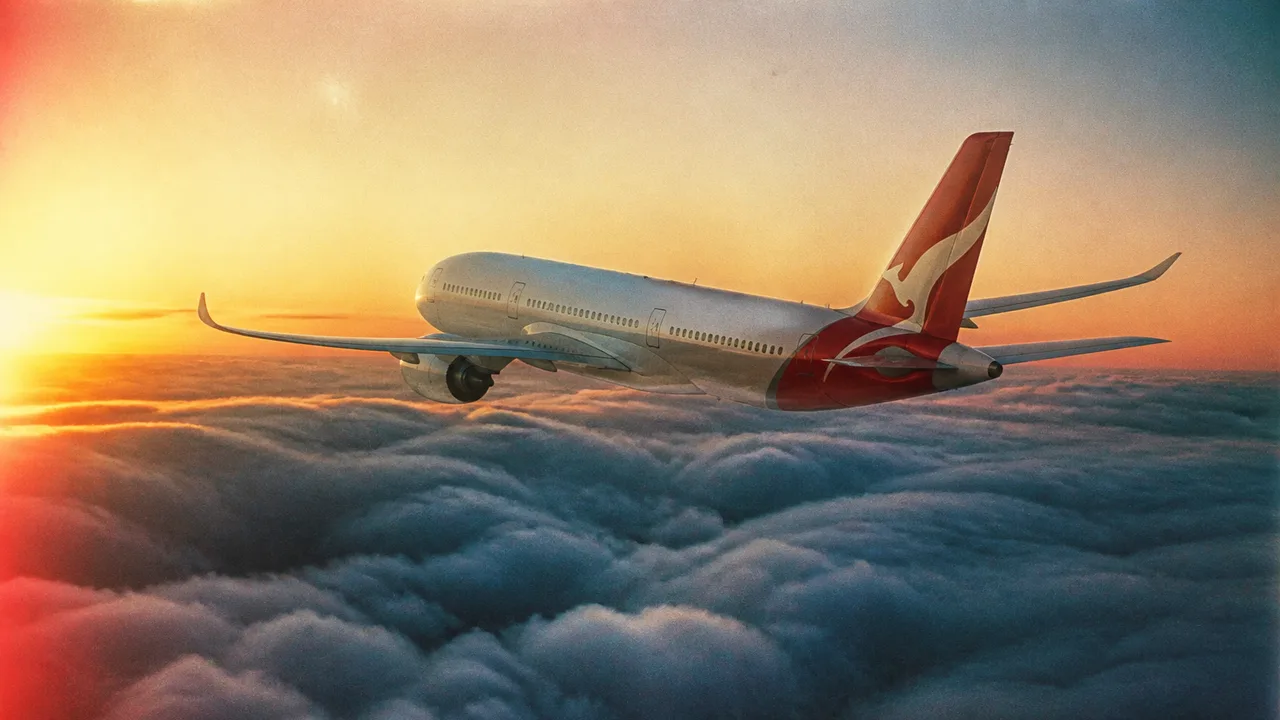
Qantas plans to put Sydney and New York on one 18-hour eastbound flight in mid-2028, leaving travelers to decide whether skipping Auckland is worth spending nearly a day inside one aircraft.
Board once, unpack the neck pillow once, avoid gambling the itinerary on a connection. Qantas Group CEO Vanessa Hudson said in the launch announcement that the nonstop should cut around three hours from the current fastest journey. That figure is the airline’s comparison, and the saving on any individual trip will depend on the connection and schedule it replaces.
Tickets are scheduled to go on sale in August 2027. The service would become the first regularly scheduled nonstop between Australia and New York, operated by a custom Airbus A350-1000ULR. The eastbound trip is expected to take around 18 hours, while westbound flights could approach 20. Direction, winds and season will affect the time.
How much money and bodily patience are those saved hours worth?
Seventy Years of Stepping Stones
Qantas has linked Sydney and New York since 1958, when its round-the-world service reached the city through Fiji, Honolulu and San Francisco. The airline now flies daily through Auckland using a Boeing 787-9. In its launch announcement, Qantas said it plans to retain that one-stop option after the nonstop begins, as detailed in the route history and launch coverage.
That history explains what has changed. The old journey depended on several stepping stones. The proposed service removes the final scheduled stop, but Qantas will keep Auckland available rather than force every passenger into the same bargain.
For a traveler, Auckland can be the place where a connection goes wrong. It can also be the place where legs straighten, shoulders drop and the cabin air stops following you around. The nonstop exchanges that pause for schedule simplicity and, if Qantas meets its forecast, roughly three fewer hours in transit compared with the fastest current option.
Project Sunrise began in 2017. Qantas considered ultra-long-range proposals from Boeing and Airbus, including a Boeing 777-8-based option, before selecting the modified A350. The resulting aircraft has an additional 20,000-liter fuel tank and is designed to fly for up to 22 hours, AirlineGeeks reports. Qantas has ordered 12.
A date on a press release cannot move an aircraft through certification. Airbus’s Vega test aircraft flew from Toulouse to Melbourne in about 19 hours in July 2026, then returned to France on a 24-hour, 23-minute flight over the United States and Canada. The first production aircraft is expected in April 2027. Delivery, ticket sales and service commencement remain subject to regulatory approvals and aircraft certification, AeroTime notes.
Mid-2028 is therefore a plan with visible hardware behind it, plus unresolved gates before passengers can board.
What 238 Seats Buy You
The Project Sunrise A350 is configured for 238 passengers across first, business, premium economy and economy. Qantas also plans a dedicated Wellbeing Zone, lighting and meals informed by its work with sleep scientists, and free Wi-Fi.
A low-density cabin buys space in broad strokes. Fewer seats leave room for larger premium cabins and the Wellbeing Zone. The benefit becomes less abstract around hour 16, when standing somewhere other than the aisle beside your own row may feel like a small jailbreak.
Space elsewhere in the aircraft does not guarantee sleep in an economy seat. Lighting can cue bedtime, and meal timing can stop the cabin crew from serving dinner when your body believes breakfast is overdue. Neither intervention lengthens the distance between your hips and the armrests. The Wellbeing Zone could offer useful relief, although its value will depend on how access works when much of the cabin wants to move at once.
The layout also exposes Qantas’s commercial wager. A plane carrying only 238 passengers has fewer seats from which to recover the cost of fuel, crew and aircraft time than a denser configuration would. Its large premium footprint suggests that higher fares are expected to help carry the route. That is an inference from the cabin and range, not evidence that the service will be profitable. Public operating-cost, load-factor and cabin-revenue forecasts are unavailable.
One Mile at a Time reports that Qantas hopes to charge about 20% more than connecting itineraries. Live fares may depart sharply from that target by cabin, date and demand. Travelers will have a useful comparison only when the nonstop and Auckland options appear beside each other on the same booking screen.
Qantas says demand for its New York services has nearly doubled since 2023. The airline has not supplied the underlying passenger totals or fare data in the reporting cited here. Growth can support more capacity, but it does not show how many customers will pay extra to eliminate the stop.
Singapore Offers a Comparison, with Limits
Singapore Airlines currently operates the world’s longest flight between JFK and Singapore, a trip that can top 19 hours. It provides evidence that travelers will book this much time in the air. Its cabin avoids the hardest part of Qantas’s experiment: Singapore Airlines operates the route with business and premium economy, while Qantas plans to sell standard economy too.
Hudson pointed to another precedent in a CNBC interview. Qantas’s Perth to London service lasts more than 17 hours, and Hudson said the airline had learned that “there is absolutely a customer who wants this and is prepared to pay a premium for it.” She linked that willingness to travelers wanting to avoid connections.
Perth to London supports the premise that some passengers will pay to stay aboard. Sydney to New York pushes it further, potentially adding two or three hours and offering a standard-economy cabin that Singapore’s comparable marathon does not. The precedents establish demand for ultra-long-haul travel, but neither reveals how broad the market will be for this route at Qantas’s eventual prices.
By hour 19, two extra inches of pitch, a well-timed meal or a walk to the Wellbeing Zone will carry more weight than they did at departure. So will the absence of a terminal where you could have walked for half an hour. The tradeoff changes with the person: a short business trip rewards saved time, while a poor sleeper may value the break more than the stopwatch.
The Booking Screen Will Settle the Argument
The nonstop has a strong case for tight schedules and anyone who hates handing an itinerary to a connecting airport. One takeoff and one landing remove a moving part, while Qantas’s claimed time saving could preserve several hours at the destination.
The Auckland service keeps another choice alive. It may offer a lower fare, different award availability or simply a chance to get off the aircraft. Keeping both services will let travelers express what they value with actual bookings rather than survey answers or launch-party enthusiasm.
Early buyers will need to compare the final departure times, total journey duration and fare gap, then check whether aircraft certification and delivery remain on schedule. An advertised 18-hour eastbound journey says little about whether a particular traveler can sleep through six of those hours or none. A proposed 20% premium says even less until Qantas publishes fares in August 2027.
Project Sunrise can remove the airport in the middle of Sydney and New York. It cannot remove the distance. Qantas’s test begins when people in economy see the price, picture hour 19 and decide whether Auckland looks like an obstacle or a mercy.
More Like This
Qantas A350 Flies 24 Hours Nonstop: What It Means for You
A Qantas Airbus A350-1000ULR just flew Melbourne to Toulouse in 24 hours 24 minutes. Here's what that test flight record actually means for real passengers.

What Experienced Cruisers Know Before They Board
Professor Melissa's 14-minute cruise guide distills hard-won tips on packing, pricing, seasickness, and gratuities that first-timers rarely hear before embarkation day.

The World's Longest Domestic Flights, Explained
From Boston to Honolulu to Paris to Réunion, the world's longest domestic flights reveal how borders, customs zones, and sovereignty really work.