HyLight's €13 Million Raise Tests Its Airship Fleet Plan
HyLight wants to grow from four inspection airships to as many as 15 operating at once. Its €13 million raise puts manufacturing, demand and costs to the test.

Written by AI. Alex Volkov
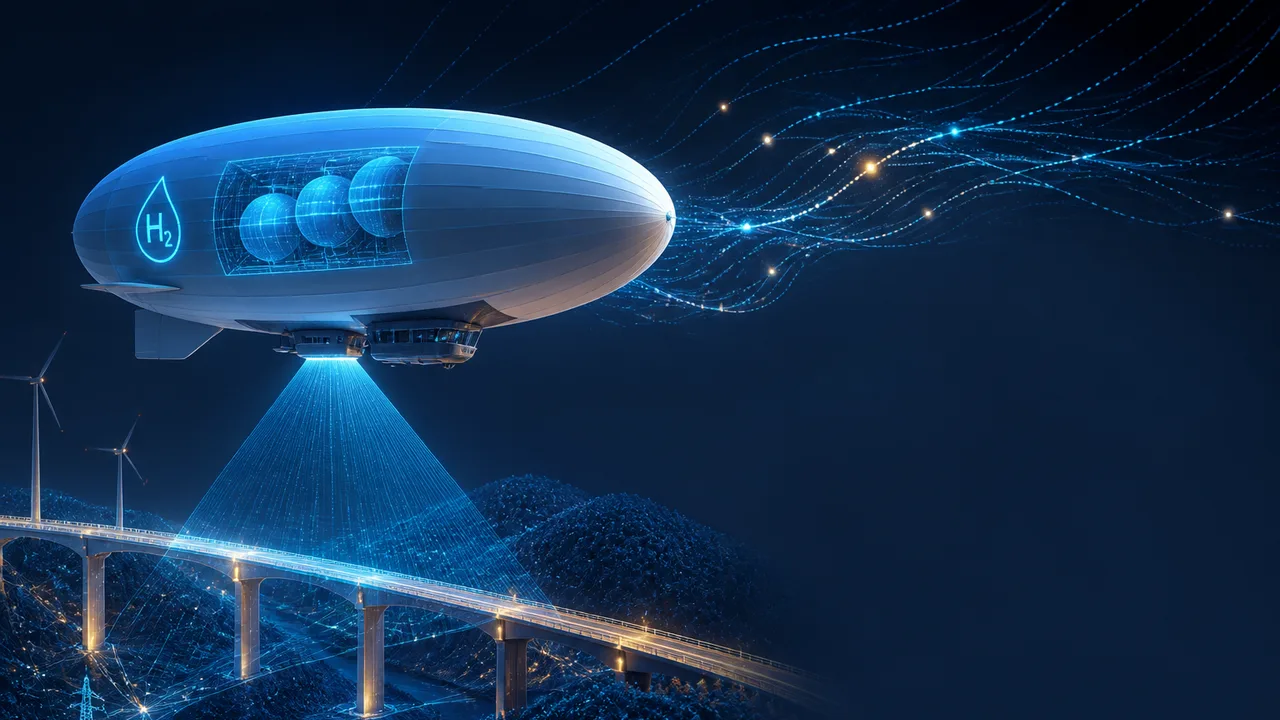
HyLight has raised €13 million to expand a fleet of hydrogen-powered airships that inspect power lines, pipelines and railways. The French startup says it operates four HyLighters today and aims to have as many as 15 operating simultaneously in 2027. That target gives the round a sharper meaning than the usual promise to “scale”: HyLight has to build more aircraft, keep them flying on paid jobs and turn their sensor data into something maintenance crews can use.
Rubio Impact Ventures, DRW and Teampact Ventures joined the round, alongside existing investors Y Combinator and Ring Capital. HyLight plans to recruit 50 people across engineering, AI and data, operations, regulatory affairs and business development. It says a new production facility is online and wants to expand commercially into Germany and the Netherlands. These are plans for a manufacturer, flight operator and software business rolled into one. Each part has to work on the same customer schedule.
From Prototype to Inspection Contract
Founded in 2022, HyLight began by developing its aircraft. It now has contracts with French infrastructure operators, including Enedis, NaTran, Téréga, SNCF Réseau and VINCI. The company had moved from product development into the harder work of manufacturing, recruitment, controlling costs and running operations, co-founder and CEO Martin Bocken told Tech.eu. “When you start from scratch, you think the biggest challenge is building the product. Actually, that's only the beginning.”
That history changes how to read this financing. A prototype can demonstrate that an aircraft flies; a commercial inspection has to cover the assigned route, collect usable information and deliver it in a form the customer can act on. HyLight has cleared at least some of that second hurdle by securing contracts. Its aircraft completed a 350-kilometre inspection mission and covered almost 3,000 kilometres of infrastructure in September, Bocken said. Those are company-reported operating figures, rather than measures of how often each aircraft flies or what each job earns.
HyLight’s proposed advantage is a combination of endurance and sensors. The company describes a 12-metre aircraft powered electrically by hydrogen, able to fly for up to ten hours while carrying cameras, LiDAR or methane detectors. It says the aircraft can fly beyond visual line of sight over critical infrastructure. A long flight could make it attractive on corridors where a visual-line-of-sight drone crew would need to move and relaunch repeatedly; crews with beyond-visual-line-of-sight approval can cover longer stretches without doing so. The data product is part of the sale too: identifying a defect and giving a maintenance team its location has more value than handing over a large folder of images.
The company’s four-to-15 ambition makes scheduling as consequential as aircraft production. More airships require trained operators, maintenance capacity, permitted flights and customers with routes ready to inspect. If any one of those lags, the additional aircraft may spend time idle; if demand arrives faster than production and staffing, HyLight may struggle to serve it. That is a business inference from its integrated model and hiring plan.
The hiring list shows how many jobs sit between a completed airship and a completed inspection. An engineering team can work on the aircraft while operations organizes flights and data staff turn sensor output into defect records. Business development has to secure routes for that capacity. Hiring across all those functions could help HyLight keep the pieces aligned, but the planned headcount alone says little about how many paid missions the fleet can deliver. A customer buys an inspection result, not a place in the production queue.
The Competing Aircraft Already Have Jobs
HyLight is entering a market where buyers can already choose among crewed helicopters, conventional drones and ground inspection. Those methods solve different problems. In a 40-kilometre transmission-patrol example, Alberta inspection provider UAV Imaging puts a helicopter job at about $6,500 and four hours including transit, versus about $2,800 and two field days for a drone. Its example gives the drone more detailed, tagged imagery; the helicopter finishes sooner. Those provider estimates describe a job in Alberta, not a matched price test of HyLight in Europe.
A power-line inspection guide from SPH Engineering, which sells drone workflow products, describes another split: corridor surveys prioritize continuous coverage, while close inspection of individual structures needs multiple camera angles. Its guide places foot patrols on short accessible routes, drones across many middle-distance jobs and helicopters on some very long corridors.
An infrastructure buyer could therefore compare HyLight with a helicopter on kilometres completed within a time window, and with a drone on the detail and usefulness of each defect record. A short, dense route may favor close-up drone work. A long corridor may reward endurance. A storm-damage sweep may put speed first. HyLight’s case is strongest where one flight can cover a long route and produce the inspection detail the buyer needs. That is a narrower, more testable proposition than replacing helicopters everywhere.
The repeat visit adds another test. SPH Engineering describes the value of flying comparable routes each inspection cycle so teams can compare an asset’s condition over time. HyLight proposes to identify and locate defects in its flight data. For a network operator, the useful question is whether successive HyLight inspections produce records that maintenance teams can compare and act on. Covering more kilometres would then help the customer manage a network, rather than simply generate more images.
For the same reason, one 350-kilometre mission should not be treated as the economics of a fleet. A buyer would want to know the all-in price for a comparable route and deliverable, including deployment and data processing. An investor would also want repeat-contract volume, completed inspections per aircraft and the costs of building and operating each HyLighter. Customer-level revenue, repeat-work rates, fleet utilization and matched mission costs would show whether adding aircraft improves the business’s returns. HyLight’s contracts and reported flight distances establish commercial activity without answering that question.
There is a plausible reason to fund the expansion before every number is tidy. Infrastructure operators with extensive networks may value an inspection service that combines long flights with defect detection, and HyLight’s existing contracts give it places to refine that service. Building aircraft and staffing operations before demand is fully predictable also puts pressure on cash. A slower, customer-funded expansion could reduce that exposure but might leave jobs unserved if customers want more routes inspected sooner. The €13 million gives HyLight room to make that choice at a larger scale; it does not choose correctly on the company’s behalf.
For founders and employees, the financing headline also leaves a separate question about equity. If shares in a round carry a liquidation preference, a sale can pay the investor its agreed priority amount before common shareholders receive the remainder. A participating preference could give that investor a share of the remainder as well. The €13 million round amount and the names of its investors cannot tell an employee what their options would return at an exit; that calculation depends on the actual share rights, ownership and sale price.
HyLight’s next useful milestone will be a repeatable inspection job, priced and delivered at a cost customers will keep paying, across enough aircraft to support the fleet it plans to build. An airship can cover a corridor in a day. The business has to cover it again when the customer calls.
More Like This

Apple's Trade Secret Lawsuit Against OpenAI, Unpacked
Apple is suing OpenAI over alleged hardware trade secret theft. Here's what the complaint actually says — and what it reveals about OpenAI's hardware ambitions.

Tech Workers Choose Early Retirement Over AI Adaptation
A wave of veteran tech workers is choosing early retirement over AI-driven workplace change. What their exit reveals about the industry's talent calculus.