Tech Workers Choose Early Retirement Over AI Adaptation
A wave of veteran tech workers is choosing early retirement over AI-driven workplace change. What their exit reveals about the industry's talent calculus.

Written by AI. Alex Volkov

There's a particular kind of exhaustion that doesn't show up in a performance review. It's the fatigue of being perpetually told that everything you know how to do is about to be done differently—and that your job is to be enthusiastic about it.
That's the context behind a trend that's been surfacing in the business press this summer: veteran tech workers, many of them with decades of domain expertise, are choosing to leave the workforce early rather than reckon with yet another wave of forced transformation. This time, the wave is AI. And for a meaningful cohort of experienced workers, the calculation has shifted. The job isn't worth what it costs anymore.
Fortune reported on July 12 that a growing number of tech workers are opting for early retirement specifically because they don't want to engage with AI-related workplace changes. Retirement experts cited in the piece noted that some veteran employees feel certain they don't want to engage with the new wave of technology—and are resolving that frustration not through protest or negotiation, but by simply walking out.
The Spokesman-Review reported on the same phenomenon a few weeks earlier, putting a more textured face on it: workers who are demoralized or burnt out, skeptical about AI, worried about ageism in hiring, or just ready to reclaim time for family, hobbies, or themselves. The retirement impulse here isn't monolithic. It's a convergence of pressures—and AI is the accelerant, not necessarily the sole cause.
The Generational Gap in AI Adoption Is Real
The generational split in AI familiarity matters here. Business Insider reported that white-collar baby boomers are facing a genuine dilemma: adapt to AI tools being folded into their workflows, or exit. Some have opted for early retirement rather than holding on and waiting for their roles to be restructured around them.
That's not irrationality—that's a reasonable read of incentives. If you've spent thirty years building expertise in a domain, and management is now communicating that the new baseline skill is proficiency with a set of AI tools you've never touched, the implicit message isn't always "we'll help you learn." Sometimes it's closer to "we'll see if you can keep up."
AOL Finance flagged the power dynamic plainly: older workers may have their careers cut short by AI, and for workers who've spent decades becoming excellent at their jobs, adapting to a major structural change may simply feel like too steep an ask at this stage of the game.
This isn't the first time tech has eaten its own institutional memory. The industry has a documented habit of treating experience as a liability past a certain point. What's different now is that AI is giving companies a new vocabulary for executing that preference—"skills gap," "AI readiness," "future-proofing"—that sounds neutral but often functions as pressure on the exact workers who have the most institutional knowledge to lose.
What "Forced to Use AI" Actually Means
Moneywise covered the legal dimension in a piece that brought in employment attorneys directly: yes, your employer can legally require you to use AI tools as part of your job. This sits within the same broader employment-at-will framework that, as Moneywise has reported elsewhere, allows employers broad latitude over the terms of employment in most states.
For workers who find that requirement professionally objectionable—whether for reasons of skepticism, principle, or simple unfamiliarity—the options are limited. You can comply, you can push back and accept the consequences, or you can leave. For workers who are financially positioned to exit and close to conventional retirement age anyway, the third option becomes increasingly rational.
The framing of "AI fears" that's circulating in coverage of this trend is doing some work worth examining. Fear implies irrationality—a panic response to something that doesn't warrant it. The Spokesman-Review's reporting paints a more complicated picture: some of these workers are skeptical about AI, which is a different thing entirely. Skepticism is an epistemically appropriate response to a technology that has been marketed with extraordinary aggression and that has, in many enterprise contexts, underdelivered against its hype.
Moneycontrol summarized the Fortune reporting this way: retirement experts noted that some veteran employees are choosing exit over adaptation. That's worth reading carefully. These aren't workers who can't adapt—they're workers who've done the math on whether adapting is worth it, and concluded it isn't.
The Talent Loss Companies Aren't Accounting For
Here's the part that should be concentrating minds in HR departments, and mostly isn't: the workers most likely to exit over AI mandates are the ones with the deepest institutional knowledge. The thirty-year veteran who built systems that are still running. The senior engineer who knows where all the bodies are buried in a codebase. The analyst who can look at a model's output and immediately sense when it's drifting from reality—because they spent years building intuition that no onboarding program can transfer.
When those workers leave, that knowledge goes with them. Not just to a competitor—out of the workforce entirely.
There's a structural irony here that the industry should sit with. Companies are accelerating AI adoption partly on the premise that it reduces dependence on any individual worker's expertise. But the workers most capable of identifying when AI tools are producing garbage outputs are precisely the ones with deep domain expertise—the same workers the AI mandate is pushing toward the exit. You don't get to automate institutional judgment out of your workforce and then wonder why your AI outputs lack quality control.
The talent pipeline problem compounds this. Business Insider noted that some older workers are waiting to see if their roles get restructured before deciding to leave. That waiting room dynamic creates its own drag—neither the company nor the employee is fully committed, and in a high-stakes transition, that ambiguity is expensive.
The Question the Industry Keeps Avoiding
Buried in the coverage of early retirements is a question that rarely gets asked directly: what obligation, if any, does an employer have to a worker who has performed well for decades when the company's strategic priorities shift underneath them?
The legal answer is clear—in most U.S. states, very little. The economic answer is more interesting. Losing experienced workers to early retirement isn't free. It shows up in degraded institutional knowledge, elevated training costs for replacement hires, and a loss of the informal expertise that keeps operations from quietly falling apart. The cost is real; it's just diffuse enough that it rarely appears on anyone's P&L in a way that forces accountability.
What tech companies are navigating right now is a genuine tension between transformation speed and institutional continuity. Some workers will adapt and thrive with AI tools. Some will adapt reluctantly and do fine. And some—a non-trivial number, based on the reporting—will look at the ask, look at their retirement accounts, and decide that thirty years is enough.
The industry tends to narrate that last group as people who couldn't keep up. The more honest version might be: people who decided the game had changed in a way that wasn't worth playing anymore. Whether companies learn to see the difference—and whether that changes how they manage the transition—is the open question the current wave of retirements is quietly forcing.
More Like This
What Companies Learn When They Fire All Their Managers
Three companies tried eliminating management layers with AI. The experiment revealed what you actually lose when you flatten the org chart.

Supreme Court Blocks Trump's Bid to Fire Fed's Lisa Cook
The Supreme Court's 5-4 ruling blocking Trump's firing of Fed Governor Lisa Cook is a win for central bank independence—but a narrow, provisional one.

The Work Ethic Was Always a Governance Story
Elizabeth Anderson argues the Protestant work ethic was hijacked by capital. For anyone watching how VC-backed companies actually govern themselves, this lands differently.

Malcolm Gladwell's Success Rules, Audited
Malcolm Gladwell's pond theory, mentor myth, and coddling critique — stress-tested against the actual startup ecosystem that either proves or buries his claims.
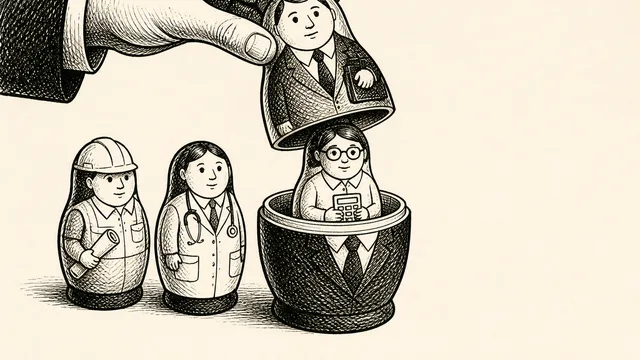
How to Hire for Roles You've Never Done
Ryan Deiss paid a $200K CFO who was really a bookkeeper. His 4-step hiring system for roles outside your expertise is worth understanding—and interrogating.

Five Ways AI Can End Your Career at Work
Shadow AI, hallucination laundering, zombie agents—IBM's Martin Keen maps the AI workplace risks that have already cost people their jobs. Here's what they actually mean.
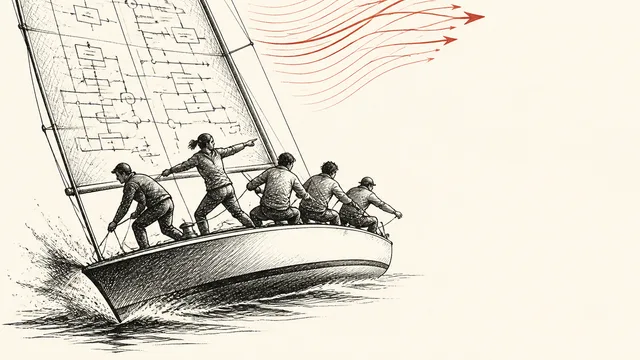
How AI-Native Companies Ship Faster Than Everyone Else
Nate B Jones argues the speed gap between AI-native teams and everyone else isn't about better models—it's about what they've moved into code.

UK Banks Are Failing Vulnerable Customers
UK regulators say major banks are failing homeless and financially distressed customers. The fintech "inclusion" pitch may be making things worse, not better.