Night Trains at InnoTrans 2026: Privacy and Space Redefined
Sleeper car concepts at InnoTrans 2026 promise privacy and smarter layouts, but rolling stock alone cannot fix night train economics. What to know before boarding.

Written by AI. Priya Chandrasekaran
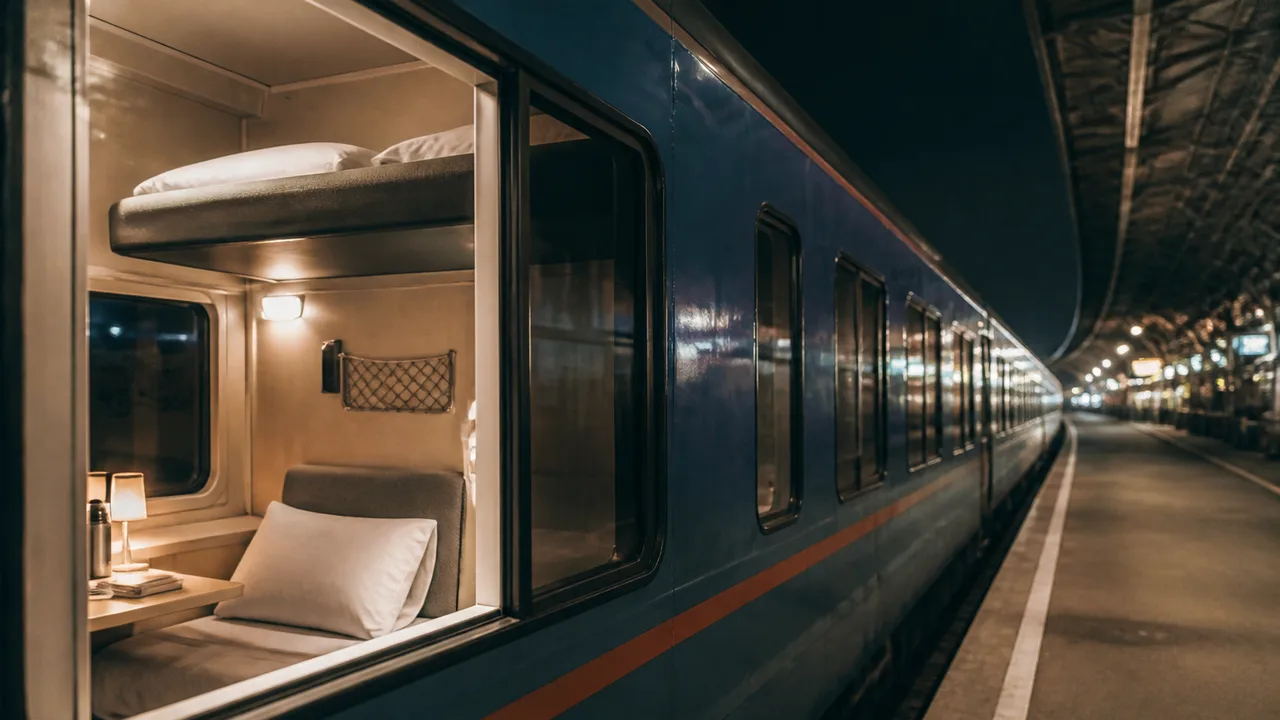
The berth width shapes everything about the night train concepts heading to Berlin this month, where manufacturers are being asked a question that has no clean answer: how do you give someone privacy, rest, and a fair price inside a steel tube moving at 200 km/h?
What is Actually on Display
InnoTrans 2026, the rail industry's largest trade show, runs in Berlin with 113 vehicles from 17 countries on site, from high-speed trains and hydrogen locomotives to new night train concepts, according to RAILTARGET. Among that lineup, several companies are presenting sleeper car designs that aim at what Railway PRO describes as one of the sector's major challenges: how to offer greater privacy and comfort within the physical limits of a carriage.
Railway Gazette frames the trend the same way: the revival is about more than restoring old routes, with manufacturers exploring layouts that use limited onboard space more efficiently and give overnight passengers flexible cabin configurations. RailBusinessDaily adds that the focus is on privacy, more efficient use of space, and new comfort concepts, with several companies showcasing what overnight travel could look like in the future.
The specific designs matter less, at this stage, than the shared premise behind them. For decades, European sleeper cars were built around maximising berth count, because berth count is what pays the bills. The new concepts concede something the old fleet never did: passengers who pay for a night on rails want a door that closes.
Why Privacy Became the Product
Six strangers, one compartment, overhead racks, and a door that locks imperfectly, if at all. My colleague has catalogued the gap between the Orient Express fantasy and the current reality on European night trains, where cramped cabins, unreliable bathrooms, and often no showers are the norm (European Night Trains: What to Realistically Expect). The concepts in Berlin are, in effect, a manufacturer's response to that catalogue.
Privacy on a train is a spatial problem, and spatial problems have costs. A private cabin with a private wet cell consumes the floor area of perhaps three or four couchette berths. Operators must then charge enough per cabin to make up the difference, which pushes the product upmarket, which raises the question of who a revived night train is actually for. A sleeper serving business travellers between capital cities is a different service, with different political meaning, from a sleeper carrying students and families overnight.
The flexible layouts being touted at InnoTrans are an attempt to straddle that divide: cabins that convert between daytime seating and night berths, family configurations alongside solo capsules, differentiated cabin types at different price points, as Railway Gazette notes. Whether a convertible cabin can be both a decent seat and a decent bed is one of the open questions the show floor will not answer. Seat cushions that work at 45 degrees rarely work at 180.
The Economics No Carriage Design Can Fix
Here is where the enthusiasm needs its brakes, and the trade press applies them. Railway Gazette is direct about it: new rolling stock alone cannot solve the problems of cross-border scheduling, track capacity, fares, or staffing. A beautiful sleeper car running on a route that exists only because a government grant says so is a showroom exhibit, not a network.
The structural challenges are worth spelling out.
Scheduling. Night trains need to depart late and arrive early, which means they need slots on congested main lines near major cities, and they need those slots on both ends of a journey that may cross two or three national infrastructure networks with different maintenance windows and different priorities.
Border friction. Cross-border operations involve locomotive changes, driver certification across jurisdictions, and security or customs procedures that can take place at 3 a.m. in a station parking loop. Every added hour of border time erodes the one advantage a night train has over a flight: it sells the night itself.
Competition. A sleeper competes with inexpensive daytime rail, buses, and short-haul flights, as Railway Gazette observes. If a budget flight costs less and takes 90 minutes, the night train has to win on something other than price or speed, which brings us straight back to cabin design.
Staffing and maintenance. Overnight service requires onboard crews, catering, cleaning, and maintenance windows that compete with the daytime timetable. Labour shortages in rail are well documented across Europe, and none of the concept cars in Berlin solves that.
Lightweight construction, which several manufacturers are pursuing, helps with energy costs and track access charges. It does not help with any of the above.
What the Revival Gets Right, and Where It Could Go Wrong
The strongest case for the night train revival is environmental and experiential at once. Short-haul aviation faces mounting political pressure in Europe, and the sleeper occupies a niche aviation cannot serve: city centre to city centre, door to door in your sleep, no 4 a.m. taxi to an out-of-town airport. If the new cabin designs deliver actual rest rather than a horizontal approximation of it, they expand the market rather than merely re-segmenting it.
The risk is nostalgia doing the work of strategy. Railway Gazette puts the condition plainly: the concepts will matter more if operators pair them with durable routes and passenger-centred service standards rather than treating the night train as a nostalgic design exercise. Europe has been here before. Sleeper services were withdrawn through the 1990s and 2000s because they lost money, and the current revival in several countries has leaned on public subsidy and political goodwill that can change with an election.
A related risk is one the trade press does not name, because it is a travel writer's observation rather than a rail economist's: the night train is being sold to two audiences at once. Investors are shown berth densities and yield projections. The public is shown renderings of warm wood and lantern light, an aesthetic borrowed from a century when sleepers carried different assumptions about class and labour. If the marketing promises the former while the fare structure delivers only the latter's price, the gap will show up in load factors within a year.
What to Watch After Berlin
Trade shows sell concepts; timetables sell trains. The questions that will determine whether this generation of sleepers survives are the ones the concept cars cannot answer. Do operators commit to routes for a decade, the minimum horizon for a service whose habituation takes years? Are fares structured so a couchette remains affordable, keeping the night train a public good and not a boutique one? Do border procedures get harmonised, or does each train still lose an hour at the frontier?
The InnoTrans exhibits, according to RailBusinessDaily, are about what comfortable overnight travel could look like. Whether it will look like that at fare levels most people can pay, on routes that last longer than a press cycle, is the question the industry will answer slowly, one timetable at a time.
The sleeper berth is still the width of a person asleep. The design challenge in Berlin is everything around it: the door, the price, the route, and the promise that a night on rails is worth more than the same night in a departure lounge.
More Like This

Istanbul's Layers: History, Faith, and Food
Rick Steves guides viewers through Istanbul's Byzantine ruins, Ottoman mosques, hammams, and tables. A food writer looks closer at what the camera catches and what it misses.

Long-Haul Flights Are Often More Comfortable Than Short Ones
Wide-body aircraft, better air quality, and the psychology of surrender make long flights surprisingly pleasant. Here's what actually drives the comfort gap.

European Night Trains: What to Realistically Expect
Before you book a European night train, read this. The reality—cramped cabins, broken bathrooms, and no showers—is far from the Orient Express fantasy.
Qantas A350 Flies 24 Hours Nonstop: What It Means for You
A Qantas Airbus A350-1000ULR just flew Melbourne to Toulouse in 24 hours 24 minutes. Here's what that test flight record actually means for real passengers.

Vodka and Pierogi: Poland's Food Identity Explained
Rick Steves and guide Tomasz Klepacki explore what Polish vodka and pierogi reveal about Polish identity, tradition, and the meaning of home-cooked food.

Grocery Tourism Is One of Travel's Fastest-Growing Trends
Travelers are flocking to foreign supermarkets as a cultural experience. Here's what the grocery tourism trend reveals about how we understand place and food.

JAL Backs JetZero's Blended Wing Body Jet Z4
Japan Airlines has partnered with startup JetZero on the Z4, a 250-seat blended wing jet promising 50% fuel savings. Here's what the design really means for passengers.

Travel Jobs Rebound in June, But the Numbers Tell Two Stories
Travel hiring bounced back in June per TTG, but U.S. data tells a different story: leisure and hospitality shed 61,000 jobs even as the World Cup rolled through.