Public Speaking Anxiety: What a Five-Step Fix Actually Offers
A five-step method for presentation anxiety is everywhere. Marcus Obi sorts the evidence from the marketing, and shares his own worst speaking moment.

Written by AI. Marcus Obi
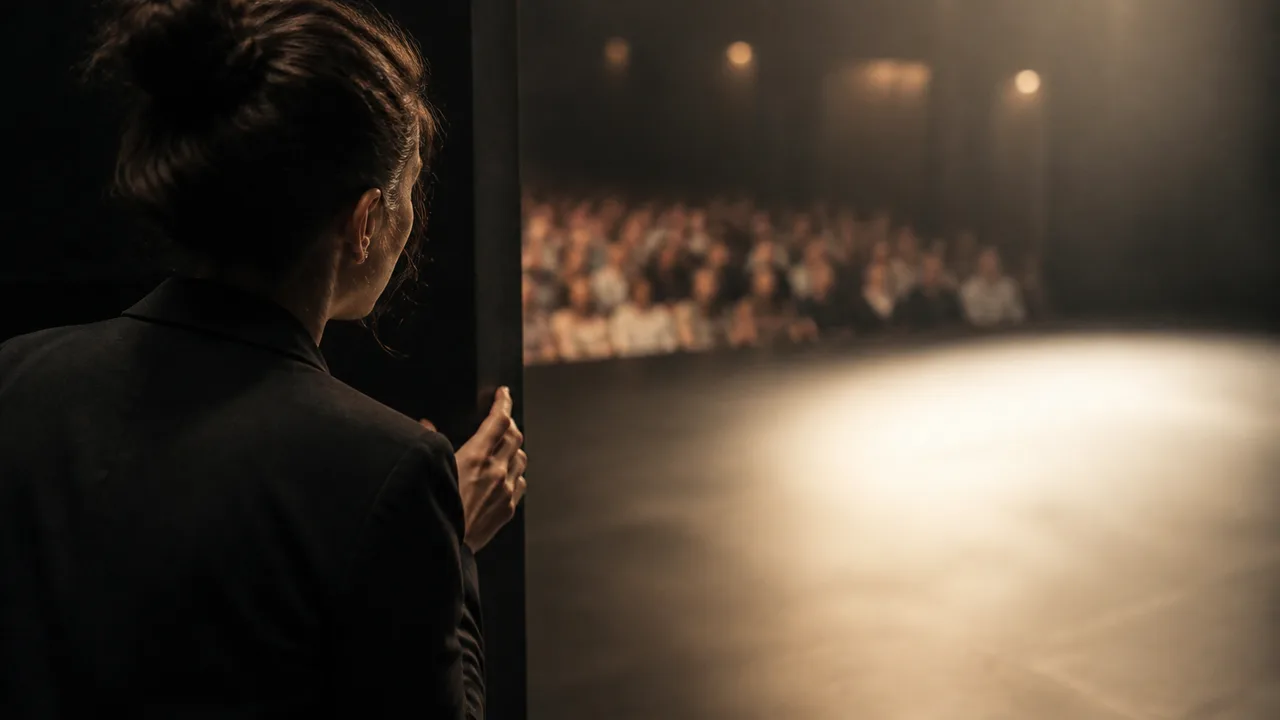
In 2019 I gave a five-minute talk at my twins' preschool fundraiser, forgot the name of the school, and called it "this wonderful place." Two hundred parents. The director of the school. I had run the place for three years at that point. My legs shook so visibly that a friend asked afterward if I'd had too much coffee, and I said yes, because that was easier than "no, my body treated a room of people holding raffle tickets like a predator."
So when a piece on presentation anxiety from a performance-psychiatry perspective crossed my desk, I read it with a personal stake. It's a Psychology Today article that argues public-speaking anxiety is common even among experienced executives, and that treating it as a character flaw usually makes it worse. The executive-patient detail comes straight from that article; I can't verify how many or how severe, and the piece doesn't say. But the framing is the interesting part: a presentation is a trainable performance, not a referendum on your competence. The target becomes preparation, not "feeling confident," which is the target nobody has ever hit on demand.
The Five Steps, and What's Under Them
The Psychology Today method combines five elements: preparation, gradual exposure, attention to physical arousal, realistic self-talk, and recovery after mistakes. Strip the numbering away and you have something familiar. These are cognitive-behavioral techniques and exposure practice, which decades of research on anxiety support. The ERIC-indexed literature on public-speaking anxiety in students covers causes and remedies in the same territory: the anxiety is well-documented, and the remedies cluster around rehearsal, gradual desensitization, and reframing rather than any single trick.
That's the strongest version of this framework. It doesn't promise nervelessness. The practical test, as the brief behind this piece puts it, is whether the method helps you rehearse under conditions resembling the real event. Rehearsing in your head fails that test; prezent.ai's guidance makes the same point about practicing out loud to internalize pacing and find your weak spots, and about preparing for questions and objections before they arrive.
The Crowded Market of Five Steps
Search for this topic and you'll find five-step everything. eNotAlone has five strategies: breathing, mindset shifts, pacing, preparation. The Moxie Institute, a communications training firm, has five proven techniques. The consistency of the underlying advice is actually reassuring; the industry has converged on roughly the same core. The packaging, though, does some selling.
Take the Moxie Institute's visualization advice. They claim that consistent short visualization sessions, 10 to 15 minutes daily, outperform irregular practice, and that you can enhance results by combining visualization with physical elements like wearing your presentation clothes. That's their marketing claim, not a finding from a peer-reviewed study, so treat it accordingly. The presentation-clothes detail does have a strange plausibility, though. My wedding suit has opinions about who I am that my sweatpants do not. But I'd want an actual study before telling my neighbor to whisper his remarks to a suit hanging on the closet door.
Then there's the AI angle: a site called speaking-club.online showed up on Hacker News this week under the honest headline "You have public speaking anxiety, so do I," offering practice partners presumably in software form. An app dispensing courage on demand is either a low-stakes rehearsal tool or a vending machine for something vending machines don't carry. Nobody has done the research yet. On the more human end, Toastmasters has spent a century making people sweat in front of six strangers on a Tuesday night before they sweat in front of sixty, and the model holds up precisely because it's boring. Exposure works even when the venue has folding chairs and lukewarm coffee.
Where the Framework Meets Its Limits
Here's the tension to sit with, and I mean tension in the plain sense: the same advice appears on both sides of a clinical line. For most people, speaking nerves are a performance problem. For some people, they're a disorder, and the distinction isn't visible from the outside. Someone canceling three weddings to avoid a toast and someone dreading a quarterly review both describe "fear of public speaking." The Psychology Today article's own caveat applies: severe panic, persistent avoidance, or anxiety bleeding into daily life warrants assessment by a qualified mental-health professional. A checklist is not an assessment, and step four of anything should not be mistaken for treatment.
The record on prevalence is thinner than the internet suggests. I found no solid figure for how many adults have diagnosable speaking anxiety in the sources for this piece, so I won't state one. What the sources do support is the milder claim: this is common, including among people who look composed, which matches the Psychology Today piece's core claim about executives.
There's also a personality question the five-step lists mostly skip. Reframing a talk as practice rather than a verdict on your worth works differently depending on who you are; we've covered this from the introvert's side before, in introverts can thrive in public speaking, and the point stands that the pressure to perform extroversion is itself a load some speakers don't need to carry. A framework that assumes everyone wants to be a keynote speaker is optimizing for the wrong person.
Knowing Your Rung
The piece of all this I'd actually hand to the trembling preschool-fundraiser version of me: figure out which rung you're on before picking a technique. Rung one, everyday nerves? Prepare out loud, rehearse under realistic conditions, breathe, recover from mistakes, and accept that your legs will shake a little. Rung two, avoidance that's shrinking your life? That's a clinician question, and the sooner you ask it, the less the avoidance compounds. The actual skill in managing presentation anxiety isn't mastering the five steps. It's knowing which rung you're on, and choosing your tool accordingly.
I still couldn't tell you the school's name that night. But I finished the talk, and the raffle made money, and nobody remembers except me and now, regrettably, you.
Marcus Obi is a parenting and family writer at Buzzrag.
Disclosure: My knowledge of raffle economics comes from firsthand observation only.
More Like This

Eckhart Tolle Says You're Not Who You Think You Are
Eckhart Tolle's 'historical self' vs 'deep eye' framework is either profound or a very elegant dodge. A parenting writer tries to figure out which.

Procrastination Is a Survival Mechanism, Not a Flaw
Researcher Itamar Shatz argues procrastination has evolutionary roots. Here's what the science says and which strategies actually help.

Handwriting Beats Typing for Learning, Studies Find
New research shows handwritten notes improve memory and recall more than typing. Here's what the science says — and what it actually means for kids and parents.
Dr. K Walked Into Chaos and Won the Room
Dr. K's Tiger Belly appearance is a masterclass in social dynamics. Here's what the Charisma on Command breakdown gets right—and what it glosses over.

Introverts Can Thrive in Public Speaking
Discover how introverts can overcome public speaking anxiety by reframing it as practice, reducing pressure and improving performance.

How to Handle Feeling Intimidated, According to Psychology
Feeling intimidated is universal—but psychology has real tools for navigating it. Here's what the research says about why it happens and what actually helps.

Boredom Is Good for Your Brain, Science Suggests
Research suggests boredom sparks creativity and deep thinking. Here's what the science says about letting your mind wander in a distraction-saturated world.

Taylor Farms Lettuce and the Cyclospora Investigation
The FDA retracted a positive Cyclospora test but still links Taylor Farms lettuce to a multistate outbreak. Here's what that means for your fridge.