Polymarket’s New York Fight Turns on Court Geography
New York’s Polymarket lawsuit tests whether federal commodities rules override state gambling law, as appellate geography shapes the outcome for users.

Written by AI. Alex Volkov

New York sued Polymarket U.S. on September 24, accusing the prediction-market company of running an unlicensed gambling operation and allowing customers aged 18 to 20 to use products that the state considers mobile sports betting.
The lawsuit asks a court to stop Polymarket from operating in New York, order restitution and forfeiture of allegedly illegal gains, and impose penalties tied to those gains. The state also seeks $100,000 for each alleged offer or attempt to offer sports wagering in New York.
Those remedies could become enormous, but the headline fight starts one level above the damages spreadsheet: Who gets to regulate the product?
New York’s position is straightforward: Polymarket is offering what the state considers gambling without the licenses, age restrictions, taxes and compliance controls imposed on sportsbooks. Prediction-market companies argue the opposite, saying event contracts traded on federally regulated exchanges fall under the Commodity Futures Trading Commission, not state gambling regulators.
Polymarket moved quickly to challenge that theory. On Thursday, it sued New York Attorney General Letitia James and state officials in Manhattan federal court, asking the court to block the state from regulating its prediction market.
That procedural move turns a consumer-protection complaint into a test of regulatory borders. The contracts still look the same on a phone. Their legal identity may depend on whether a court treats them as federally supervised derivatives or wagers subject to state gambling law.
One Trade, Two Regulatory Stories
A basic prediction contract pays a fixed amount if an event happens and nothing if it does not. A contract priced at 60 cents therefore implies roughly a 60% probability, assuming market price works as a useful probability signal. Users can trade contracts involving elections, economic data and sports.
New York alleges that these products meet its definition of gambling because customers stake money on uncertain outcomes outside their control. The state also says Polymarket has avoided obligations that licensed casinos and sportsbooks carry, including taxes used for public programmes and problem-gambling treatment.
Polymarket’s strongest response does not require pretending that customers lack a financial stake in uncertain events. Its argument is jurisdictional: Polymarket U.S. operates within a federal commodities framework, the CFTC regulates it, and state gambling agencies cannot apply a second licensing system to contracts traded through that framework. Other prediction-market operators have advanced the same position.
Polymarket chief legal officer Neal Kumar called New York’s action a “copy/paste” lawsuit and said the company would fight for its users. He also said Polymarket employs more than 350 people in New York. Neither employment nor local origin resolves the legal question, but the statement reveals the company’s political pitch: it wants to be treated as financial infrastructure built in New York, rather than a sportsbook that skipped the queue for a licence.
The state’s version focuses on function. If an 18-year-old can put money on a game through an app, New York argues that calling the instrument an event contract should not erase the state’s betting age of 21. The lawsuit’s claims about unlawful operation, consumer harm and unpaid obligations remain allegations. Polymarket has said its markets are legal and federally regulated.
Polymarket Already Took the Federal Route Once
The company’s history explains why this clash arrived so quickly after its domestic relaunch. Polymarket’s offshore prediction platform dates to 2020, while its CFTC-regulated U.S. exchange opened in December 2025, according to the reported launch timeline. Front Office Sports separately reported that a 2022 CFTC settlement preceded a period of nearly four years during which Polymarket was barred from operating in the United States.
That sequence creates an awkward regulatory loop. Federal enforcement preceded Polymarket’s return through a federally supervised structure. States now argue that this structure cannot carry sports-event contracts past gambling laws written for products with similar customer behaviour.
The broader backdrop began in 2018, when the Supreme Court’s decision in Murphy v. NCAA allowed individual states to decide whether to legalise sports betting within their borders. That ruling helped produce a state-by-state betting system. Prediction markets introduced a competing route: a nationwide federal framework for contracts that can include sporting events.
Murphy did not decide whether CFTC-regulated event contracts are gambling or whether federal commodities law preempts state restrictions. Its relevance is structural. States built licensing, tax and consumer-protection regimes after gaining control over sports betting. Prediction platforms now claim access to many of the same customers without entering those regimes.
Kalshi Shows Why Appellate Geography Counts
New York’s Polymarket case follows its July lawsuit against Kalshi and April actions against Coinbase and Gemini over prediction-market offerings. The comparison with Kalshi is especially useful because the companies invoke the same federal theory, while courts have already produced different results elsewhere.
A Third Circuit panel sided with the federal position in a dispute involving New Jersey, while the Ninth Circuit last month favoured Nevada’s effort to regulate Kalshi and blocked the company’s attempt to prevent state action, Engadget reported. The CFTC has also sued states while asserting sole authority over prediction markets.
Those decisions do not automatically resolve New York’s complaint. Different procedural records, state laws and contract designs can produce different holdings. They do show that Polymarket’s preemption argument has enough legal purchase to win in one appellate setting and enough vulnerability to lose in another.
Removal to federal court therefore offers more than a change of stationery. A federal judge will confront the claimed conflict between federal commodities oversight and state gambling enforcement directly. Any appeal would proceed through the federal circuit structure, where the developing split makes geography unusually consequential.
The existence of conflicting appellate outcomes also makes eventual Supreme Court review more plausible, but never guaranteed. One Kalshi dispute has already reached the Court’s doorstep, although the justices can decline to hear it. Until a controlling national rule emerges, platforms may face a patchwork: lawful federal exchange in one jurisdiction, state-regulated gambling product in another.
For a nationwide marketplace, that patchwork is an operating-model problem. Compliance systems may need to identify users by location, block contracts state by state, apply different age thresholds and absorb litigation costs in multiple courts. Liquidity can fragment when fewer traders can access the same contract. Prediction markets sell the usefulness of a common price; fifty regulatory borders make that price harder to build.
Consumer Risk Survives Either Legal Label
The jurisdiction fight can obscure what users experience. A person can lose money rapidly whether the app describes the position as a wager or a contract. The legal category determines which regulator writes the rules, but it does not remove addiction, manipulation or insider-information risks.
An economist writing in The Conversation cited estimates of roughly 20 million problem gamblers in the United States and identified insider trading and large anonymous traders as additional prediction-market concerns. That commentary does not establish that Polymarket caused those harms in New York. It identifies risks that any eventual regulatory winner will still have to address.
Federal oversight may offer national consistency and market-integrity expertise. State gambling systems bring established age rules, licensing requirements and problem-gambling programmes. The present dispute asks courts to choose which framework has legal priority, while leaving a policy question behind it: whether either framework was designed for an app that packages sports, elections and economic events in the same trading interface.
The next useful signals will come from the federal court’s treatment of removal and preemption, followed by any appellate ruling. A damages headline can wobble for years. The durable outcome will be the rule that decides whether a federally regulated event contract carries its legal status across a state line.
More Like This
Inside the Kalshi NFL Prediction Market Bot Challenge
Exploring the real-time data challenges of building a Kalshi NFL prediction market bot.

States Can Now Regulate Prediction Markets as Gambling
A federal appeals court ruled states can regulate prediction markets as gambling. Here's what Kalshi users need to know right now, and what to watch next.

CFTC Orders Kalshi to Keep Operating in New York
The CFTC invoked emergency powers to keep Kalshi running in New York as the state sues for $36 billion. It's a federal-vs-state preemption fight with familiar fingerprints.

Federal Court Blocks Minnesota's Prediction Markets Ban
A federal judge halted Minnesota's first-in-the-nation prediction markets ban days before it took effect. Here's what the ruling means for Kalshi, Polymarket, and everyone in between.
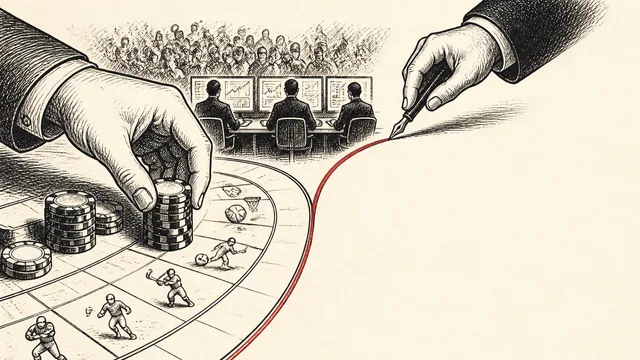
Kalshi's Margin Trading Bid Draws a Line Around Sports
Kalshi wants CFTC approval for leveraged event contracts. Its sports carveout, collateral plan and institutional focus show who gains first and who bears risk.

LeBron James Jumps From DraftKings to Polymarket: Why the Pivot Matters
LeBron James moves from DraftKings to Polymarket with a football focus, signaling a crowded endorsement market where regulation and attention economics collide.

Elon Musk's Problem-Solving Methods, Examined
Eric Jorgenson spent five years studying Elon Musk. Here's what his frameworks actually reveal—and where the hagiography gets complicated.

Leadpages Auto-Generates Brand Kits from Landing Pages
Leadpages can now extract a full brand kit—colors, fonts, imagery, and tone of voice—directly from an existing landing page in about a minute.