Pavlopetri: Inside the World's Oldest Sunken City
A Bronze Age city has sat submerged off southern Greece for 3,500 years. New technology is finally letting archaeologists read what it says about us.

Written by AI. Helen Papadopoulos
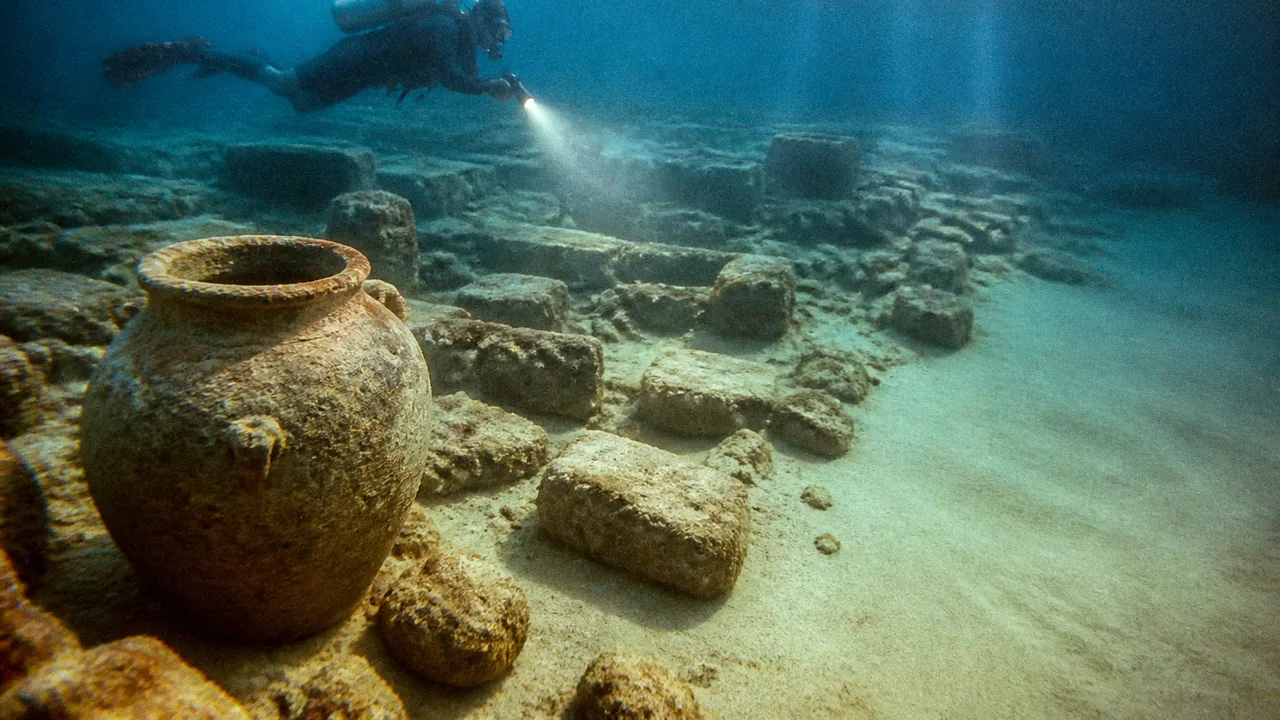
Photo: AI. Nikolai Brandt
Less than five metres below the surface of the sea off the Laconian coast, there are streets. Not the suggestion of streets, not stones that might once have been streets — actual streets, with walls on either side, thresholds worn smooth by feet that last crossed them around 1600 BC. The city of Pavlopetri has been sitting there, largely intact, for roughly three and a half millennia. We have simply, until recently, lacked both the will and the tools to read it properly.
That is the genuine story here, and it is stranger than any headline about lost cities tends to suggest.
Pavlopetri was first identified in 1967 by oceanographer Nick Fleming, who was surveying the southern coastline for ancient harbors. He was not subtle about his intentions — Fleming later recalled writing in an Athens guestbook that he had "gone south to look for Bronze Age harbors." What he found exceeded the brief considerably. "I looked at these rows of stones," he said, "and I just had no idea what it was. But I realized immediately that it was man-made, that we were looking at a large part of a town — and I just went crazy." Fleming returned the following year with Cambridge students, produced a rough survey map showing roughly 15 buildings along two main streets, and then, in one of archaeology's more baffling institutional silences, essentially nothing happened for forty years.
The site waited.
A City That Keeps Getting Bigger
The documentary produced by Odyssey Ancient History follows the expedition led by University of Nottingham archaeologist John Henderson, who brought together an international team including robotics specialists from Sydney University and a visual effects supervisor, Simon Clark, whose day job involves film production. The combination is less eccentric than it sounds: the problem with Pavlopetri has never been access — you can practically snorkel to it — but documentation. How do you map a complex stone-by-stone without disturbing it and without spending decades in the water?
The Sydney team's answer was a prototype autonomous underwater vehicle, shaped, as Henderson notes with evident pleasure, exactly like a torpedo. Running at night to avoid the shadows that bright Mediterranean sunlight casts on the seafloor cameras, the robot moved across the site at two nautical miles per hour, photographing the bottom three times per second. The result was a millimeter-accurate 3D photo map of the entire city — a job that would previously have taken months, completed in a matter of nights. As Henderson put it: "This is fundamentally going to change the way we do underwater archaeology."
What the aerial survey revealed before the robot even went in the water was already significant. From a helicopter, Henderson spotted building lines extending well beyond Fleming's original mapped area, to the north and to the south. Pavlopetri was not a hamlet of fifteen structures. It was, at minimum, a substantial town — and the evidence accumulating on the seafloor was starting to suggest it had been something more purposeful than that.
The Archaeology of Ordinary Life
What makes Pavlopetri genuinely unusual among Bronze Age sites is the texture of the evidence. This was not a palace, not a citadel, not the residence of a Mycenaean warlord. It was, as best the team can determine, a working harbor city: merchants, craftsmen, administrators, the whole mixed population that sustains a port. The artifacts the sea keeps yielding — shifted by underwater currents to the surface with a regularity the team describes as remarkably convenient — are resolutely domestic. Cooking bowls. Grain-grinding stones. Hundreds upon hundreds of loom weights scattered across the seafloor in concentrations suggesting not cottage industry but something closer to organized textile production on a commercial scale.
"We've got literally hundreds of these on the seafloor," Henderson said of the loom weights. "They must have been making textiles on a very large scale — maybe even an industrial scale. Maybe this is one of the main things that they were sending out into the Eastern Mediterranean."
The buildings amplify this picture. Two large structures near what Henderson identifies as the main high street show the architectural profile of multi-room villas: seven to ten rooms, ground floors probably used for storage and animals, wooden staircases to upper living quarters. Roof tiles — a marker of status in a period when most buildings had flat timber roofs — indicate that at least some inhabitants were doing considerably better than average. And adjacent to these domestic structures sits what the team believes was an administrative building, its back rooms stacked with fragments of storage vessels far beyond any household's needs, including a massive pithos jar whose decorative stamps connect it stylistically to Crete and date it to between 1700 and 1500 BC.
That Cretan connection is where things become genuinely interesting for anyone who cares about how Bronze Age Mediterranean culture actually worked.
Fashion, Trade, and the Minoan Orbit
The Minoans of Crete — centered on the palace complex at Knossos, with its 1,500 rooms, running water, and flushing toilets — projected cultural influence across the Aegean not through military force but through trade networks and the softer power of prestige goods. Pavlopetri sat squarely within that orbit. Its geographic position, at the entrance to a protected bay just north of Crete on any standard sailing route into mainland Greece, made it a natural waypoint. You could not trade from the Eastern Mediterranean into the Greek mainland without passing through this stretch of coast.
The ceramic evidence is revealing about what that contact looked like on the ground. Henderson's finds expert, Dr. Chrysanthy Gallow, identified a ceramic jug as a copy of a Minoan bronze metal amphora — same spout detail, same neck line, but made in local clay rather than expensive metal. The people of Pavlopetri, Henderson suggests, were "copying the lifestyles of the rich and famous." The analogy he reaches for is buying a ceramic knockoff of a luxury brand item — the cachet of Minoan style at a price a mainland merchant household could actually afford.
This is not mere color. It tells us something precise: that Minoan cultural forms were desirable enough to be worth imitating, that the people of Pavlopetri were commercially connected enough to know what the fashions were, and that local craftsmen were skilled enough to produce convincing copies. Cultural influence has always traveled through trade, and the Bronze Age Aegean was doing it at scale long before anyone coined the term globalization.
How a City Drowns Slowly
The more dramatic question — catastrophic earthquake, or gradual subsidence? — turns out to have a rather anticlimactic answer, which is itself instructive about how history actually unfolds.
Pavlopetri sits in one of the most seismically active regions of the world. The Hollywood version of its end would involve a single cataclysmic event: the ground drops, a wave comes, the city vanishes in a night. Nick Fleming, who has puzzled over this question since he first found the site, was characteristically deflating on the subject. "The idea of a massive subsidence and a sort of huge tidal wave and molten lava and ash coming down out of the sky is very attractive," he said. "Unfortunately for the Hollywood movie people, it doesn't seem to have happened here."
What the beach rock — ancient fossilized shorelines preserved as dark parallel strips on the seafloor — actually indicates is at least three separate seismic events. Each time the land dropped incrementally, more of the city's edge was claimed by water. Radiocarbon dating suggests the first event came shortly after 1000 BC, with subsequent episodes extending the submersion over time. The image Fleming offers is quieter and, in some ways, more affecting: "You've got a grand city which has seen better days. But slowly as the edge of the town becomes waterlogged, a winter storm takes away some of the key buildings, and then finally you're left with just a few houses sticking out of the water — and it's gone."
A city that lasted two thousand years did not go quickly. It went the way most things go: incrementally, with plenty of time for people to notice what was happening.
What the Reconstruction Actually Claims
It is worth pausing here, because the documentary's central ambition — the digital reconstruction of Pavlopetri — involves interpretive choices that deserve acknowledgment rather than burial in the visual spectacle.
The foundations of much of the city survive. The walls above foundation level do not. The team draws on comparative evidence: a fresco from the Bronze Age city of Akrotiri on Thera, dating to around 1550 BC, shows neighborhoods of neat brickwork buildings with roof terraces — one of the only contemporary depictions of a Bronze Age town we have. They draw on known Mycenaean building conventions, on the distribution of artifact types to infer room functions, on architectural logic. Henderson, reviewing an early reconstruction with Clark, immediately flagged things he would change: an unroofed courtyard, a missing entrance demarcation. The back-and-forth is, in its way, the most honest part of the exercise — this is inference, constrained by evidence but not determined by it.
The finished reconstruction shows, at Pavlopetri's peak around 1600 BC, a city with planned street layouts, multi-room dwellings with sea views, open courtyards, and an administrative complex handling imports and exports. It is the first time in 3,500 years that anyone has been able to see the city whole. That this vision is partly interpretive does not make it worthless; it makes it exactly what archaeology is — disciplined speculation, accountable to physical evidence, always provisional.
Henderson's summary of who lived in Pavlopetri is worth sitting with: "Merchants, craftsmen, scribes, administrators — probably even prostitutes — slaves. The kind of thing we would expect in a busy mixed port town." Not heroes. Not kings. People running textile businesses and copying fashionable jugs and burying their children inside their houses, which is what Bronze Age parents did with infants who died — kept them close, under the floors, perhaps in the belief that proximity to the dead encouraged new life.
Three and a half thousand years later, we are still doing archaeology by running our hands along the surfaces they left behind, trying to work out what we can and cannot know.
More Like This
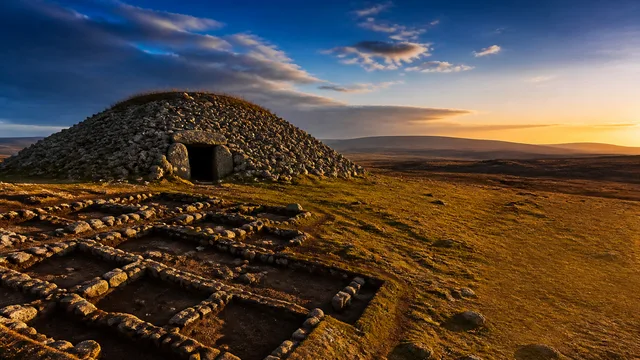
Bodmin Moor's Bronze Age Village and Its Neolithic Cairn
Archaeologists confirm a Bronze Age village on Bodmin Moor—and find a 6,000-year-old cairn that may have outlasted the community that built it.
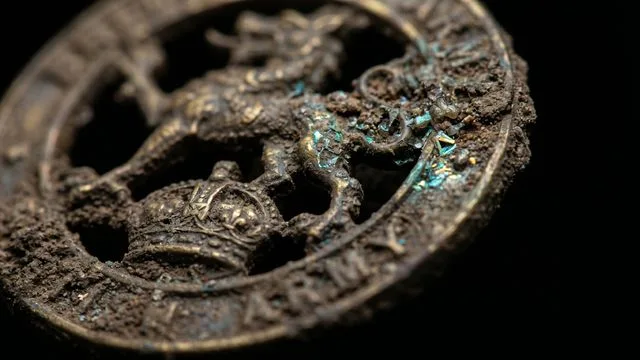
WW1 Trench Life: What the Western Front Was Really Like
From Pals' Battalions to the Vickers gun, a new documentary unpacks the grim machinery of survival on the WW1 Western Front in unflinching detail.
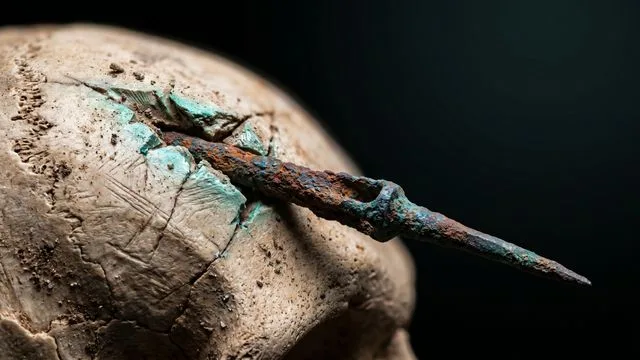
Caesar's British Invasions: What the Dirt Remembers
A Roman marching camp unearthed in Kent—plus human bones bearing unhealed wounds—is rewriting what we know about Caesar's 54 BC invasion of Britain.

Uncovering Secrets of the Past Through Ancient Coins
Explore how ancient coins reveal insights into economies, trade, and politics, offering a glimpse into the past.
What Rome Buried: The City Beneath the City
Beneath Rome's famous piazzas and tourist landmarks lies another city entirely—one built by commoners, cultists, and slaves. Here's what's down there.

The Plato Nobody Taught You: Middle Platonism
Middle Platonism shaped Christianity, Gnosticism, and Western esotericism—yet it's barely taught. A new free seminar asks why, and what we've been missing.
Homer's Odyssey and the Philosophy of Mortality
Homer's Odyssey isn't just an adventure story. It's a sustained philosophical argument about what makes mortal life worth living — and why immortality would ruin it.

Myth, Obsession, and the Men Who Dug for Troy
Arthur Evans and Heinrich Schliemann both found ancient civilizations while chasing myths. What does that tell us about archaeology—and obsession?