The Rise and Mysteries of Chichen Itza
Explore the rise and fall of Chichen Itza, a center of Mayan power, architecture, and mysticism.

Written by AI. Margaret "Maggie" Holloway
Deep in the dense jungles of the Yucatan Peninsula lies Chichen Itza, a city that once stood as a beacon of Mayan civilization. This ancient city is not merely a collection of ruins; it is a testament to the ingenuity, spirituality, and eventual decline of a people who mastered both the earth and the stars.
A City Built on Water and Belief
Chichen Itza was ingeniously constructed over a network of underground tunnels and cenotes—natural sinkholes that provided both vital water supplies and spiritual significance. These cenotes were not only practical but sacred, believed by the Mayans to be portals to the underworld. This dual purpose of life-giving and spiritual connection underscores the Mayan worldview where the material and divine were closely intertwined.
"In their eyes, they represented the world of the dead while also being the source of life," the documentary notes, highlighting the profound relationship the Mayans had with their environment.
The Architecture of Power
The city’s architectural feats were not just displays of aesthetic beauty but were symbolic of power and religious ideology. At the heart of Chichen Itza stands El Castillo, a pyramid dedicated to the serpent god Kukulcan. This structure was not only a religious center but also an astronomical tool, aligned with celestial events such as the equinoxes, when the play of light and shadow creates the illusion of a serpent slithering down its steps.
The Mayans’ understanding of astronomy was profound. They used the stars to guide agricultural and political decisions, with their observatories like El Caracol providing precise measurements of celestial movements. It is said that "the movements of the stars will tell you a lot about the future," illustrating how deeply the Mayans integrated astronomy into their governance and daily lives.
The Role of Ritual and Sacrifice
Human sacrifice was a grim yet integral part of Mayan religious practices. It was believed to appease the gods and ensure the prosperity of the city. The documentary paints a vivid picture: "Literally, you could stand here and count the number of human sacrifices." The scale of these rituals underscores the lengths the Mayans went to in order to maintain cosmic and societal order.
From Prosperity to Decline
Chichen Itza’s rise was bolstered by its strategic location and resources, which attracted migrations from other Mayan cities facing environmental challenges. This influx of people and resources catalyzed its growth into a cosmopolitan hub, comparable in size and vibrancy to cities like Paris at the time.
However, this prosperity was not eternal. By the 11th century, the city began to decline, a fate shared by many great civilizations. The video hints at environmental challenges and internal strife as contributing factors, mirrored in the architectural shifts and the eventual abandonment of traditional Mayan leadership structures.
The Legacy of Chichen Itza
Today, Chichen Itza remains a site of intrigue and mystery. Its ruins are a reminder of a civilization that mastered astronomy, architecture, and spiritualism in ways that continue to captivate scholars and tourists alike.
The tensions between religious devotion, environmental challenges, and political power that characterized Chichen Itza’s history are not just ancient stories; they are reflections of ongoing human themes. As we explore these ruins, we find threads of our own narratives woven into the stones and cenotes of this remarkable city.
More Like This
Unraveling Rome's Dodecahedron Mystery
Exploring the enigmatic Roman dodecahedron, its theories, and historical significance in modern archaeology.
Unveiling Rome's Gladiator Underworld
Explore the hidden world beneath ancient Rome's arenas, unveiling gladiator training, underground tunnels, and cultural practices.
Colombia's Ituango Dam: Ambition Meets Disaster
Explore the failure of Colombia's Ituango Dam, a $4BN project that faced engineering, political, and socio-economic challenges.

The Science and Stories Behind Earth's Fiercest Winds
Explore the science of deadly winds, from hurricanes to tornadoes, and the people dedicated to understanding and surviving them.
UFO Encounters and Government Interest: Bledsoe's Story
Chris Bledsoe's UFO encounter in 2007 led to healing, government interest, and ongoing unexplained phenomena.
The Odyssey of Reunion's Coastal Road Megaproject
Reunion's new coastal road faces engineering challenges, environmental concerns, and public opposition, revealing deeper tensions.
The Invisible Inventions That Built Modern Life
From flush toilets to undersea fiber cables, the inventions that most shaped modern civilization are the ones we've stopped noticing entirely.
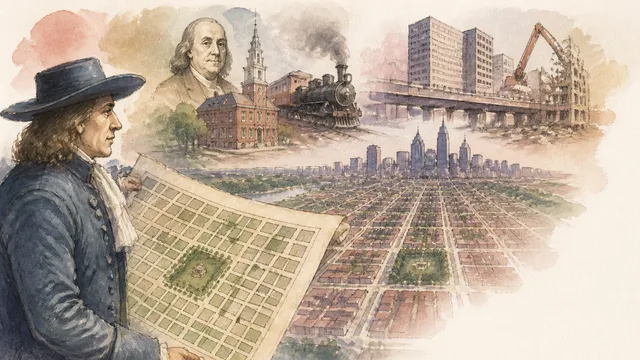
How William Penn's 1682 Grid Still Shapes Philadelphia
From Penn's Quaker grid to Ed Bacon's urban renewal, Daniel Steiner's video traces how Philadelphia's original plan survived — and who it cost along the way.