The Odyssey of Reunion's Coastal Road Megaproject
Reunion's new coastal road faces engineering challenges, environmental concerns, and public opposition, revealing deeper tensions.

Written by AI. Margaret "Maggie" Holloway
In the Indian Ocean, nearly 9,000 kilometers from mainland France, lies the island of Reunion. This remote outpost of the French Republic is the site of a monumental infrastructure endeavor: the Nouvelle Route du Littoral, a new coastal road that promises to be one of France's most impressive feats of engineering. Yet, this promise comes with its own set of trials.
A Road Like No Other
Reunion's new coastal road is no ordinary stretch of asphalt. It includes France's longest bridge, the Grand Chaloupe viaduct, extending 5.4 kilometers and standing as a testament to modern engineering. However, building such an ambitious project in one of the world's most isolated locations presents unique challenges. The island's geography—a landscape dominated by volcanoes and surrounded by the ocean—demands that solutions be as innovative as they are grand.
The existing Route du Littoral, built in 1959, perilously hugs the cliffs along the shoreline, making it vulnerable to the region's frequent cyclones. These storms can unleash winds exceeding 100 miles per hour, driving waves and rocks onto the roadway. In 2006, this peril became a deadly reality when a rockslide claimed two lives, prompting the push for a safer, more resilient route.
Engineering Prowess Meets Environmental Concerns
The new road's design initially included a tunnel through the volcanic rock—a plan quickly deemed unfeasible due to the rock's unsuitability for drilling. Instead, the project shifted towards an offshore route, incorporating a dyke and the iconic viaduct. This approach aimed to mitigate the hazards posed by the island's natural forces.
Yet, the road's construction has not been without its hurdles. "Reunion isn't an idyllic island paradise for nothing," notes the video, emphasizing the environmental richness that has sparked public opposition. Local residents and environmental groups have challenged the opening of new quarries necessary for sourcing the rock to build the road's dyke, citing potential harm to the island's ecosystems and daily life.
"Local residents and environmental groups opposed the plans, claiming blasting and heavy truck traffic would disrupt daily life," the video highlights, pointing to the tension between infrastructural progress and ecological preservation.
Resourcefulness in Isolation
In response to the quarrying impasse, an innovative solution emerged: tapping into the island's volcanic bounty. Farmers were encouraged to clear their fields of basaltic boulders, which were then repurposed for the road's construction. This local resource utilization reflects a broader theme of self-sufficiency necessitated by the island's isolation.
However, the project faced another setback. It was discovered that the quantity of rock required had been underestimated—12 million cubic meters were needed, not the projected 7 million. This miscalculation brought construction to a halt in 2019, raising costs to over $2 billion, making it one of the world's most expensive roads.
The Path Forward
As of 2026, the Reunion Council has resolved to complete the road as a viaduct, adding further complexity and cost. The specialist barge, Zurit, which had initially supported the construction, will need to be commissioned again to build the final stretch. Construction is set to resume in 2027, with a projected completion by 2030.
The new coastal road is a saga of human ingenuity against natural adversity, a reminder that in the quest for progress, the stakes are as high as the ambitions. Reunion's story is not just one of engineering marvel but also of the enduring tension between development and preservation. As the island continues to build amidst the forces of nature, the question remains: How do we balance the demands of the present with the legacy we leave for the future?
More Like This

Unraveling Rome's Dodecahedron Mystery
Exploring the enigmatic Roman dodecahedron, its theories, and historical significance in modern archaeology.
Unveiling Rome's Gladiator Underworld
Explore the hidden world beneath ancient Rome's arenas, unveiling gladiator training, underground tunnels, and cultural practices.
Colombia's Ituango Dam: Ambition Meets Disaster
Explore the failure of Colombia's Ituango Dam, a $4BN project that faced engineering, political, and socio-economic challenges.

The Science and Stories Behind Earth's Fiercest Winds
Explore the science of deadly winds, from hurricanes to tornadoes, and the people dedicated to understanding and surviving them.

UFO Encounters and Government Interest: Bledsoe's Story
Chris Bledsoe's UFO encounter in 2007 led to healing, government interest, and ongoing unexplained phenomena.

The Rise and Mysteries of Chichen Itza
Explore the rise and fall of Chichen Itza, a center of Mayan power, architecture, and mysticism.
The Invisible Inventions That Built Modern Life
From flush toilets to undersea fiber cables, the inventions that most shaped modern civilization are the ones we've stopped noticing entirely.
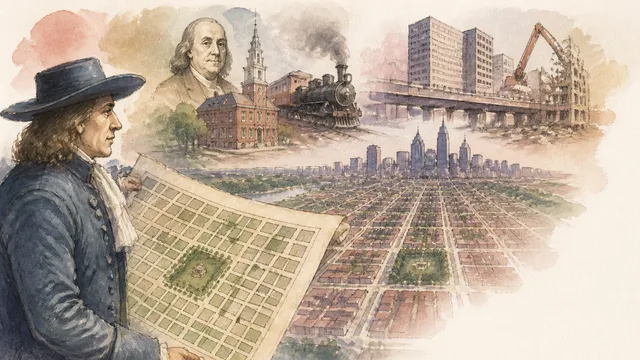
How William Penn's 1682 Grid Still Shapes Philadelphia
From Penn's Quaker grid to Ed Bacon's urban renewal, Daniel Steiner's video traces how Philadelphia's original plan survived — and who it cost along the way.