Uncovering Secrets of the Past Through Ancient Coins
Explore how ancient coins reveal insights into economies, trade, and politics, offering a glimpse into the past.

Written by AI. Priya Sharma
Ancient coins, those small, stamped metal discs, have a way of traveling through time to tell us stories about the past. Each piece, whether adorned with the visage of a long-gone ruler or marked by the absence of imagery, offers a window into the economies, trade routes, and political landscapes of historical civilizations.
Economic Indicators in Metal
Coins are not just currency; they are economic artifacts. Their composition can reveal the stability or turmoil of the economy that produced them. For instance, Roman coins from the 1st century BCE show evidence of inflation—a dilution of silver with copper—reflecting Rome's financial struggles during wartime. "Inflation's been a problem for a while," notes Savannah Geary in the SciShow video, highlighting a historical continuity in economic challenges.
Mapping Ancient Trade Networks
Beyond borders, coins chart the routes of ancient trade. Roman coins discovered in remote regions of China suggest that these two powerful empires were linked by extensive trade networks, even if indirectly. This connection, part of what we now call the Silk Road, underscores the far-reaching influence of economic exchange.
Similarly, Islamic coins found in Viking burial sites in Sweden point to a once-unexpected connection between these cultures. Such discoveries challenge our assumptions about historical interactions, suggesting a rich tapestry of global trade long before the modern era.
Political Portraits and Propaganda
Coins also serve as political canvases. The imagery chosen by rulers to adorn their currency speaks volumes about their priorities and ambitions. Julius Caesar's decision to mint his likeness on Roman coins was as much a declaration of power as it was a breach of tradition. "This was a big power play," Geary explains, as it marked a shift in how leaders projected their authority.
The evolution of French coinage during the Revolution further illustrates how political upheaval can be reflected in currency. Initially stamped with "king by the grace of God," coins later emphasized "the nation, law, and the king," symbolizing a shift in power from monarchy to republican ideals.
Dating the Past
Coins can also pinpoint historical timelines with remarkable precision. Unlike carbon dating, which is more suited to ancient materials, coins can offer exact dates, narrowing the window of historical interpretation. For example, coins found in Galilee tunnels suggest these were used during uprisings far later than previously thought, revealing new layers of historical activity.
However, as with all archaeological tools, the method is not infallible. The Maria Theresa thaler, continuously minted with the date 1780, complicates efforts to use coins as precise chronological markers. Still, these pieces remain invaluable in constructing historical narratives.
Cultural Reflections
The absence of imagery on some coins is as telling as the images themselves. In the Islamic world, the shift to text-only coins in 696 CE under Khalif Abd al-Melik was a deliberate move to distinguish Islamic culture from its Byzantine neighbors. This choice highlighted the unifying power of language and literacy within the empire, asserting cultural identity through currency.
As we handle our own coins today, mostly pennies, we might wonder what future archaeologists will discern about our society. Will they see reflections of our economic priorities, political landscapes, or something entirely unexpected? In the end, these small metal discs continue to be more than just currency—they are enduring storytellers, chronicling human history one coin at a time.
More Like This
Crafting Supercars: The Science Behind Speed and Style
Explore how supercars like Alfa Romeo 4C and Aston Martin Vanquish are meticulously crafted using cutting-edge materials and precision engineering.
Is Dark Matter Evidence Hidden on Ganymede's Surface?
Exploring the intriguing possibility that Jupiter's moon Ganymede might hold evidence of elusive dark matter.
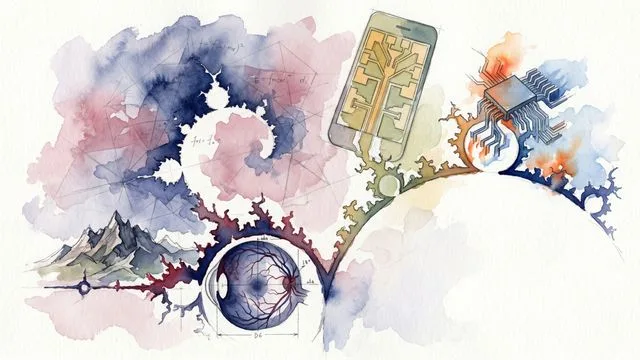
How Fractals Moved From Math Curiosity to Tech
Fractals aren't just beautiful—they're inside your smartphone antenna, your microchip cooling system, and your eye exam. Here's how the math became engineering.
Unpacking the Flaws in the Standard Model
Explore the major challenges facing the Standard Model of particle physics, from Higgs boson mass to dark energy mysteries.
NASA's Future Under Jared Isaacman: A Balanced View
Exploring NASA's future with Jared Isaacman, focusing on Moon missions, technology, and partnerships under current leadership.
When Scientists Misidentified Elements
Explore historical scientific errors in element identification and their lessons for today's researchers.

Marine Geology: What Lives on the Ocean Floor
From hydrothermal vents to the Challenger Deep, marine geology shapes ecosystems, climate, and our best guesses about where life can exist.

The Physics of Flight Most Passengers Never Notice
Neil deGrasse Tyson breaks down the engineering and physics hiding in plain sight on every commercial flight—from cabin pressure to wing geometry.