Patience as a Skill: What the Science Actually Says
Patience keeps getting called a "superpower." But what does the research actually say about cultivating it—and what does the wellness framing get wrong?

Written by AI. Kira Yoshida

Every few months, the self-help internet rediscovers patience. It gets slapped with the word "superpower"—which, at this point, has been applied to everything from deep breathing to saying no to emails—and sent back into the content cycle for another lap. The framing is always roughly the same: slow down, wait more, stress less, win at life.
Here's the thing though: underneath that marketing gloss, there's something genuinely worth examining. Not because patience is a superpower—it isn't, it's a cognitive and emotional skill—but because the way it's being framed right now reveals a real tension between what behavioral research suggests and what the wellness industry wants to sell you.
So let's pull it apart.
What Patience Actually Is (And Isn't)
The wellness-industry version of patience tends to be passive. Wait. Breathe. The universe has a plan. But that's not what the more careful thinkers in this conversation are describing.
Psychology Today puts it this way: patience "encourages us to respond with calm and fortitude and to shape a space to wait, rather than defaulting to an unthinking reaction when confronting uncertainty." That's a meaningfully different claim. Shaping a space to wait is active. It requires you to do something—to deliberately create the conditions for non-reactive decision-making rather than just sitting back and letting time pass.
Writer Julie P., on Medium, makes the same distinction directly: "Patience isn't passive. It's not about waiting around for life to happen. Patience is active."
This active-versus-passive distinction matters enormously for how we think about the practice of patience. Passive patience is just tolerance. It's enduring discomfort without processing it, which can just as easily calcify into avoidance or resignation. Active patience is something closer to what exercise physiologists call "controlled loading"—you're applying deliberate stress to a system in a way that allows adaptation without breakdown. The goal isn't zero resistance; it's calibrated resistance.
The Neuroscience Context (With Appropriate Caveats)
Here's where I want to be careful, because the sources available for this piece are largely editorial rather than primary research, and I'm not going to manufacture citations that don't exist.
What we can say, from the general state of behavioral and cognitive research: impulse control and delayed gratification involve the prefrontal cortex—the same region implicated in executive function, planning, and emotional regulation. The famous longitudinal work on delayed gratification (the Stanford marshmallow studies and their many replications and critiques) has suggested that the ability to tolerate delay correlates with various life outcomes, though the causal picture is considerably messier than the popular version suggests. Later research has consistently shown that the marshmallow test was capturing socioeconomic stability as much as individual willpower.
That context matters. When Forbes contributor Benjamin Laker writes that patience holds "the power to transform lives, relationships, and even the course of history," it's a compelling claim—but it flattens the structural dimension. Patience is considerably easier to practice when your material circumstances are stable, when you're not in survival mode, when the systems around you are working reasonably well. Telling someone in a precarious situation to just "be more patient" is, at minimum, incomplete advice.
The self-help genre tends to treat psychological traits as individual choices. The research is more equivocal.
What It Does Seem to Help With
That caveat entered, there's a real case to be made for patience as a trainable skill with measurable benefits—within the individual's sphere of influence.
The Business of Happiness poses a question that's genuinely useful as a reflective exercise: "Is anything truly urgent? How much of what you perceive as 'urgent' truly is?" That's not a rhetorical trick—it points to something concrete in stress physiology. The body's threat-response system doesn't discriminate well between a deadline email and an actual emergency. Chronic activation of that system is associated with elevated cortisol, disrupted sleep, impaired immune function, and a narrowed attentional field that makes complex decision-making harder.
Practices that interrupt that pattern—deliberate pausing, reframing, breathing—don't just feel calming. They're interrupting a physiological loop. That's the grain of truth inside the "patience reduces stress" claim, and it's worth taking seriously even when the packaging is cheesy.
Dyan Williams adds a nuance that I think often gets lost: "With the superpower of patience, we know when to keep going, when to pause, and when to quit." That last one—when to quit—is the part the hustle-culture version of patience never talks about. Persistence is valorized; quitting is treated as failure. But knowing when to exit a situation that isn't working requires the same discernment that patience supposedly builds. If patience only ever means "keep going," it's not wisdom—it's just rebranded stubbornness.
How It Gets Cultivated (Practically)
The sources here converge on a few mechanisms: mindfulness practices, cognitive reframing, and deliberate exposure to situations that require tolerating delay or uncertainty.
Mindfulness gets overloaded as a term—it now covers everything from ten-second breathing exercises to three-week silent retreats—but its core application to patience is fairly specific. The practice of noticing an urge to react and not immediately acting on it is essentially a reps-based training for the same neural pathways involved in impulse control. You're not suppressing the urge; you're creating a gap between stimulus and response. That gap is where choice lives.
Cognitive reframing—viewing delays and obstacles as information rather than obstruction—is the other lever. Calum Upton on Medium describes a decade-long personal development journey in which patience emerged as central. The framing there is experiential rather than empirical, but it reflects a pattern you see across behavioral change literature: the people who sustain long-term growth tend to have developed tolerance for the slow, non-linear parts of the process.
That's not a personality trait they were born with. It's something they built—by necessity, usually, and often by getting it wrong first.
The Superpower Problem
I keep returning to the language. "Superpower" is doing a lot of work in the current patience discourse, and it's worth asking what that framing actually achieves.
Superpower language individualizes. It suggests an exceptional capability that sets you apart—something you have rather than something you practice. Which is useful for selling courses and books, but it subtly undermines the actual message. If patience is a superpower, it's special; if it's a skill, it's learnable. The second framing is more democratic and, frankly, more supported by the evidence.
It also tends to obscure the cost. Patience isn't always free. Sometimes what looks like patience is deferred anger. Sometimes it's accommodating situations that genuinely deserve a more immediate response. The Psychology Today piece notes that patience "requires us to be generous with ourselves and others"—and that's true, but generosity has limits, and knowing those limits is part of the skill too.
The strongest version of the patience argument isn't "wait more, react less." It's closer to: develop the capacity to choose your response rather than be driven by it. That's genuinely useful. It's also genuinely hard, and it's not something a listicle unlocks. It's a long, imperfect practice of noticing when you're on autopilot—and, occasionally, remembering you don't have to be.
Whether that's a superpower or just a very human thing we keep having to relearn is probably the more interesting question. 🌱
By Kira Yoshida
More Like This

How Sports Actually Bring People Together
Sports are celebrated as a universal unifier—but how does that actually work, and when does it fall short? We map the real science and the real limits.
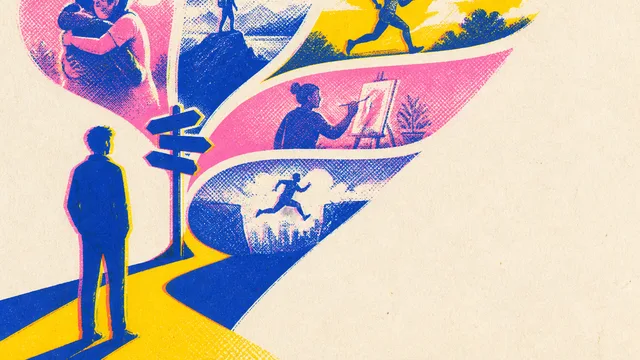
5 Life Regrets That Are Actually Real (With Caveats)
The Art of Improvement's viral regret video gets a lot right — but the gap between what you *should* do and what you *can* do is where self-improvement content always falls apart.
Morning Routines: Intention, Gratitude, and a Dash of Skepticism
Explore morning routines focusing on intention and gratitude, with a critical look at wellness industry promises.

Why You Keep Second-Guessing Decisions You've Already Made
The psychology of post-decision doubt—what research says about indecision, counterfactual thinking, and how to actually close a choice.

Charisma Is a Skill, Not a Personality Trait
Charlie from Charisma on Command breaks down 7 principles for building charisma through practice—not personality. Here's what holds up, and what's worth questioning.
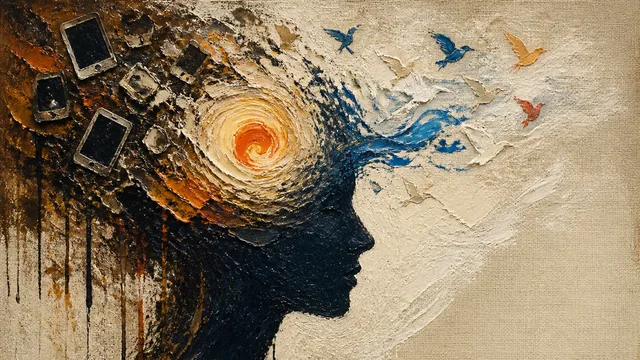
Boredom Is Good for Your Brain, Science Suggests
Research suggests boredom sparks creativity and deep thinking. Here's what the science says about letting your mind wander in a distraction-saturated world.
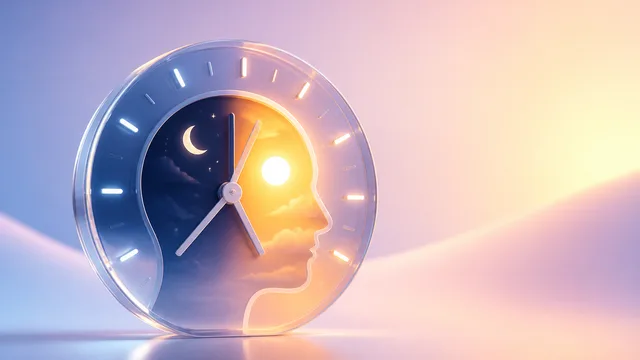
How Your Circadian Rhythm Controls Morning Wakefulness
Your body already knows how to wake up naturally. Here's what sleep science says about training your circadian rhythm to stop dreading mornings.
Grounded Confidence Is a Body State, Not a Mindset
A viral Charisma on Command video gets the framework right but misses the physiology. Grounded confidence isn't a technique — it starts in your nervous system.