October CPI Raises Rate Bets Before the Fed's December Vote
October inflation beat forecasts and Treasury yields rose. A missing annual CPI figure and mixed price trends complicate the Fed's December rate decision.

Written by AI. Jin Seo
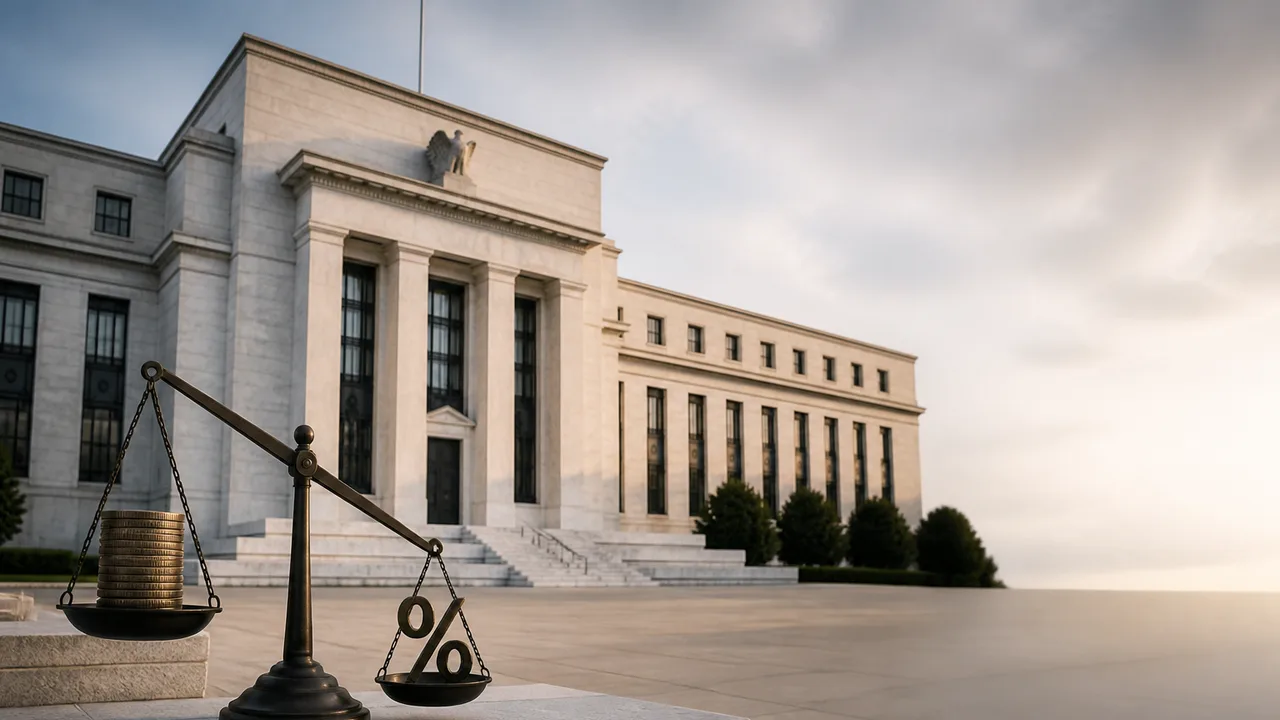
U.S. consumer prices rose 0.4% in October, above the 0.3% increase economists had expected. Prices excluding food and energy rose 0.3%, also a tenth of a percentage point above forecast. By Tuesday, Treasury yields had climbed and traders had raised their bets on a December interest-rate increase. The Federal Reserve has yet to vote on one.
The October reading gives policymakers a reason to worry about persistent price increases. It also poses a less obvious question for anyone trying to understand the next rate decision: How much can one month settle when the usual annual comparison is missing, the components are moving at different speeds, and a Fed governor has floated a larger increase than traders expect?
A Slower Headline, a Stubborn Core
October's 0.4% headline increase was slower than September's 0.6%. Core inflation, which excludes food and energy prices that can swing sharply, held at 0.3% for a third consecutive month. The history changes the reading of Tuesday's surprise. Someone looking only at the headline slowdown sees relief from September; someone watching core sees no monthly improvement across August, September and October.
A sustained monthly core reading around 0.2% would be more consistent with the Fed's 2% annual inflation goal, Mark Zandi, chief economist at Moody's, said in comments to CNBC. That is an economist's guide to the pace of price increases, rather than an official annual rate for October. A softer headline alongside unchanged core gives the Fed reason to examine whether the recent relief will last.
The shopping basket moved unevenly. Shelter rose 0.3% and accounted for more than 30% of the increase in the overall index. Food rose 0.5%, while energy rose 0.7%, following a 5.2% jump in September. Used cars and trucks fell 1.2%. Those movements leave two live interpretations: shelter and food increases can sustain pressure on household budgets, while the sharp slowdown in energy's monthly rise gives policymakers reason to watch for further cooling. Neither reading requires every price category to move together.
The numbers also describe different experiences. A household paying more for groceries does not get a refund because the used-car index fell. A prospective borrower may face a higher financing rate even if the CPI's overall monthly increase has slowed. The headline averages those experiences; a rate decision reaches them through a different channel.
The Missing October Benchmark
The Bureau of Labor Statistics could not publish most October 2026 12-month CPI changes because the 2025 government shutdown prevented it from collecting the October 2025 data needed for comparison. Some individual categories still have annual figures. The October monthly changes remain usable, but they cannot supply an official year-over-year headline or core rate.
That absence makes the sequence of recent monthly readings more useful, and easier to overinterpret. Three consecutive 0.3% core increases show that this measure has yet to slow month to month. They cannot, by themselves, tell readers what the missing official 12-month October figure would have been. The distinction also affects political and market arguments about whether inflation is accelerating: a forecast for an annual rate would require assumptions about the missing 2025 baseline.
The gap has a policy history, too. The Fed raised rates in September and held them in October. At the October meeting, officials voted 10-2 to keep their benchmark rate at 3.75% to 4%, awaiting more information. A faster September headline reading was already behind them; Tuesday brought a slower headline but another firm core figure. The committee's previous decision gives context for the new data without turning its December choice into a replay of October.
A Governor's Signal Meets the Bond Market
Fed Governor Christopher Waller said Tuesday he leaned toward an increase in December even if October inflation came in softer than expected. For a hotter reading, he said, a half-percentage-point increase should be considered. His argument went beyond this month's CPI: he warned that failing to follow through on expectations for higher rates could weaken the Fed's credibility and cause market rates to fall, loosening financial conditions.
That is a coherent case for tightening. It asks the Fed to consider both persistent inflation and the effect of its own signals on borrowing conditions. It is Waller's position, though, and the committee held rates in October while seeking more information. Other officials have counseled patience. The December 8-9 decision belongs to the rate-setting committee, including members who may weigh the risk of tightening too much against the risk of allowing inflation to persist.
Market pricing offers a useful comparison with the period before Tuesday's CPI release. After Waller spoke but before the inflation figures arrived, traders assigned a better-than-80% chance to a quarter-point December increase and no chance to a half-point move, CNBC reported using CME FedWatch data. After the release, a quarter-point increase was fully priced in, while the quoted chance of a half-point increase reached 13.6%. Those snapshots span Waller's remarks as well as CPI, so they cannot isolate the effect of either. They show traders becoming more open to a larger move, while still favoring the smaller one.
Bond yields moved before any Fed vote. The two-year Treasury yield climbed more than 20 basis points to 4.755%; the 10-year yield rose more than 14 basis points to 5.004%. A basis point is one-hundredth of a percentage point. The two-year yield is especially sensitive to expectations for near-term Fed policy. The 10-year yield is a reference point for longer-term borrowing, including mortgages.
For someone seeking a mortgage, the route from Tuesday's inflation figure to a loan quote can run through that bond market rather than wait for the December meeting. Higher Treasury yields can put upward pressure on borrowing offers, though an individual loan rate will not move point for point with a Treasury yield. Existing borrowers with fixed rates face a different immediate picture from people taking out new loans. Savers and lenders, meanwhile, can benefit from higher rates; households financing a home or car may pay more. That is how a debate over a quarter-point or half-point Fed move can reach people before the committee settles it.
The next decision will test two judgments at once: whether October's firm core reading calls for another increase, and how much weight to place on a slower headline and uneven categories. Traders have made their wager. Borrowers may encounter its effects first.
More Like This

IMF Raises 2026 Growth Forecast as Energy Risks Persist
The IMF expects 3.1% global growth in 2026, helped by AI investment, while energy costs and strained public budgets complicate the outlook for workers.

Why Friday's August CPI Report Matters More Than Usual
The August CPI lands Friday at 8:30 a.m. with the Fed split 9-3 on rates. What the inflation report could settle, what it can't, and who feels the answer first.
Weaker September Housing Data Tests the Fed's Rate Case
September housing weakness puts borrowing costs and construction in focus as the Fed weighs inflation against signs of strain. What should policymakers watch next?

U.S. Interest on National Debt Tops $1 Trillion
U.S. interest payments on the $40 trillion national debt surged 14% in 10 months, now outpacing Medicare. Here's what that actually means for federal spending.
Fed Holds Rates, but Treasury Yields Keep Loans Costly
The Fed held rates in a 10-2 vote, but Treasury yields near 5% may keep mortgages costly. July and September votes show why the pause offers borrowers no guarantee.

Fed Rate Outlook Splits Over Inflation and Timing of Hikes
John Williams sees room for one more Fed hike this year; Beth Hammack fears sticky inflation. Their disagreement puts the next rate decision in focus.

How Buy Now Pay Later Companies Actually Make Money
BNPL is engineered to increase spending, structured to benefit retailers over borrowers, and now operating without a federal regulatory floor. Here is how it works.

Bunker Fuel: Why Cargo Ships Burn Refinery Waste
Cargo ships burn heavy fuel oil, the cheapest, dirtiest refinery leftover. Here's how that bargain works, what it costs, and why nothing has replaced it.