Fed Rate Outlook Splits Over Inflation and Timing of Hikes
John Williams sees room for one more Fed hike this year; Beth Hammack fears sticky inflation. Their disagreement puts the next rate decision in focus.

Written by AI. Jin Seo
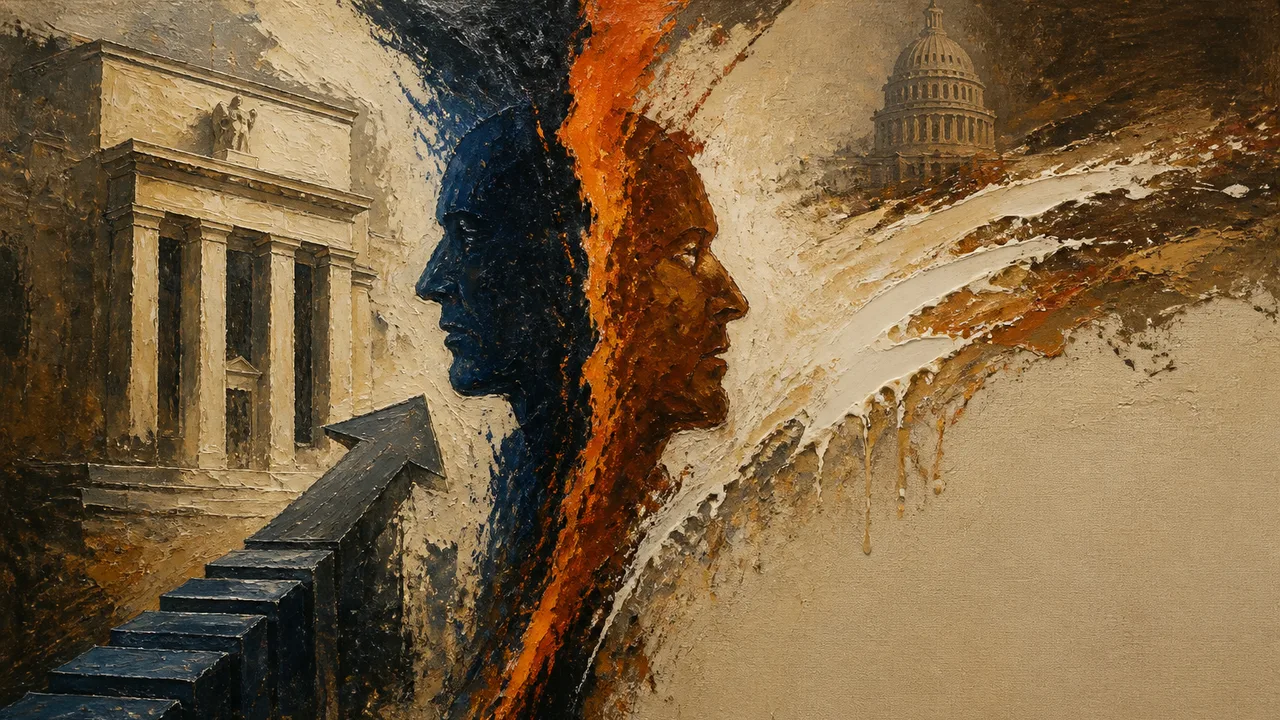
New York Fed President John Williams said Tuesday that one more interest-rate increase this year may be appropriate, then indicated he sees no current reason for another in 2027. Cleveland Fed President Beth Hammack, meanwhile, is arguing for restrictive policy and relatively quick, small adjustments if inflation demands them. The two officials are looking at the same economy and putting different weight on the risk that price increases will persist.
Williams’s outlook for another possible hike follows the Federal Reserve’s quarter-point increase in September. “I haven't changed my view that it may be appropriate to have one more rate hike,” he told Bloomberg News in an interview, as quoted by Quartz. His proposed stopping point matters as much as the possible move: he currently sees no reason to expect further increases after this year. That is a conditional judgment about inflation, rather than a commitment the Fed can make for 2027.
The policy-setting Federal Open Market Committee, or FOMC, next meets October 27 and 28. It must decide whether September’s increase bought enough time to assess inflation, or whether waiting would leave it facing a harder job later. Williams and Hammack are supplying arguments to that decision. Neither can set the committee’s path alone.
Two Readings of Persistent Inflation
Williams expects the effects of tariffs and an energy-price shock to fade. He has pointed to lower measures of underlying inflation and a labor market that, in his assessment, is not adding to price pressure. He also acknowledged that demand for artificial-intelligence infrastructure is outrunning supply, while arguing that one fast-growing sector should not stand in for the whole economy. His case for stopping after another possible hike depends on those broader pressures continuing to ease.
Hammack’s concern runs in the other direction. In prepared remarks at the National Association for Business Economics, she argued that inflation is broad enough to warrant a restrictive policy stance and that smaller adjustments made relatively quickly can reduce the risk of a larger correction later. August’s personal consumption expenditures price index was up 3.4% from a year earlier; its core measure, which excludes food and energy, was up 3%. Both readings were above the Fed’s 2% goal.
She also acknowledged a point in Williams’s favor: long-run inflation expectations have remained anchored despite years of above-target inflation. Her worry is what happens if that persists. If businesses and households begin to expect higher inflation as a matter of course, bringing it down could become more costly. Williams’s argument gives more weight to pressures he expects to fade. The disagreement turns on how long inflation lasts and what the Fed risks by waiting, not on whether 3% core inflation has already reached the goal.
September’s hike was the first since July 2023, and it left the federal funds target range at 3.75% to 4%. It was a decision the committee could make together. Agreement on that move did not require officials to agree on the next one, or on how many might be needed in 2027. Dallas Fed President Lorie Logan, like Hammack, has signaled that more than one additional increase may be necessary, according to Bloomberg reporting relayed by Quartz. Williams’s view sits closer to the midpoint of officials’ rate forecasts published after the September decision.
A forecast records where an official thinks policy may need to go if the economy develops as expected. A vote sets policy at a meeting. Treating the first as a promise would ask a borrower or employer to plan around conditions that have yet to arrive.
Three Different Bets on the Next Move
The disagreement extends beyond Fed officials, although the groups involved are answering different questions. In a Wolters Kluwer survey of corporate economists, 59% said borrowing costs were still too low to cool inflation or growth. Separately, 84% expected another quarter-point increase before 2027. Those are the views of surveyed corporate economists, not a measure of all economists or a tally of FOMC votes.
That 84% expectation overlaps with Williams’s possible one-more-hike scenario. The 59% answer addresses a different question: whether current borrowing costs are doing enough to slow the economy. An economist can expect one more increase and still worry that it will prove insufficient. Keeping the two answers separate makes the survey more useful than treating it as a show of hands for any Fed president.
Traders are making a different bet again. Federal funds futures reflected expectations for a December increase followed by two more in 2027, Quartz reported. That path extends beyond Williams’s current stopping point. CNBC also reported that traders, at the time of its October 12 article, priced a greater than 78% chance of no change at the October meeting and a nearly 88% chance of a hike in December, citing CME’s FedWatch tool. Market prices can change as economic figures and policymakers’ views change; they are neither committee forecasts nor advance election results for Fed votes.
For someone financing a purchase or budgeting a business expansion, the difference is between a rate in force now and several possible future rates. The benchmark range stands at 3.75% to 4%; Williams’s scenario, Hammack’s caution and futures pricing describe ways it might move. A plan that only works if the gentlest of those paths arrives carries a risk its owner should be able to see plainly.
An Election Calendar Offers Limited Guidance
The October 28 decision will come shortly before the November 3 midterm elections. The timing invites a familiar prediction that the Fed will avoid changing rates near a vote. A CME Group study of election years from 1972 through 2024 found no rate change in 67% of its October 1-to-Election Day windows; that figure is the study’s own classification of past cycles, rather than a probability for this meeting.
The broader September-to-Election Day window tells a different story: the study counted no action in 52% of those election years. The Fed has already raised rates this September. Its record also includes midterm-year increases that the study associates with rising inflation, including 2018 and 2022. Past pauses therefore give the committee neither a prohibition on acting nor a reason to ignore current prices. The comparison changes with the window chosen, and a calendar cannot resolve the argument Williams and Hammack are having about inflation.
One more consumer-price report is due before the October meeting. Officials will have to judge it alongside the inflation and labor-market trends they already disagree about. Williams has described a possible final hike for this year; Hammack has described the cost of falling behind. The committee still has to decide how much insurance against persistent inflation is worth paying for in higher rates.
More Like This
Bitcoin's $75,000 Test After Fed and Crypto Setbacks
Bitcoin held near $75,000 amid a crypto bill setback and hawkish Fed fears. What price resilience can reveal, and what traders may still be overlooking.
Divided Fed Holds Rates, But September Looms
The Fed held rates at 3.5%-3.75% in a 9-3 vote. Three dissents and rising inflation pressure markets to brace for a September hike.
AI Investment Puts Inflation and Public Debt to the Test
AI infrastructure spending could lift productivity while raising energy demand, inflation and borrowing costs. Who pays if gains arrive late or stay concentrated?
September Jobs Slowed as Stocks Bet on a Fed Pause
September's weak hiring lifted hopes of a Fed pause and stocks rose. The same figures point to a tougher job search, while inflation keeps the rate outlook open.

Garden City's AI Election Scare Exposes a Timing Gap
A fake AI website appeared before a Garden City vote. The case reveals a dangerous response gap, but offers no proof synthetic media changed the result.
Fed Rate Hike Opens a Harder Phase for the Economy
The Fed lifts rates to 3.75%-4%, raising borrowing costs and testing whether inflation can cool without a sharper slowdown in jobs, spending and growth.

How Climbing the Investing Ladder Costs You Ownership
From a $100 index fund to managing billions as a pension CIO, each rung of the investing ladder hands you more money to move and less of it to keep.

What Fintech Affiliate Models Could Teach iGaming
Line Peteri argues fintech's education-first affiliate model and retention focus offer a playbook iGaming has ignored for a decade. Here's what that gap actually costs.