Bitcoin's $75,000 Test After Fed and Crypto Setbacks
Bitcoin held near $75,000 amid a crypto bill setback and hawkish Fed fears. What price resilience can reveal, and what traders may still be overlooking.

Written by AI. Jin Seo
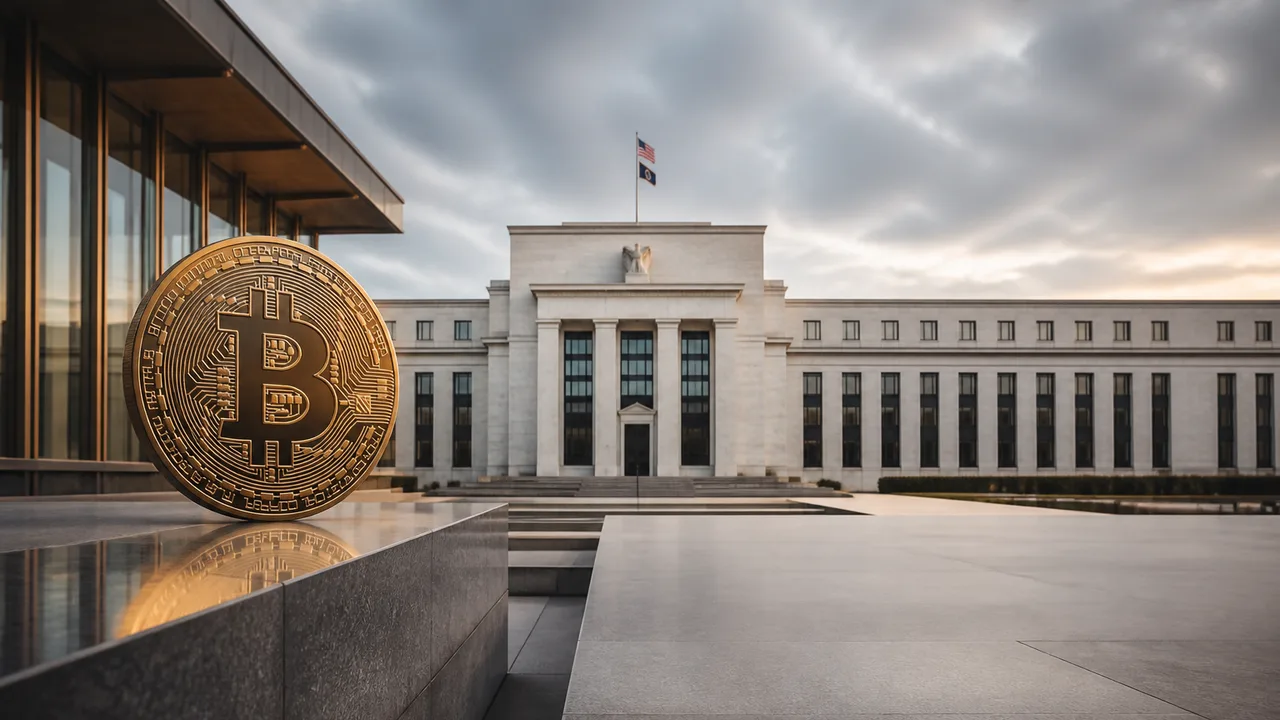
Photo: AI. Hayden Cross
Bitcoin's recovery around $75,000 has given crypto traders a live test of an old market maxim: prices that refuse to fall on bad news may have buyers waiting underneath.
That interpretation sits at the center of the latest analysis from EllioTrades, which points to two threats: the apparent collapse of a major crypto market-structure bill and a hawkish Federal Reserve decision. Bitcoin briefly fell through the lower end of its recent range, according to the channel, before recovering the $75,000 to $75,500 area.
A recovery like that can indicate demand. It can also reflect short covering, derivatives liquidations, a catalyst already embedded in prices, or traders waiting for clearer information. One rebound cannot separate those explanations. The chart shows what participants did, while leaving their motives inconveniently off-screen.
What a Failed Breakdown Can Show
Technical traders call a move below support followed by a quick recovery a bullish deviation or failed breakdown. The logic is concrete. Sellers push Bitcoin below a level that had previously attracted buyers, but they cannot keep it there. Traders who sold the break may then repurchase, adding fuel to the reversal.
EllioTrades identifies $75,000 as the range low and roughly $75,500 as the level whose recovery would strengthen the bullish case. The channel describes the setup this way: “You want to see the deviation get bought up and for things to reverse.” A fresh low beneath the initial downward wick would invalidate that reading.
That last condition does more analytical work than the bullish label. A price thesis needs a point at which the evidence stops supporting it. Otherwise, “support” becomes a line that traders redraw every time the market embarrasses them.
Time also matters. A four-hour recovery can attract short-term traders without changing the trend over several weeks. Trading volume, follow-through buying and Bitcoin's behavior after derivatives positions reset would offer better evidence than a single reclaimed candle. The video acknowledges this by favoring confirmation rather than an entry based only on the first wick.
The strongest version of the bull argument relies on relative reaction. The EllioTrades analysis on YouTube says, “When bad news fails to push the market down, that's bullish.” Markets often do reveal their positioning through failed reactions. If nearly everyone who planned to sell has already sold, a negative headline may find few remaining sellers.
Yet the adjective “bad” hides a pricing question. A market can shrug off news because investors consider it unimportant, because they anticipated it, or because another force outweighs it. Resilience establishes that the catalyst failed to produce sustained selling. It does not establish why.
Congress and Regulators Offer Different Kinds of Certainty
The legislative setback matters because crypto businesses have spent years asking Washington for rules that define when digital assets fall under securities or commodities oversight. Clearer jurisdiction could affect exchanges, token issuers, brokers and institutional investors. Regulatory ambiguity has a price: legal bills, delayed products, enforcement exposure and fewer counterparties willing to participate.
The source characterizes the failed measure as one of the largest promised pieces of US crypto legislation. Yahoo Finance, in an analysis of Bitcoin's late-summer rally, likewise framed Congress and the Fed as major tests for the market. That pairing makes sense because one affects the industry's operating rules while the other affects the price and availability of money.
Congressional legislation and agency rulemaking have different durability. A statute can allocate authority and bind regulators within the law's terms. Securities and Exchange Commission or Commodity Futures Trading Commission rules can provide operational guidance, but agencies must work within existing statutes. Administrations can also reinterpret priorities, rewrite rules through formal processes or shift enforcement resources.
EllioTrades argues that forthcoming SEC and CFTC rules could reduce the immediate need for legislation. The channel also concedes that the long-term position remains unclear. That caveat deserves more weight than an answer generated by an AI chatbot, which the creator cites while discussing whether a future administration could pursue past crypto activity. Legal exposure depends on statutory language, conduct, timing, jurisdiction and the final rules. A chatbot response cannot settle those questions.
The distributional effects are easy to lose amid talk of “clarity.” Large exchanges and established financial companies can absorb compliance costs and help shape rulemaking. Smaller developers may gain from clearer boundaries but struggle with registration, reporting or legal expenses. Consumers could receive stronger custody and disclosure protections, though rules designed around incumbent business models may narrow the products available to them. Everyone favors clarity in the abstract. The invoice determines who keeps favoring it.
The Fed Test Needs a Precise Clock
Higher interest rates usually pressure speculative assets by increasing the return available on safer instruments and raising financing costs across the economy. Bitcoin has no cash flow to discount, but it competes for capital with Treasury bills, equities, credit and cash. Rate expectations also influence the dollar and market liquidity.
The supplied source material creates a timing problem. The video description says the Federal Reserve raised rates, while the quoted discussion presents an 87% prediction-market probability before the FOMC outcome and calls the decision a coming test. Readers should avoid treating a pre-decision market setup as proof about a completed announcement. The distinction changes what Bitcoin's price has supposedly survived.
Markets also trade the gap between expectations and reality. A rate increase can coincide with a rally if traders had priced an even harsher decision or if the Fed signals a gentler path afterward. An unchanged rate can produce a selloff if officials warn that tighter policy remains ahead. The headline decision is one line in a package that includes the statement, projections and press conference.
This is why binary-event trading carries unusual risk. Prices can jump in both directions as algorithms parse language, leveraged positions liquidate and investors revise the expected path of policy. EllioTrades says leverage was reduced ahead of the uncertainty, a more cautious choice than the video's broader enthusiasm might suggest.
The commercial context belongs in the analysis too. The channel discloses a sponsorship relationship with a platform offering prediction markets and perpetual contracts while discussing event odds and leveraged trades. Disclosure lets viewers weigh that incentive. Perpetual contracts can amplify gains and losses, and tight invalidation levels do not guarantee execution at the intended price during a fast market.
Rotation is a Hypothesis, Not a Funding Pipeline
The wider bullish thesis proposes that money could rotate from the artificial-intelligence equity trade into crypto. Stretched valuations in one sector can encourage investors to seek assets that have lagged. Bitcoin and altcoins would benefit if portfolio managers chose them as the next destination.
Capital does not move between themes like water through labeled pipes. A falling stock price can erase market value without sending an equal number of dollars into another asset. Investors can move into bonds, cash, defensive shares or private markets. They can also reduce risk altogether. A durable crypto rotation would require observable demand, such as sustained spot buying and broader participation, rather than weakness in AI shares alone.
Altcoins add another layer of risk. Bitcoin holding support does not guarantee that smaller tokens will follow. Liquidity, token issuance, insider holdings and project-specific demand can produce very different outcomes. In speculative markets, “rotation” sometimes means early holders have found later buyers with better stories and worse timing.
Bitcoin's defense of $75,000 therefore supplies a useful signal with a narrow meaning: sellers failed, so far, to hold the market below that zone. Continued trading above $75,500 could reinforce the failed-breakdown case; renewed lows would weaken it. Congress, regulators and the Fed will determine whether the next move has policy behind it, or whether one four-hour candle simply acquired more narrative than it could carry.
More Like This

How Netflix Built a Habit, Not a Streaming Service
Netflix earned $45.2B and $11B in profit in 2025, then stopped reporting subscriber counts. That's not hiding weakness. It's changing the game entirely.
Rockefeller's Wealth-Building Secrets Revealed
Explore how John D. Rockefeller built a $400 billion fortune through strategic discipline and overlooked industries.

What Fintech Affiliate Models Could Teach iGaming
Line Peteri argues fintech's education-first affiliate model and retention focus offer a playbook iGaming has ignored for a decade. Here's what that gap actually costs.

Crypto Treasury Stocks: Who Wins and Who Absorbs the Loss
Crypto treasury stocks promise Bitcoin exposure through regulated equity. But when the thesis shifts, retail investors learn who the structure was built for.
America's Economic Cycles: Reinvention or Stagnation?
Examining America's economic pivots every 80-90 years and their impact.
Fed Rate Hike Odds Hit 92% as Warsh Faces a Divided Committee
Traders price a 92% chance of a Fed rate increase under Chair Kevin Warsh. What the vote, the dissents, and the guidance mean for borrowers and markets.

Vetting Expired Domains in iGaming SEO
Craig Campbell explains why domain rating misleads iGaming SEO buyers, what the Wayback Machine reveals, and how to vet expired domains before spending.

Auditing Vibe-Coded Apps Without Reading Them
A Brainqub3 video argues you can safely ship 100k-line AI-generated codebases without reading them. The framework is sound. The business model behind it is worth examining.