NFL Schedule Expansion Draws Greed Criticism
Joy Taylor calls the NFL's schedule expansion "greedy." Here's the economic logic behind the push—and why the pushback deserves a serious look.

Written by AI. Denise Okafor-Williams
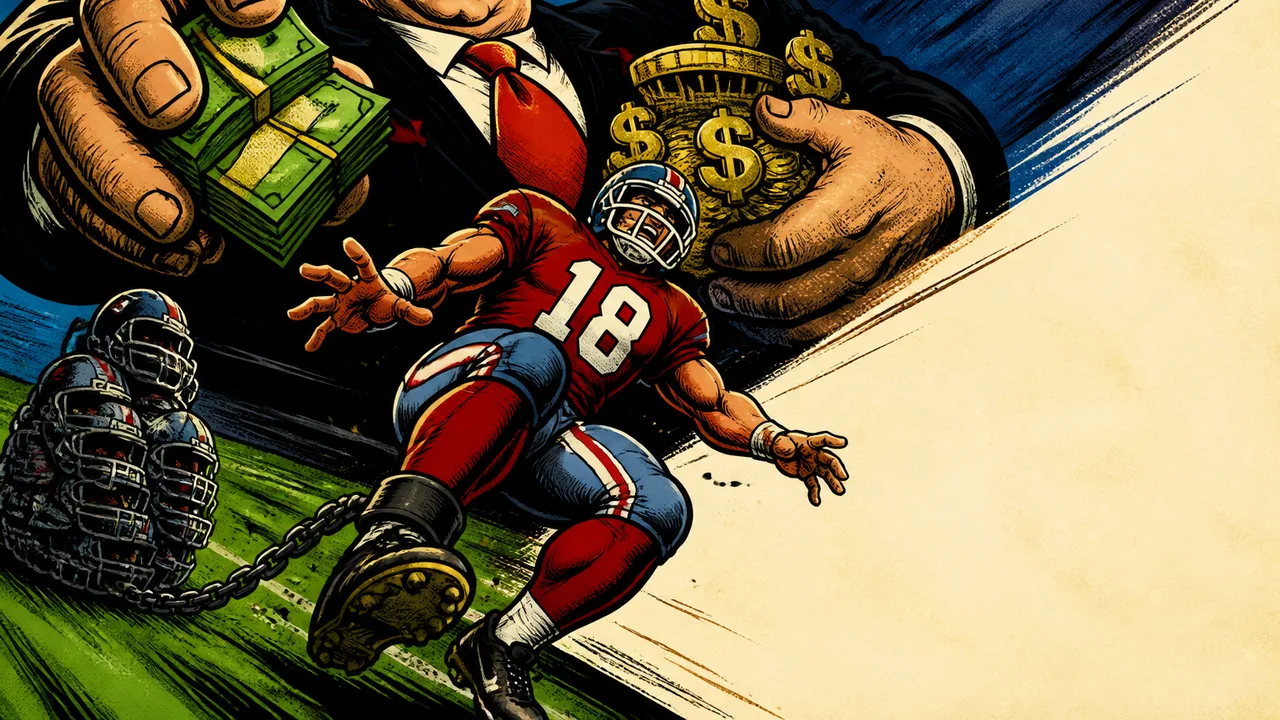
The NFL does not expand its schedule because it forgot how football works. It expands its schedule because expanding its schedule makes money—a lot of it. That much is not complicated. What is complicated is the question of when a league crosses the line from growth into extraction, and whether anyone with real power will notice before the product pays the price.
Joy Taylor, speaking with Front Office Sports, made the case plainly: the NFL's ongoing push to grow its schedule is "greedy" and ill-advised. Her framing was notably audience-centered. Taylor acknowledged that most Americans are already swamped—overscheduled, time-strapped—which is precisely why asking them to carve out more hours for more games is a miscalculation dressed up as a gift. The league, in her read, is solving for its own balance sheet, not for the lives of the people who actually watch.
That argument is worth sitting with, because it lands differently than the usual sports-media noise about the NFL going too far. Taylor is not making a traditionalist complaint about the sanctity of a 17-game schedule. She is making a consumer behavior argument: that the scarcity of NFL Sundays is load-bearing infrastructure for the league's cultural dominance, and that flooding the market with more games risks devaluing the thing that makes NFL games appointment television in the first place.
The Revenue Logic Is Real—and Massive
The NFL's appetite for schedule expansion does not exist in a vacuum. It exists inside a media rights environment that has fundamentally restructured what professional football is worth. Yardbarker reported on a $200 billion NFL streaming deal that marks the largest media rights shakeup since 1961—a figure that signals how thoroughly the league has positioned itself as the anchor tenant of American live television, and increasingly, of streaming. When your media partners are paying at that scale, every additional game is additional inventory. Every additional inventory unit is additional revenue. The math writes itself.
The logic of that math also explains why the NFL is not particularly moved by consumer sentiment surveys about schedule length. The league's leverage with broadcasters is not derived from fan enthusiasm surveys—it is derived from live viewership numbers, which have remained durable in a landscape where almost every other form of scheduled television is eroding. The NFL is not growing its schedule because fans demanded it. It is growing its schedule because broadcasters need content and are willing to pay for the right to air it.
That distinction matters. When the league and its partners talk about schedule expansion as "giving fans more football," they are describing the product of a negotiation that fans were not part of. The beneficiaries of expanded inventory are the rights holders and, through revenue sharing, the owners. Whether that expanded inventory actually serves the audience is a separate question.
The Player Side: Bodies, Not Inventory
There is a second set of stakeholders the revenue conversation tends to flatten: the people playing the games.
The NFL's injury picture is not a contested abstraction. Epidemiologist Zach Binney, in a detailed analysis titled "Just How Dangerous IS the NFL vs. Other Sports?", documents the substantial injury risk that NFL players carry relative to other athletes—risk that is structural to the sport rather than incidental to it. More games means more exposure. More exposure means more injuries. This is not a complicated causal chain.
Critics of schedule expansion, as Yahoo Sports noted, have argued for a model that would reduce actual playing time while increasing practice opportunities—a position grounded in concern about cumulative physical load rather than game count alone. Whether that framing gains traction inside the league's collective bargaining process is a different matter, but the argument reflects a genuine tension between the league's growth ambitions and the physical constraints of the people executing them.
The 2020 CBA, which governs the current labor relationship between the NFL and its players, included the expansion from 16 to 17 games. That deal was ratified by players, which the league has since pointed to as evidence of consent. What that framing tends to omit is the context in which workers ratify agreements—a context shaped by the leverage available to them, the alternatives on the table, and the short career windows that make future-oriented tradeoffs particularly costly for the people being asked to make them. "The players agreed to it" is a meaningful data point. It is not a complete analysis.
What Taylor's Critique Actually Represents
Joy Taylor is a media personality, not a union representative—a distinction worth keeping in mind when calibrating the weight of her comments. She does not bargain on behalf of players. She does not have access to the league's internal projections. What she does have is a public platform and a demonstrated willingness to engage with the structural dimensions of sports business debates rather than just the cultural ones. Her comments on the WNBA's labor and cultural politics reflect a similar instinct: to treat the business architecture of a sport as a legitimate subject of commentary, not just the games themselves.
Her schedule expansion critique is most useful when read as a signal of where mainstream sports commentary is trending, rather than as an authoritative economic analysis. The fact that this argument is now being made in broad-audience formats—not just in labor publications or player union statements—suggests that the NFL's expansion logic is no longer being accepted on its own terms by the audiences the league most depends on.
That is information the league should be tracking, even if it does not change the revenue calculus immediately.
The Scarcity Question Is the Real One
Here is the tension at the center of this debate that tends to get lost in the noise: the NFL's extraordinary commercial value is inseparable from the scarcity of its product. There are 17 regular-season weeks. Every game matters, or feels like it might. The consequence of losing is compressed and immediate in a way that 82-game NBA seasons and 162-game MLB seasons cannot replicate. That structural scarcity is not incidental to what makes NFL rights worth what they're worth—it is constitutive of it.
Expanding to 18 games, or to additional flex windows, or to more international matchups, does not simply add more of what fans already value. It potentially dilutes the conditions under which the thing fans value was produced. Whether that dilution is marginal or material is genuinely uncertain—the answer likely depends on execution, competitive balance, and the league's ability to maintain meaningful consequences in every week of a longer regular season.
What is not uncertain is that the people making the expansion decision are not the ones absorbing its costs. The owners accrue additional revenue. The broadcasters acquire additional inventory. The players absorb additional physical risk. The fans are asked to carve out more of their already-depleted attention. Each of those groups is weighing the same decision from a very different position.
Joy Taylor's argument that this is "greedy" is, at its core, a claim about whose interests are being optimized. The league's counterargument—that growth benefits everyone—is a claim that deserves scrutiny proportional to the scale of the financial stakes involved.
At $200 billion in streaming rights alone, those stakes are not modest. The question is whether anyone with actual leverage will ask the NFL to prove it.
More Like This

NFL Season Fuels a Sports Betting Industry Arms Race
As the NFL season approaches, gambling operators are escalating marketing wars for customer share. Here's what the competitive pressure actually looks like—and who bears the cost.

ESPN Cuts Ryan Clark as Cable Decline Reshapes Sports Media
ESPN let go of NFL analyst Ryan Clark mid-broadcast, signaling a broader restructuring as cable audiences shrink and the network pivots to digital.

MLBPA Rejects MLB's Amateur Draft Overhaul
The MLBPA's first formal draft proposal rejects MLB's sweeping changes to draft timing, eligibility, and signing bonuses. Here's what's actually at stake.

MLS Ticket Sales Surge, But TV Ratings Stay Flat
MLS is riding a World Cup attendance wave, but TV ratings haven't followed. What that gap means for media rights, and MLS player salaries.

Packers Reject Lambeau Naming Rights Despite Financial Strain
The Packers won't sell Lambeau Field's naming rights—even after posting their first operating loss since 1990. Here's what that choice actually costs them.

Sports Business Shifts: Big Events, PGA Tour, and Unrivaled
From Unrivaled's $650M valuation to the PGA Tour's 2028 overhaul, Wednesday's sports business headlines reveal a market rewarding scarcity and spectacle.

Bryne, Norway and the Haaland World Cup Economy
Erling Haaland's World Cup run is drawing global attention to Bryne, Norway. What does superstar proximity actually mean for a town of 13,000?

NCAA Court Order Forces Athlete Eligibility Grandfather Clause
An Ohio judge ruled the NCAA's new age-based eligibility rules "arbitrary and capricious," ordering 24 athletes grandfathered in. What the ruling reveals about how the NCAA governs.