Bryne, Norway and the Haaland World Cup Economy
Erling Haaland's World Cup run is drawing global attention to Bryne, Norway. What does superstar proximity actually mean for a town of 13,000?

Written by AI. Denise Okafor-Williams
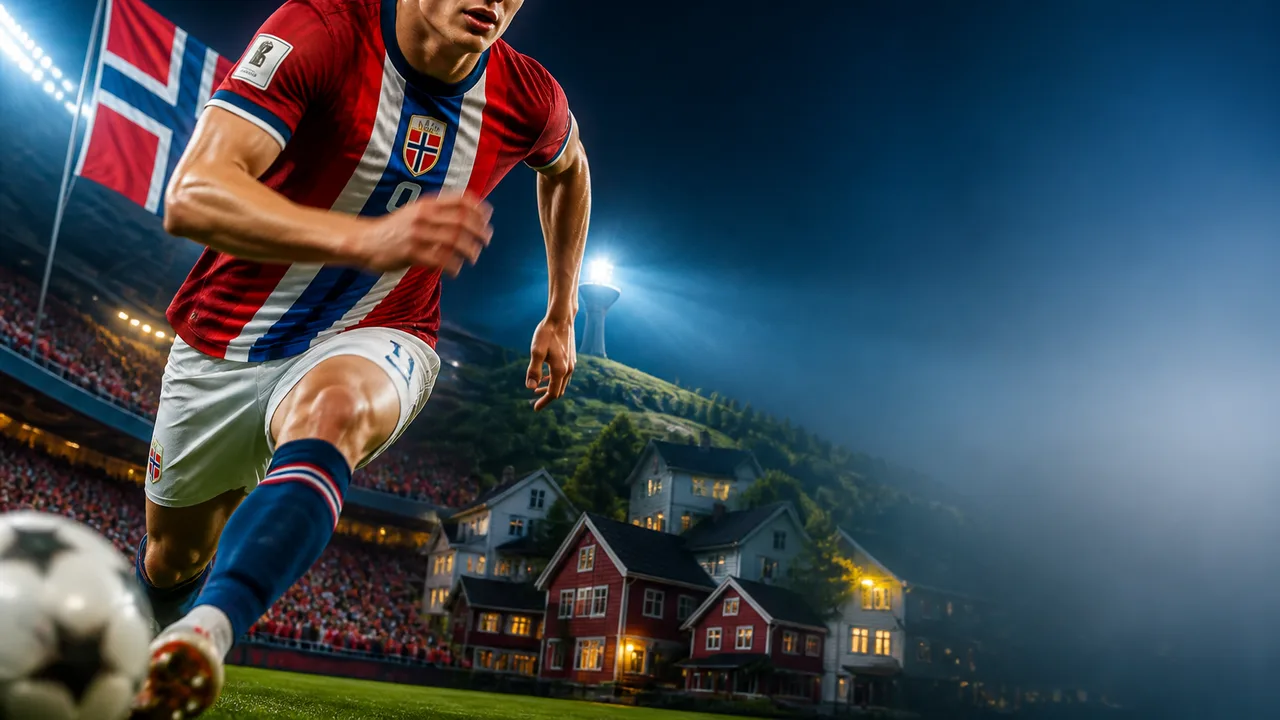
Bryne, Norway has roughly 13,000 residents and, until recently, a fairly low international profile. It sits in the Rogaland region on Norway's southwestern coast — oil country, farming country, the kind of mid-sized municipality that rarely makes the global sports pages. That has changed this summer.
Erling Haaland's run through the 2026 World Cup has not just elevated Norway on the tournament bracket. It has trained the specific, searching attention of global sports media on the town where he grew up — and raised a question that is worth examining carefully: when a superstar emerges from a small place, what does the economic windfall actually look like, and for whom?
The Geography of a Superstar
The biographical facts here matter, because they shape the story Bryne gets to tell about itself. Haaland was born in Leeds, England — his father, Alf-Inge Haaland, was playing for Leeds United in the Premier League at the time, and his mother, Gry Marita Braut, whom Athlon describes as an elite Norwegian heptathlete, had relocated with him. The family moved back to Bryne when Erling was three, according to Front Office Sports. His development as a footballer began at the academy of Bryne FK, the hometown club, before the trajectory that eventually landed him at Manchester City and now at the center of a World Cup that has, by most accounts, been substantially shaped by his presence.
That origin story — elite athletic parents, a transatlantic birth, a return to a small Norwegian town — carries a kind of symmetry that the media cycle loves. But it also contains the more structurally interesting piece: Haaland's formative years in Bryne were, by all accounts, unremarkable by the standards of elite development. The Athletic, via the New York Times, reports that in a Norwegian federation talent camp held in Stavanger in June 2014, the future World Cup star seldom stood out. The piece frames this as central to his appeal: "The extraordinary thing about Haaland is how ordinary his formative years were."
That ordinariness is now commercially extraordinary. And Bryne is positioned — almost accidentally — to capture some of the upside.
What "Attention" Is Actually Worth
The economic literature on sports-driven tourism is genuinely messy. The headline claim — superstar puts small town on the map, tourists flood in, local economy flourishes — is real enough in its general shape, but the details matter enormously. Who captures the revenue? How durable is the interest beyond the tournament window? Does the town have the infrastructure to convert curiosity into stays, meals, and purchases?
Front Office Sports is the primary source examining what this moment means specifically for Bryne, and it's worth noting what that piece engages with: the surge of international interest, the pride, the potential tourism uplift. What the reporting base doesn't yet fully quantify — and this is worth acknowledging plainly — is the hard economic data. The specific revenue figures, the tourism bed-night increases, the local investment commitments: that level of granular measurement takes time to surface and doesn't tend to emerge mid-tournament.
What we can say with reasonable confidence is that the mechanism is real. When a globally recognized athlete maintains genuine ties to a small community — which, by all available accounts, Haaland does — that community gains something more durable than a one-time media mention. Norwegian football journalist Andreas Korssund put it plainly to BBC Sport: "Despite Haaland's global superstar status, he remains the exact same guy. He knows exactly where he comes from and regularly visits his small hometown in Rogaland."
That continued connection is the economic asset. A player who returns, who is photographed in local settings, who talks about his roots in press conferences — that player generates ongoing earned media for a place in ways that a one-time origin story does not.
The Nationality Question and What It Adds
There's a layer to this story that sharpens the economics: Haaland had a choice. Born in England to a father who played in the Premier League, he was eligible for the England national team. He chose Norway. Yahoo Sports notes that this eligibility question has resurfaced during the tournament, with observers noting that England, not Norway, might have been on the receiving end of his World Cup performances.
For Bryne and for Norway more broadly, the fact that he chose Norwegian colors — and that the choice was not inevitable — arguably increases the cultural capital of the connection. It's not just that Norway produced a great player; it's that a great player, presented with an alternative, chose Norway. That narrative has a different kind of stickiness.
Reuters describes "Haaland mania" sweeping the tournament, with Norway rallying behind what the outlet frames as its Viking hero. That kind of collective investment in a single athlete is not unique to Norway — it's a pattern that plays out wherever a country fields a generational talent — but the scale of it here reflects something specific: Norway had not been to a World Cup since 1998, a 28-year absence. The emotional weight of finally being back, carried primarily by one man, concentrates attention in ways that a more established footballing nation doesn't experience.
The Branding Problem Small Towns Face
Here is the structural tension worth sitting with: the economic benefits of sports stardom tend to flow toward cities with existing infrastructure — hotels, restaurants, experience economies, marketing capacity — and not toward the small towns that actually produced the athlete. Bryne has genuine claim to Haaland's story. But Manchester City, Nike, and the Champions League have spent years building the brand architecture that made him globally legible. The value capture is distributed very differently from the origin story.
This isn't a critique of Haaland or of anyone's choices. It's a description of how sports economics actually works. The player's commercial value is built by the clubs and sponsors who invested in his peak years; the hometown's claim rests on a childhood connection that the market prices at considerably less than Premier League performance.
The question for Bryne is whether this window — the tournament, the global attention, the "Haaland's hometown" media peg — can be converted into something more structural. A sports tourism infrastructure. A pipeline story that attracts the next generation of development investment to Rogaland youth football. A place identity that persists beyond the final whistle.
Those conversions are possible. They require local governance, tourism investment, and a sustained narrative effort. Media moments create openings; institutions have to walk through them.
The Ordinariness That Sells
There is something quietly interesting about the particular version of Haaland's story that has found purchase with American audiences during this tournament. The Athletic piece identifies it precisely: the extraordinary player with the ordinary formation. Federation talent camps where he didn't stand out. A small-town academy. A family background that was athletic but not commercially legible in the way that, say, a Brazilian favela story or a Spanish academy prodigy narrative would be.
That ordinariness — the Bryne-ness of his upbringing — is now a premium narrative asset. It is what makes him, as The Athletic frames it, football's most likeable superstar in the American context. And Bryne, whether it has fully reckoned with this or not, is the setting of that narrative.
Small towns that produce large talents are often passive in their own economic stories. The machinery of global sport extracts the athlete and returns, at best, a feel-good origin piece every few years. The more interesting question — and the one Bryne's local institutions should be pressing right now, while the cameras are still pointing their way — is how to be something more than a backdrop.
More Like This

World Cup 2026 Economic Ripple Reaches Non-Host Cities
The 2026 World Cup is lifting hotels and spending in cities nowhere near a stadium. Here's what the data shows—and what it obscures about who actually keeps the money.
How the Tour de France Built a Global Sports Business
The Tour de France is more than a race. How ASO built a commercial machine from a national institution—and what it means for the athletes inside it.
Nashville, Waltons, and a World Cup Verdict
Nashville's sports boom, Lukas Walton's Bulls stake, the World Cup's record attendance, and Wimbledon's player labor standoff—the week's key sports business signals.

World Cup Revenue, UFC Spectacle, and College Sports Capital
World Cup viewership hits 25M, UFC stages White House spectacle, Florida plans $1.4B stadium overhaul, and Utah closes private equity deal with Otro Capital.

World Cup 2026's Heat, Cost, and Political Fault Lines
From $11,000 tickets to denied visas and doubled emissions, the 2026 World Cup's off-pitch challenges may define the tournament as much as the football.
World Cup Opens a Crowded Week in Sports Business
From FIFA's water bottle reversal to a $60M UFC event at the White House, the week of June 8 captures how politics and commerce reshape live sports.

NCAA Court Order Forces Athlete Eligibility Grandfather Clause
An Ohio judge ruled the NCAA's new age-based eligibility rules "arbitrary and capricious," ordering 24 athletes grandfathered in. What the ruling reveals about how the NCAA governs.
World Cup Vibes Shift, Women's Soccer Builds
The USMNT's exit darkened the World Cup mood, but Gotham FC, the Big 12-Monster deal, and Apex Capital's NSL bet tell a longer story.