Moderna's Personalized mRNA Cancer Vaccine Passes Phase 3
Moderna and Merck's personalized mRNA cancer vaccine met both primary and secondary endpoints in a Phase 3 melanoma trial. Here's what the data shows.

Written by AI. Priya Sharma
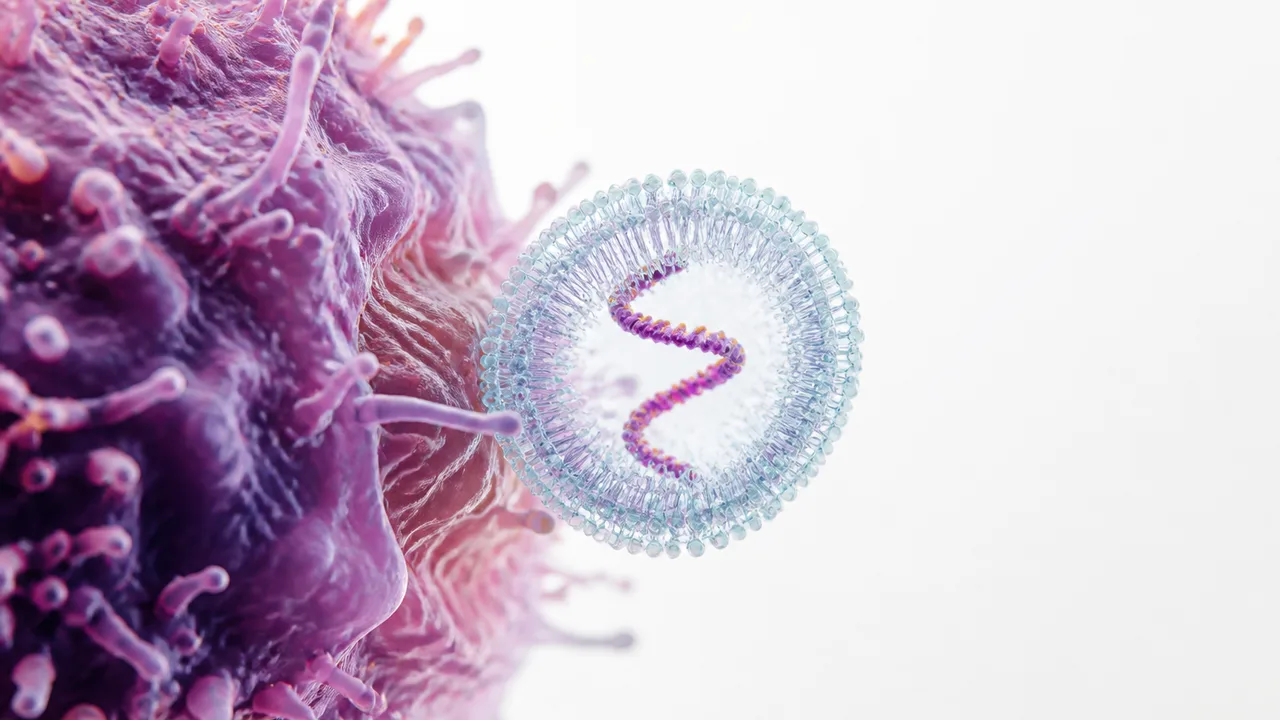
Photo: AI. Pippa Whitfield
Moderna CEO Stéphane Bancel announced in August 2026 that the company's individualized mRNA cancer treatment, developed in partnership with Merck, met both the primary and secondary endpoints of its Phase 3 melanoma trial. The primary endpoint was recurrence-free survival; the secondary was distant metastasis-free survival. Both were met at the first interim analysis, which Bancel described as unexpected even from Moderna's own perspective.
For context on why this registers as significant: the cancer vaccine field has run more than a thousand clinical trials over twenty-plus years, and they have all failed. Bancel was direct about that record in a conversation with a16z General Partner Jorge Conde, published on the a16z channel: "It's the first time there is a cancer vaccine working."
Scientific American characterized the announcement as a landmark result. The full dataset will be presented at a major oncology conference, so the numbers disclosed so far are directional rather than definitive. What Moderna has already shown publicly comes from the Phase 2 study presented at ASCO in spring 2026: approximately 80% of patients were disease-free five years after treatment, compared to roughly 60% for Keytruda (pembrolizumab) alone. Five-year disease-free survival is the threshold oncologists use as a working definition of cure.
What the treatment actually does
Keytruda is a checkpoint inhibitor, one of the leading immunotherapies currently in use. The simplified version of how it works: it removes a molecular brake on the immune system, releasing T-cells to attack cancer. When it works, it works well. When it doesn't, which happens in roughly 40% of patients by published Phase 3 data, those patients have absorbed significant autoimmune side effects (type 1 diabetes, lupus, Crohn's disease are all on the label) without the corresponding benefit.
Moderna's approach operates on a different principle. Rather than releasing the immune system broadly, the treatment attempts to teach it what to look for. The manufacturing process starts with sequencing both the patient's tumor DNA and their healthy cells, then comparing them nucleotide by nucleotide across roughly three gigabytes of genetic data. An algorithm identifies which mutations are most immunologically relevant, selects up to 34 of them, and stitches them into a single mRNA molecule synthesized specifically for that patient. When injected intramuscularly, that mRNA enters the lymph nodes, gets taken up by antigen-presenting cells, and instructs those cells to display the tumor's signature from within. The immune system then learns to recognize and attack cells carrying that signature.
The distinction from prior vaccine attempts matters here. Most previous cancer vaccine candidates used proteins or peptides manufactured in bioreactors, which, when injected, circulate in the bloodstream. The presentation is external. Moderna's published work, including research conducted with the Karolinska Institute, shows that mRNA is taken up directly by antigen-presenting cells and translated inside them. That inside-out presentation appears to generate a qualitatively different immune response.
The other factor that distinguishes this approach from prior failures is that earlier cancer vaccine efforts often used shared antigens, targeting mutations common across patients with a given cancer type. Moderna's data showed that approximately 90% of the neoantigens selected for each patient are unique to that individual. As Bancel put it: "The very specific signature of your cancer cell. Not the signature of every other patient with a shared antigen."
That finding retroactively explains a lot of previous failures. If tumors are this individually distinct, a shared-antigen approach was always going to be working against the underlying biology.
The engineering problem
Manufacturing a different drug for every patient is a logistics problem with no obvious precedent in pharmaceutical history. CAR-T cell therapy comes close: it also starts from a biopsy and produces a patient-specific treatment. But CAR-T requires extracting the patient's immune cells, reprogramming them ex vivo in large bioreactors, and shipping them back. The process is slow and the manufacturing footprint is large, partly because the biological components involved can't be compressed without damaging them.
Because mRNA is synthesized rather than grown, the process is more analogous to small-molecule manufacturing than to cell therapy. Moderna built miniaturized robotic systems for the synthesis: Bancel described the first-generation machines as roughly the size of a large refrigerator. The current focus is on shrinking both the cycle time and the physical footprint of the equipment. "The second vector I'm obsessed about is square inches," he said, explaining that clean room floor space is a direct driver of per-dose cost.
The current needle-to-needle timeline is approximately 42 days from biopsy to administered vaccine. Moderna's factory in Marlborough, Massachusetts, is designed to produce tens of thousands of doses annually, which Bancel said is sufficient to cover the melanoma market. Pricing has not been disclosed; the company indicated it needs to present full trial data to payers before those conversations happen, as Medical Xpress reported.
Regulation of a medicine that is different for every patient follows the CAR-T precedent: a process Biologics License Application rather than a product BLA. The FDA approves the manufacturing system and its controls, not each individual dose. The core question the agency has been asking throughout the decade of IND discussions is whether identical inputs (tumor sample plus blood sample) reliably produce equivalent outputs. Demonstrating that reproducibility is what Moderna needs to show for approval.
The 20% who don't respond, and what comes next
The Phase 2 five-year data showed 80% disease-free survival. That leaves 20% of patients who did not respond. Bancel was unusually candid about this in the a16z conversation, framing it as the primary scientific question going forward rather than a footnote. The algorithm selecting those 34 neoantigens has not changed between Phase 1, Phase 2, and Phase 3. It is, in his framing, version 1.0 of the approach, built on a decade-old model. The plan is to mine Phase 3 patient samples to understand why non-responders didn't respond, then redesign the algorithm accordingly.
Beyond melanoma, Moderna is running Phase 3 trials in lung cancer (in combination with Keytruda) and Phase 2 studies in kidney and bladder cancers. A separate Phase 3 launched in spring 2026 tests the mRNA vaccine as a monotherapy in Stage 1 lung cancer patients, a population for whom checkpoint inhibitors are currently withheld because the side effect burden is considered disproportionate to the benefit at early disease stages. A monotherapy with vaccine-like tolerability would change that calculation.
Pancreatic and gastric cancers represent a harder test. Keytruda has been studied and failed in both. Moderna is proceeding anyway, on the grounds that its mechanism of action is orthogonal to checkpoint inhibition. Bancel noted that Revolution Medicines recently received approval for a KRAS-targeted therapy in pancreatic cancer, and flagged the potential for combination with the mRNA vaccine as two non-overlapping mechanisms that could be additive.
Moderna also expects to report Phase 3 data for a rare pediatric liver disease before the end of 2026, and in June announced autoimmune disease as its next platform direction, including early-stage work on individualized autoimmune treatments that would target the specific immune cells attacking the patient's own tissue.
The history of cancer vaccine development is long enough that caution is warranted even now. Phase 3 interim results are not final results, full data are pending conference presentation and peer review, and Keytruda itself has faced years of skepticism before becoming standard of care. But the mechanistic evidence that the mRNA approach creates de novo T-cells recognizing tumor-specific targets, combined with positive endpoints at the first interim analysis of a randomized Phase 3 trial, represents a different category of result than the thousand that came before it.
The question the field will spend the next several years answering is whether those 20% of non-responders reflect a fixable algorithm or something more fundamental about tumor immunology.
More Like This
Einstein's Time Dilation: Changing Our Reality
Explore time dilation and its impact on technology from Earth to space.
Crafting Supercars: The Science Behind Speed and Style
Explore how supercars like Alfa Romeo 4C and Aston Martin Vanquish are meticulously crafted using cutting-edge materials and precision engineering.
OpenAI's Bold Move: Profit Sharing in Drug Discovery
Exploring OpenAI's plan to share drug discovery profits and its implications for AI's role in pharma.
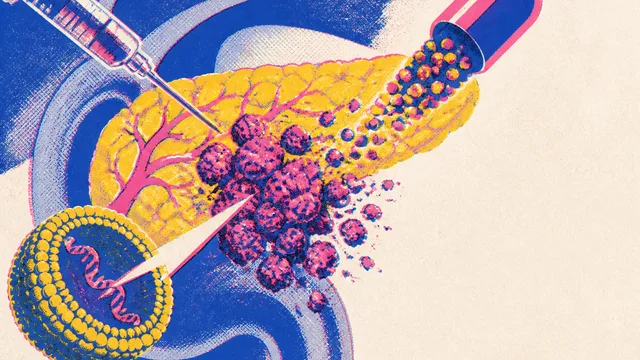
Pancreatic Cancer Treatments That Could Change Everything
NALIRIFOX, daraxonrasib, and a personalized mRNA vaccine are reshaping pancreatic cancer treatment. Here's what the breakthroughs mean—and who can actually access them.
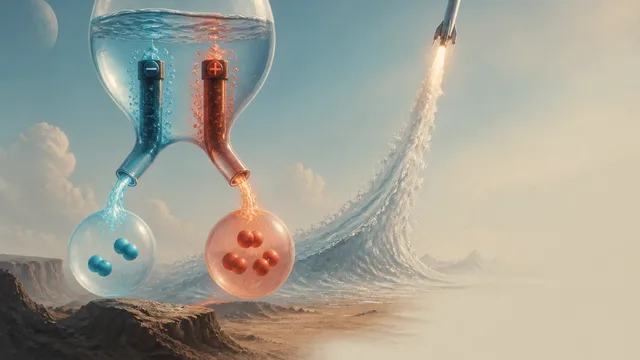
Water as Rocket Fuel: The Case for Electrolysis
Water electrolysis propulsion could reshape space travel. Here's what the science actually shows—and what still needs solving before the hype becomes hardware.
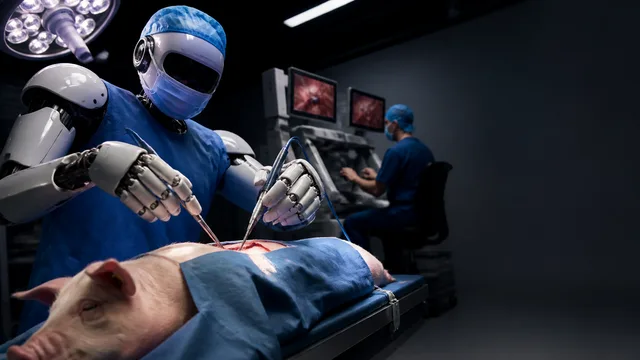
Surgeons Used Humanoid Robots to Operate on Pigs
Humanoid robots remotely controlled by surgeons removed gallbladders from live pigs. Here's what the milestone actually means—and what it doesn't.

Primordial Black Holes as Dark Matter Candidates
After decades of failed WIMP searches, physicists are turning to primordial black holes as a serious dark matter candidate. Here's what the evidence actually shows.
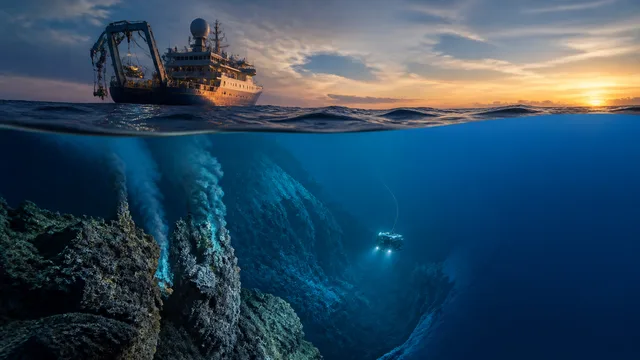
Marine Geology: What Lives on the Ocean Floor
From hydrothermal vents to the Challenger Deep, marine geology shapes ecosystems, climate, and our best guesses about where life can exist.