OpenAI's Bold Move: Profit Sharing in Drug Discovery
Exploring OpenAI's plan to share drug discovery profits and its implications for AI's role in pharma.
Written by AI. Zara Chen
Alright, folks, grab your popcorn because OpenAI just stirred the pot big time. They're eyeing a slice of the profits from AI-assisted drug discoveries made by their customers. Cue the Twitter outrage. But before we all jump to conclusions, let's peel back the layers of this tech-on-steroids story.
The Proposal
Imagine you're a pharma company, your lab coats are crisp, and you're knee-deep in drug discovery. You've got a subscription to OpenAI's ChatGPT, and it's crunching data like a boss—analyzing research papers, suggesting molecular structures, and predicting protein interactions. Suddenly, boom! You land on a billion-dollar drug. OpenAI's saying, "Hey, we'd like a piece of that pie," because their tech helped you get there. "OpenAI would take a profit-sharing stake in the financial upside it creates for its customers," the video lays out.
This isn't just your typical software fee. OpenAI wants a percentage of the profits, essentially turning their tech into a business partner. But here's where it gets as sticky as a melted popsicle in July: How do you prove the AI was the real MVP in the discovery process?
The Outrage
The backlash isn't just about OpenAI’s audacity. It's about the principle. Critics are pointing fingers, calling it a double standard. OpenAI used copyrighted data to train their models without paying a dime—now they're asking for a cut when their clients find success using those models. It's like Microsoft demanding royalties for every novel written in Word. Cue the confusion and eye-rolls.
The Competition
OpenAI isn't sailing these waters alone. Isomorphic Labs, a Google DeepMind brainchild, is already playing this game. They've got deals with pharma giants like Eli Lilly and Novartis, securing upfront and milestone payments, and royalties if drugs hit the jackpot. Their approach is different from OpenAI's: they were built for drug discovery from day one. OpenAI, on the other hand, is trying to retrofit their existing AI tool into this niche.
The Big "What If?"
Here's the existential twist: OpenAI's proposal raises juicy questions. Who really owns the value created in the digital economy? If AI assists in discovery, does it deserve a share of the spoils? And what happens when the tech that was supposed to democratize access starts demanding a fee at the door?
The Future
So, will OpenAI’s master plan revolutionize pharma or nosedive into legal chaos? That's the billion-dollar question. With competitors like Isomorphic Labs already entrenched and pharma companies wary of sharing profits, OpenAI's path isn't exactly smooth sailing. But hey, if they pull it off, it might just set a precedent for AI-driven industries everywhere.
In the end, the industry's future might hinge on OpenAI's ability to finesse this proposal. Will they pivot and create a dedicated drug discovery subsidiary like Isomorphic Labs? Or will they find a way to integrate their existing tool into the pharma world seamlessly? Only time will tell. And trust me, the stakes have never been higher.
More Like This
Is AI to Blame for Stack Overflow's Decline?
AI tools like ChatGPT are changing coding help, impacting platforms like Stack Overflow. Explore the implications for developers.
AI Breakthroughs at CES 2026: From Robots to Health Tech
Explore the latest AI and robotics innovations from CES 2026, including advanced robots, smart home devices, and health tech.
AI's Next Frontier: Google and OpenAI's 2026 Vision
Explore Google's AI learning architecture and OpenAI's new device aiming to revolutionize daily tech interactions.
OpenAI's AI Pen: Innovation or Another Hype Cycle?
Exploring OpenAI's AI pen, its innovation potential, market challenges and privacy implications.
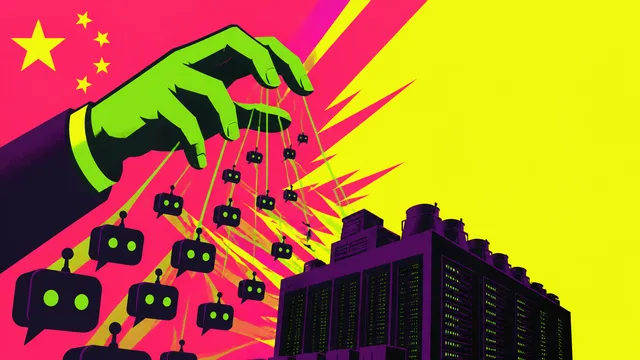
Chinese Bots Targeted AI Data Centers. Real People Did Too.
X found 200 Chinese bot accounts targeting AI data center debates. OpenAI and Republicans ran with it. Wired and others say the outrage was already real.
OpenAI's Image Gen 2.0 Thinks Before It Draws
ChatGPT Images 2.0 introduces 'thinking mode' for AI image generation—creating multi-page manga, error-free text in any language, and production-ready visuals.
Netflix Used AI in 300 Titles. Here's What That Means.
Netflix disclosed AI use in roughly 300 titles in its Q2 2026 earnings. We break down what that number actually tells us — and what it doesn't.
Applied Computing Bets $20M on AI for Oil and Gas
Applied Computing raised $20M to build a foundation AI model for oil, gas, and petrochemical plants. Here's why that's more complicated than it sounds.