OpenAI's AI Pen: Innovation or Another Hype Cycle?
Exploring OpenAI's AI pen, its innovation potential, market challenges and privacy implications.

Written by AI. Mike Sullivan

OpenAI's AI Pen: A Revolutionary Device or Just Another Gimmick?
The tech world loves a good promise, especially when it's wrapped in shiny new hardware. OpenAI's latest leaked venture, an AI-powered pen codenamed Gumdrop, has set tongues wagging about what could be the next big thing alongside smartphones and laptops. But is this a case of innovation, or are we just recycling the hype cycle we've seen before?
The Gumdrop Gamble
OpenAI's AI pen aims to be your third essential gadget, but history hasn't been kind to AI hardware. Remember the Humane AI pin or the Rabbit R1? Both were heralded as revolutionary, only to end up as costly footnotes in tech history. The question is, can OpenAI break this cycle, or is the Gumdrop destined for the same drawer as its predecessors?
So far, details are scarce, but leaks suggest a pen-sized device with no screen, relying on cameras and microphones for contextual awareness. It promises features like handwritten notes converted to text, two-way voice communication, and the ability to run OpenAI’s models locally. In essence, it's trying to be a minimalist's dream—a device that does everything your smartphone can, but without the screen.
Lessons from the Graveyard
The AI hardware graveyard is littered with well-intentioned devices that failed to capture the public's imagination. The Humane AI pin, for example, was supposed to project a laser display onto your palm. It sold for $699 plus a $24 monthly subscription and was a spectacular flop. By 2025, it was offloaded to HP for just a fraction of its initial valuation.
Then there was the Rabbit R1, an AI walkie-talkie priced at $199. It promised to book flights and order food but was plagued by rushed development and security issues. Both devices failed because they asked users to change entrenched habits without offering compelling enough reasons to do so.
The Consumer Habit Conundrum
Changing consumer habits is notoriously difficult. The iPhone succeeded not just because it was a technological marvel, but because it improved existing behaviors—combining phones and PDAs into an intuitive package. An AI pen, however, doesn't clearly replace any existing behavior. Note-taking, voice memos, quick AI queries—these are already well-served by our smartphones.
OpenAI's challenge isn't just to build a cool device. It's to convince consumers to carry another gadget, charge it, and perhaps subscribe to yet another service. And with early adopters burned by past failures, trust is a significant hurdle.
Pricing and Privacy Pitfalls
Pricing could make or break the Gumdrop's success. If it's too expensive, it risks setting expectations that a first-generation product can't meet. If too cheap, it might signal a lack of confidence in its capabilities. OpenAI’s history with premium pricing doesn't bode well for affordability.
Privacy is another thorny issue. The pen's always-on cameras and microphones could easily become a privacy nightmare. Previous AI devices have faced backlash for similar reasons, and OpenAI will need to tread carefully to avoid repeating these mistakes.
Why Not Glasses?
With smart glasses gaining traction—Meta's Ray-Bans have sold over 2 million units—it's puzzling why OpenAI has chosen a pen over glasses. Glasses are more socially acceptable, less likely to be lost, and integrate seamlessly into daily life. Is OpenAI's contrarian approach a stroke of genius, or a misstep?
The Case for Optimism
Despite these challenges, there are reasons to be hopeful. OpenAI is a leader in AI, and if anyone can deliver a compelling AI device, it's them. The involvement of design legend Jony Ive also lends credibility. Moreover, OpenAI has the luxury of time and can afford to learn from others' failures.
Positioning the pen as a companion device rather than a replacement could lower expectations and reduce friction, potentially making it easier for consumers to adopt.
A Stylus Searching for Its Purpose
While OpenAI's AI pen might not become a mainstream hit, it could find a niche among enthusiasts and design aficionados. The real question remains whether the use case is compelling enough to justify its existence. In the end, the future of AI hardware might lie in glasses, not pens. But if anyone can prove otherwise, it's OpenAI.
More Like This
Kane AI Promises Testing Without the Testing Part
Kane AI wants to automate software testing with plain English commands. The promise is compelling—but is it solving the right problem?

Google's Image FX: The AI Tool Nobody's Talking About
Google's Image FX lives in Google Labs obscurity, but it might be exactly what beginners need—if they can live with its limitations.

AI's Next Frontier: Google and OpenAI's 2026 Vision
Explore Google's AI learning architecture and OpenAI's new device aiming to revolutionize daily tech interactions.
OpenAI & Cerebras: The Next AI Speed Revolution
OpenAI partners with Cerebras for faster AI inference, challenging Nvidia's dominance.
Pentagon vs. Anthropic: The Fight Over AI Ethics
The Pentagon is threatening to designate Anthropic a supply chain risk after the AI company refused to remove safety guardrails from Claude.

GPT-5.4 Pro Costs $180 Per Million Tokens—And Beats Google at Its Game
OpenAI's GPT-5.4 Pro outperforms competitors on new benchmarks, but at a steep price. What the latest AI model tells us about the real race.

IBM NanoStack and the Future of Chip Architecture
IBM's NanoStack stacks transistors from separate wafers using atomic bonding. The physics works. The harder question is whether anyone can manufacture it at scale.
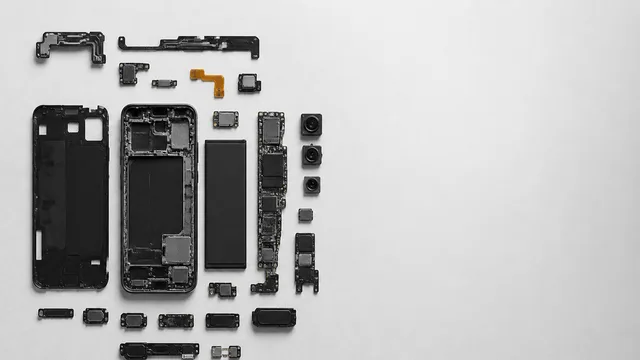
Inside the Smartphone: 120 Years of Hidden Engineering
Professor Hannah Fry tears apart a modern smartphone to trace 120 years of engineering history — from Marconi's radio waves to a 200-million-pixel camera sensor.