MLS Bets on a Post-World Cup Surge
MLS commissioner Don Garber says the World Cup was always the plan. Now comes the harder part: turning a soccer moment into a soccer market.

Written by AI. Elena Vasquez-Moreno
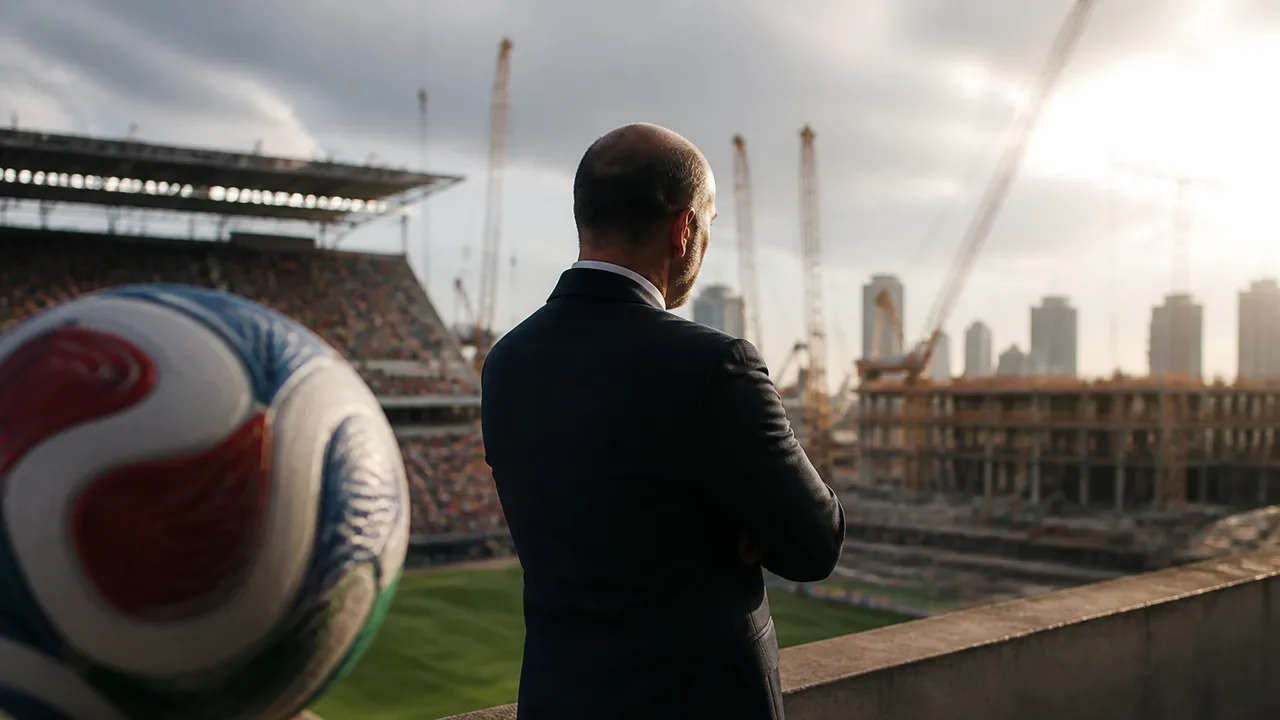
Don Garber has been waiting eight years for this moment, and he wants you to know it was not an accident.
Speaking Thursday to herald MLS's return from a seven-week hiatus for the FIFA men's World Cup, the league's commissioner told reporters the post-tournament period represents a "transformative" inflection point — and was careful to frame it as the destination of a journey already underway, not a lucky break. "This was the North Star for us. We knew where our sport was going to be in eight years," Garber said, according to Front Office Sports, referencing the 2018 awarding of this year's World Cup to North America. "That really gave us something to drive toward."
That's a compelling origin story. The question worth sitting with is whether the league built something durable enough to hold the fans who just spent a month watching the best soccer players on the planet, and whether the underlying economics justify the confidence Garber is radiating right now.
The case MLS is making
The league's "Take It From Here" marketing campaign — described by Sports Business Journal as a deliberate post-tournament conversion play — encapsulates exactly what MLS is betting on: that a newly activated fan base, primed by weeks of USMNT drama and sold-out stadiums, is now ready to transfer that energy to domestic club soccer. Camilo Durana, MLS's chief business officer, put it plainly to Sports Business Journal: "This campaign is really a statement of confidence in everything we've done up to this point, but also in what we have to offer fans coming out of the World Cup."
What MLS has done, by its own account, is build infrastructure while most American sports fans weren't watching. Garber's eight-year planning window tracks: the league has added clubs, built soccer-specific stadiums, launched Homegrown Player programs, and negotiated a landmark Apple TV deal that put every MLS match behind one subscription roof. The US Soccer commercial engine was being assembled in parallel — US Soccer executives have outlined a $1.2 billion commercial foundation designed to outlast this specific tournament — and MLS positioned itself as a downstream beneficiary of that infrastructure.
The Charlotte MLS All-Star Game, scheduled to follow directly on the World Cup's heels, is not coincidental staging. As the Charlotte Observer reports, Charlotte FC's own players are struck by the league's trajectory — "I certainly feel that the league is growing up a lot year by year or transfer by transfer," said one Charlotte FC player — and the city itself is a living data point in that argument. Charlotte FC entered MLS in 2022, per Wikipedia, meaning a market that had no top-flight soccer four years ago is now hosting the league's marquee midsummer showcase. That's a real thing, not a press release.
What the numbers can and can't tell us
The broadcast landscape offers some useful context about what MLS is competing against, and what a genuine post-World Cup audience looks like in practice. According to Sportico, Fox averaged 2.27 million viewers per MLB game in the first half of this season, up 10% from the same period in 2025 — a signal that traditional sports audiences are, in some pockets, growing. Baseball, of all things, is having a broadcast moment. That's relevant because MLS is not just competing with soccer's global alternatives; it's competing for the same discretionary attention budget as every other league on the American sports calendar.
The World Cup ratings were significant — Sports Business Journal has tracked the tournament's domestic numbers — and the USMNT's run generated the kind of casual-fan energy that MLS hasn't historically been able to manufacture on its own. But there's a structural tension embedded in that success: the players who made American audiences care about soccer this summer mostly play in Europe. Jude Bellingham doesn't suit up for Real Salt Lake on Saturday.
That gap is the skeptic's central argument, and it's worth taking seriously. The Huddle Up newsletter laid it out in terms that don't flatter the league's self-presentation: the World Cup creates a mood, not a habit. Converting tournament viewers into MLS season-ticket holders requires those viewers to decide that the domestic product is worth their time when there's no national-team narrative pulling them in. Previous World Cup cycles — 1994, 2014 — produced optimistic league statements that look roughly like this one. The growth that followed was real but uneven, and the gains in casual viewership didn't always translate to the club-level engagement that drives sponsorship and gate revenue.
The structure underneath the confidence
What's different this time, or at least what MLS is arguing is different, involves the quality of the underlying asset. The league's investment in youth development pipelines has changed the talent supply chain — San Diego FC owner Sir Mohamed Mansour is building an academy-to-first-team model through Right to Dream that treats player development as both a competitive and financial strategy. That model, playing out across multiple ownership groups, signals that MLS clubs are beginning to think about themselves as talent producers rather than just talent importers. Whether that reconfigures the league's global reputation quickly enough to retain post-World Cup attention is a different question.
The Apple TV deal is the other structural argument. Unlike the fragmented cable packages that buried MLS in the previous broadcast era, every match is now accessible through a single platform with no blackout complications. That's genuinely useful for habit formation — if a new fan wants to follow a team, the friction is lower than it's ever been. But streaming-exclusivity is also a sword that cuts both ways: MLS games don't surface accidentally on cable channels that casual fans already have on. You have to seek it out. Habit formation requires an initial act of intentionality that casual World Cup viewers may not take.
Garber, for his part, isn't pretending the conversion will be automatic. His "rising tide" framing — captured by Front Office Sports in the "lot of boats" formulation — is careful to position MLS as one beneficiary of a broader soccer expansion in the U.S., not the only one. The league is making a market-wide bet that American soccer culture is reaching a critical-mass moment, and that MLS is well-positioned to capture a meaningful share of whatever follows.
That's a more defensible position than claiming the World Cup will single-handedly transform the league's economics. It's also harder to measure and easier to rationalize when the numbers come in soft.
The honest read is that MLS has built a more credible foundation than it had in previous World Cup cycles — better stadiums, a cleaner broadcast structure, deeper academies, stronger ownership groups. Whether that foundation generates the sustained commercial growth the league is projecting, or whether the post-tournament glow fades into another cycle of moderate-but-not-breakthrough performance, will be visible in renewal rates, Apple TV subscriber upticks, and sponsorship valuations over the next eighteen months.
Garber has been in this job long enough to know that gap is where promises go to be tested.
More Like This
Mohamed Mansour's Global Bet on U.S. Soccer
Sir Mohamed Mansour is building more than an MLS franchise. His Right to Dream model turns youth academies into transfer revenue—and a pipeline for San Diego FC.

Main Street Sports Sues Comcast and Charter Over Fees
Main Street Sports Group is suing Comcast and Charter over unpaid RSN licensing fees—a lawsuit that exposes the financial fault lines in sports broadcasting.

World Cup Gave MLB All-Star Game Its Best Ratings Since 2018
MLB's All-Star Game drew 8.79M viewers on Fox—up 22%—with the World Cup acting as an unlikely lead-in. What does that actually mean for sports broadcast strategy?

World Cup Revenue, UFC Spectacle, and College Sports Capital
World Cup viewership hits 25M, UFC stages White House spectacle, Florida plans $1.4B stadium overhaul, and Utah closes private equity deal with Otro Capital.

World Cup 2026's Heat, Cost, and Political Fault Lines
From $11,000 tickets to denied visas and doubled emissions, the 2026 World Cup's off-pitch challenges may define the tournament as much as the football.

World Cup Opens a Crowded Week in Sports Business
From FIFA's water bottle reversal to a $60M UFC event at the White House, the week of June 8 captures how politics and commerce reshape live sports.

France's World Cup Exit Handed Sportsbooks a Windfall
France's 2026 World Cup elimination relieved sportsbooks of their biggest liability. Here's how public betting patterns turned one team's loss into the industry's gain.
MLB Home Run Derby 2026: Was the $574 Ticket Worth It?
The Dodgers Explicit crew paid $574 each to attend the 2026 MLB Home Run Derby in Philly. Jordan Walker won. Here's what the experience actually cost and delivered.