MIT's How to Make Almost Anything Links Code and Craft
MIT's How to Make Almost Anything has a new course site. Its history offers a guide to digital fabrication, hands-on learning and who gets access to the tools.

Written by AI. Zara Chen
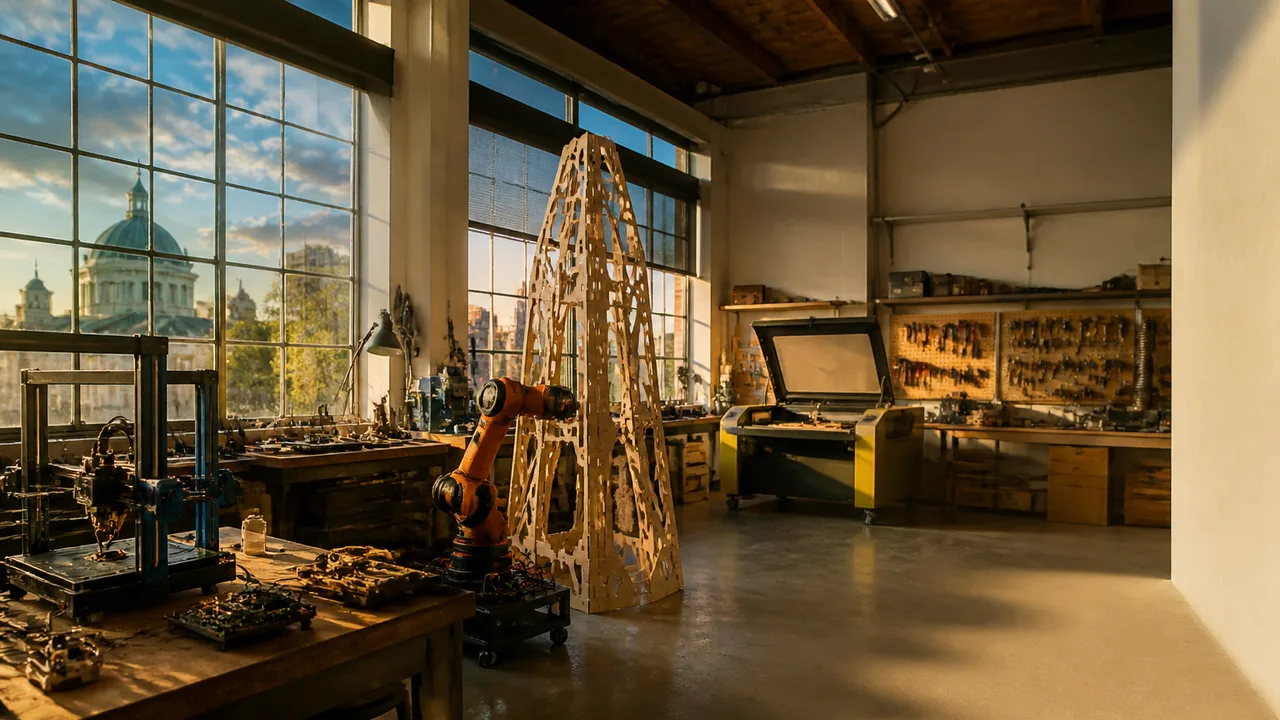
MIT’s How to Make Almost Anything course site has a familiar name and a fresh reason to pay attention: it asks what happens when a digital idea has to become a physical object. The listing identifies the course, but it does not by itself establish the 2026 syllabus, equipment or projects. That leaves a useful question to explore without guessing what this year’s students will build. What can students learn by making physical objects?
A design file can look perfect right up until two parts have to fit together. An electronic component can work on a desk and fail once it has to live inside something that moves. A material can refuse to behave the way its digital outline suggested. Those are ordinary physical constraints, and they turn making into a demanding way to learn. The object gets a vote.
The course has a longer history than its new web address. In a 2017 MIT Admissions account of How to Make (almost) Anything, a student described a semester-long crash course covering a different fabrication technique each week. Neil Gershenfeld was identified with the class, whose history was connected to an international Fab Lab movement. That earlier description captures the educational pitch: people learn to cross between tools and disciplines because a project asks them to.
Where a Design File Meets a Physical Limit
Digital fabrication joins computer-based design to processes that produce physical things. The appeal is easy to see. Someone can draw a shape, revise it and try to make it, then change the design after discovering what did not work. Each step carries information into the next. A failed fit is feedback you can hold.
That loop also complicates the familiar story that technology education is mainly about writing code. Code may be essential to a project; so may circuitry, measurement, materials or the patience to adjust a part by a fraction. A student trying to make an object that senses its surroundings, for example, would need to think about what the software does, how a sensor connects and where the components go.
The weekly-technique structure described in 2017 suggests another skill: figuring out which tool belongs to which problem. Give someone only one method and every idea starts looking like a job for that method. Introduce several, and the choice itself becomes part of the design. Should a part be rigid or flexible? Does it need to come apart for repair? How will a person use it? These questions sit between computing, engineering and craft, with no neat handoff between them.
A finished object can make learning visible, but it can also hide the most interesting work. The prototype that fits may follow several that did not. A successful connection may depend on noticing a poor one first. If the goal is to teach iteration, judging only the final artifact risks rewarding a polished appearance over the decisions that got it there. The useful classroom question is how students discover a problem, choose a revision and explain what changed.
Who Gets to Make Anything?
It invites ambition, and the “almost” keeps the claim honest. Physical production depends on access to tools, materials, workspace, instruction and time. A person with an idea but no safe place to test it faces a different set of choices from someone who can prototype repeatedly. That is a question about the conditions for learning, not just individual ingenuity.
The Fab Lab connection in the 2017 account points toward a broader promise: digital fabrication knowledge can travel beyond one classroom. Shared methods and spaces could let more people design and adapt objects for local needs. But access to a machine is only the beginning. If someone cannot learn to use it safely, obtain suitable materials or return to fix a failed attempt, the doorway is open on paper and narrow in practice.
This is where a course about making brushes up against technology policy. Public conversations about tech education often focus on who can write software or use the latest digital service. Physical making raises adjacent questions: Who maintains shared equipment? Who pays for supplies? How do beginners get enough time with a tool to learn from mistakes? Those decisions shape participation before anyone starts designing. They also make “democratizing” fabrication a proposition to examine, rather than a result to assume.
There is a fair counterpoint to the excitement around versatile makers: specialized knowledge matters. Building a one-off prototype and producing a dependable object for other people are different tasks. A class that moves quickly across techniques can offer breadth and confidence, while leaving substantial work for people who know a material, manufacturing process or safety requirement deeply. The strongest case for broad fabrication education is that it helps students recognize those boundaries and collaborate across them.
The Useful Friction of Making
Making also changes the relationship between an idea and its consequences. On a screen, a designer can revise a model without using physical material. Once production begins, each attempt takes time and resources. That can encourage more careful choices: testing a small component before making a larger assembly, designing something that can be adjusted, or asking whether the object needs to exist at all. Those possibilities do not make every fabricated project efficient or sustainable. They give students decisions to confront.
The same friction can make a tool feel less magical. Digital fabrication is sometimes discussed as though the machine does the creative work once a person presses a button. In practice, the design has to account for what the process can do, and someone has to interpret the result. When a part fails, the useful response is rarely “the machine is bad” or “the file is bad.” It is to trace the path between the intended object and the one that appeared.
That habit extends beyond workshops. People encounter technology as finished products with smooth interfaces and few visible seams. Trying to make a working object exposes seams everywhere: between software and hardware, between a diagram and a material, between one person’s plan and another person’s use. Those seams are where choices about repairability, accessibility and control show up. A builder can ask whether someone else will understand how to operate or fix what they have made.
MIT’s course title still works because “almost” leaves room for those encounters. A design can be revised; a stubborn material cannot be persuaded by a better slide deck. The most revealing moment in a fabrication class may come when a student has to decide whether to change the file, change the process or change the idea.
More Like This

This Creator Got Shadowbanned on YouTube in 25 Days—On Purpose
A vidIQ creator deliberately shadowbanned their channel with AI-generated content to expose how YouTube's algorithm actually works. The results are wild.

Flock Cameras Track Far More Than License Plates
Flock Safety's AI-powered cameras are spreading fast across U.S. cities—and they're capturing far more than license plates. Here's what's at stake.

Renewables Hit 30% of US Electricity in Early 2026
EIA data shows renewables reached 30% of US electricity in early 2026, up from 27.8% a year ago. Here's what that number actually means—and what it doesn't.

Apple's Reference Image Builds a Photo Evidence Chain
Apple's Reference Image proposal could preserve photo provenance through edits and platforms, but its value depends on adoption and careful trust rules.
Ten Tools to Fix Claude Code's Terrible Design Aesthetic
Claude Code generates the same purple gradients and Inter font on every site. Here are ten plugins and skills that might actually fix its design problem.
Building 3D Websites: What Five Hours of Tutorial Actually Teaches
A five-hour course promises to teach 3D web development. But what separates technical instruction from actual learning? An examination of modern tutorial culture.
UK's Phantom Data Centers Are Straining the Power Grid
Speculative 'phantom' data centers are clogging the UK's grid connection queue. Ofgem is pushing back—but the fix isn't simple when AI ambition is this loud.

Xbox Disc-to-Digital Program Converts Physical Games
Xbox's new disc-to-digital program lets players convert physical game discs into digital licenses. Here's what it actually means for your library—and the industry.