LunarLeaper: The Robot Proposed to Explore Lunar Lava Tubes
A new preprint proposes LunarLeaper, a legged hopping robot to explore lunar pits and the lava tubes beneath them. What the mission would face, and what it must prove.

Written by AI. Olivia Meng

A bipedal robot called LunarLeaper could become the first machine to walk into a cave on another world, according to a new arXiv preprint, "Lava Tube Exploration with LunarLeaper" arxiv.org. The paper reviews the Moon's skylight pits, collapsed openings that may connect to ancient lava tubes, and lays out how a small legged robot might descend into one and report back.
What the Paper Proposes
The concept did not appear from nowhere. A team of European researchers first proposed LunarLeaper in response to a European Space Agency call for mission ideas, as reported by phys.org. The robot is a hopper: it would travel to a lunar skylight, a collapsed section of a lava tube, and investigate the opening and whatever lies beneath it. A more detailed mission description, published in Planetary and Space Science via ScienceDirect, frames LunarLeaper as a small-scale legged robot designed to explore the lunar subsurface through these pits, with an explicit assessment of the risk of damage during the descent.
Lunar pits themselves are not hypothetical. Spacecraft have imaged dozens of them, and the preprint reviews the evidence that some are skylights into longer tunnels. Japanese orbiter data has been central here: the Kaguya spacecraft's radar sounder work in the Marius Hills region suggested a void extending beneath one skylight, an early indication that a single collapsed hole could open onto a much larger structure. The preprint synthesizes this observational record and treats the pits as doorways rather than dead ends.
Why a Hole in the Moon Matters
The scientific case is layered. A lava tube's interior preserves a vertical record of the volcanism that built the lunar maria, strata that surface missions can only sample obliquely. The tube's walls and floor could also trap volatiles, and its stable, rock-roofed environment records billions of years of exposure, or the lack of it, to space weather.
The engineering case is the one that grabs habitat planners. Lunar surface conditions are punishing: roughly two weeks of unfiltered solar and cosmic radiation, micrometeorite impacts at several kilometers per second, and temperature swings of more than two hundred degrees Celsius between lunar day and night. A lava tube solves most of that by existing. Its rock ceiling is natural shielding, which reduces how much protective construction a habitat inside it would need, and its interior temperature is far more stable than the surface's. The unverified leap is pressurization: a tube habitat would still require a sealed, pressurized envelope, and nobody has measured how airtight a multi-hundred-meter volcanic tunnel is. The preprint is careful on this point, listing geometry, structural safety, temperature, and resource availability as unknowns that robotic reconnaissance must establish before crews could depend on any of it.
A note on why this appears in a climate and extreme-environments feed: the through-line is shielding and survivability. Much of the climate story is about engineered protection from a destabilized atmosphere, insulation, cooling, flood defense. A lunar lava tube inverts that logic. Nature built the shelter first, and the engineering question is whether humans can inhabit what geology left behind. The two problems share a method: characterize the extreme environment precisely before building anything in it.
The Problem with Every Explorer so Far
No robot has entered a lunar pit, and the physics of doing so is the hard part of the paper. The challenges stack:
- Descent. Skylight walls are steep, rubble-strewn, and their stability is unmeasured. Wheeled rovers, which excel on open regolith, are poorly suited to a boulder field at the bottom of a hole.
- Darkness. Below the skylight's rim, no sunlight reaches. Power, thermal control, and navigation all have to work without solar input.
- Communication. Rock blocks radio. A probe in the tube either stays in line of sight of the surface or needs relays, which multiplies mass and failure points.
- Uncertain surfaces. The floor may be deep fine regolith, unstable debris, or bare rock. The preprint's own damage-risk analysis, echoed in the ScienceDirect paper, treats a fall or a mechanical failure during descent as a mission-ending event.
Legged locomotion is the proposed answer, and hopping between the legs. Legs handle rubble better than wheels and can recover from stumbles; hops cover the long distances a tube may extend. Whether a small robot can do both reliably, on untested terrain, in the dark, is exactly what a mission would test.
How to Calibrate This Story
This is a synthesis and a mission proposal, not flight-proven technology. Nothing in the arXiv paper or the ScienceDirect publication reports hardware that has survived a launch, a landing, or a single hop on the Moon. Mission concepts die between proposal and funding more often than they fly, and ESA's original call produced many responses of which LunarLeaper is one.
The evidence beneath the concept is stronger than the concept itself. Orbiter data, including the Kaguya radar work, has plausibly identified subsurface voids, and the existence of the skylights is settled observation. The uncertainty sits at every step below that: tube extent, floor conditions, structural integrity, and whether a legged-hopping robot can traverse any of it.
The proposal's own authors frame it as reconnaissance. The task is to establish the geometry, safety, temperature, and resources of these spaces so that decisions about human use rest on measurements instead of hope. That framing is the honest one, and it is also the standard a reader should apply to coverage of lunar caves generally: distinguish what orbiters have seen, what a paper proposes, and what no machine has yet done.
If LunarLeaper or something like it does descend a skylight within the next decade, the first data returned will be mundane, floor composition, wall thickness, temperature. Those mundane numbers would decide whether the Moon's most naturally sheltered real estate becomes a habitat site or remains a geology lecture with a locked door.
More Like This
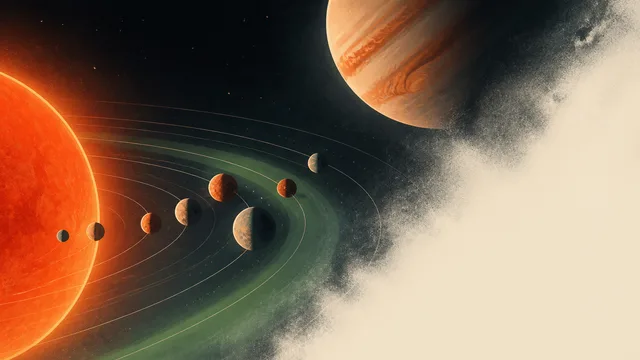
Why Finding Earth's Twin Among Exoplanets Is So Hard
The TRAPPIST-1 system looks promising—seven rocky planets, three in the habitable zone. But tidal locking and migrating gas giants make it far more complicated.
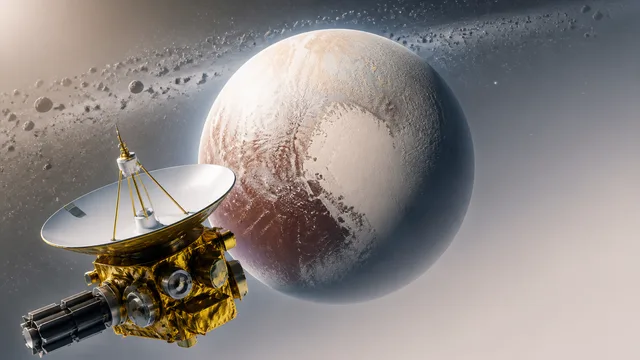
New Horizons and the Long Journey to Pluto
NOVA's 'Chasing Pluto' documents the New Horizons mission's nine-year, 3-billion-mile trek to reveal Pluto's surface for the first time.
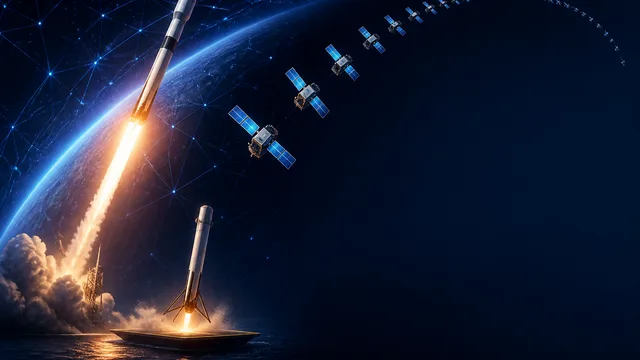
SpaceX Launches 27 Starlink Satellites, Lands Booster at Sea
A Falcon 9 launched 27 Starlink satellites from Vandenberg on Sept. 6. What the routine flight reveals about the industrial pace of low-Earth orbit.
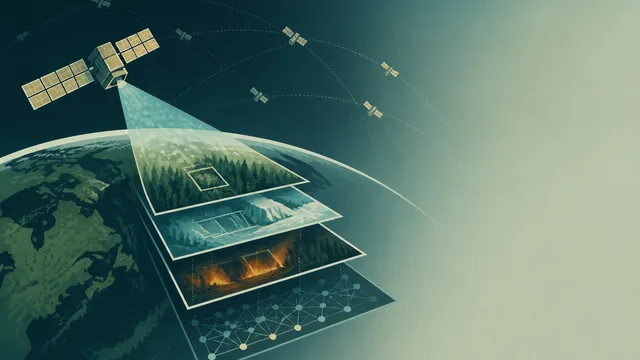
Private Satellites and AI Are Rewriting How We Watch Earth
Commercial satellite constellations and AI can track forests, ice and fires in near real time. The catch: who can audit the data, and who gets to see it.

Unveiling the Trench Effect: Lessons from King's Cross
Explore the King's Cross fire, the trench effect, and vital fire safety reforms reshaping public infrastructure.
Earth Microbes May Survive on the Moon's South Pole
NASA research finds common Earth microbes could survive in shadowed lunar south pole regions—raising urgent questions about contamination and planetary protection.
Arkansas Lithium: Oil Giants Bet on the Smackover
ExxonMobil, Chevron, and Standard Lithium are racing to extract lithium from southern Arkansas brine. Here's what's real, what's promised, and what's unresolved.

How Rockets Trigger Lightning Strikes on Ascent
Rockets don't just attract lightning—they help create it. Here's the physics behind why rocket exhaust turns a potential into a strike.