The Lucas Museum Puts Cultural Gatekeeping on Display
George Lucas's new Los Angeles museum elevates illustration and pop culture, while raising questions about expertise, context and who gets to define art.

Written by AI. Leo Santana
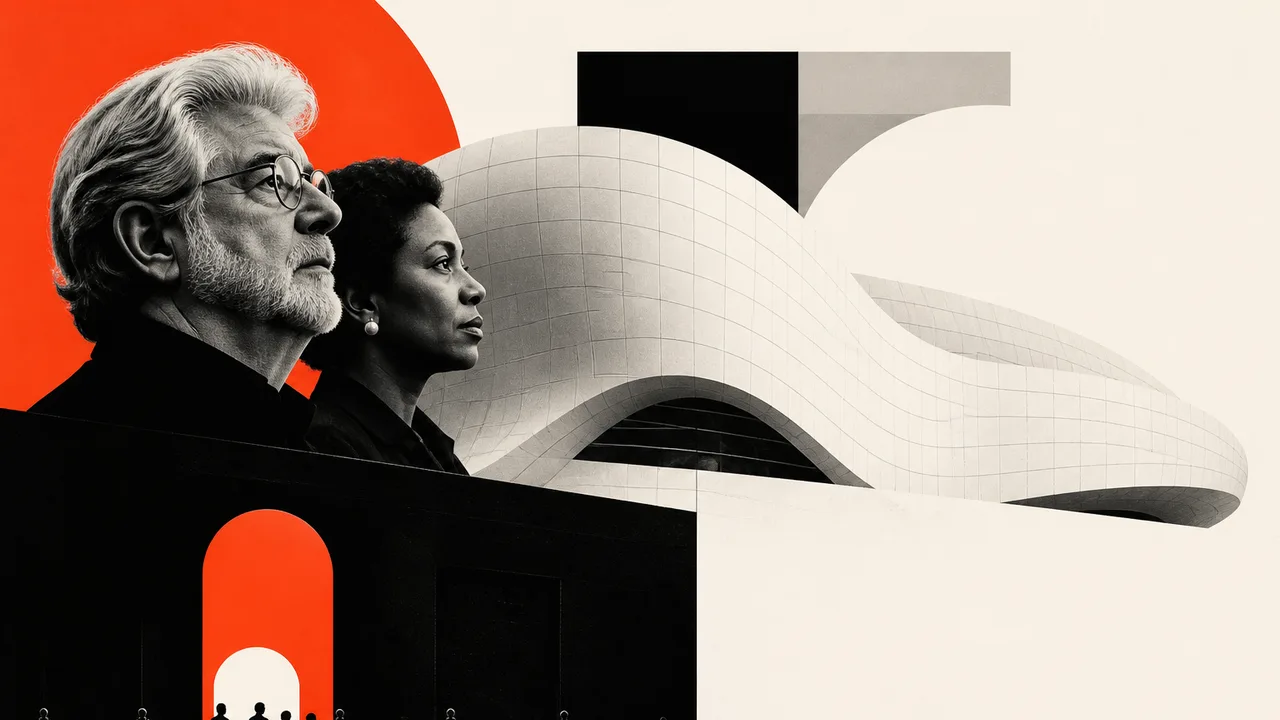
George Lucas and Mellody Hobson will open the Lucas Museum of Narrative Art to the public in Los Angeles on September 22. At its September 19 gala, Queen Latifah placed it beside some formidable neighbors: “Paris has the Louvre, New York has the Met, and now L.A. has an artistic equal, the Lucas,” she said, as The Hollywood Reporter recorded.
An opening party cannot confer artistic equality by applause, even when Steven Spielberg, Oprah Winfrey and several generations of Hollywood royalty are in the room. Latifah’s comparison does identify the museum’s scale of ambition. Lucas and Hobson have built a permanent institution to argue that illustrations, comics, film objects and other popular images deserve the architectural authority long granted to conventional museum art.
The gala supplied a compressed version of that argument. Guests moved from speeches and galleries to a rooftop drone show, where images included Frida Kahlo, Banksy’s Girl With Balloon and the Millennium Falcon. The sequence turned cultural mixture into spectacle: self-portrait, street art and fictional spacecraft, all redrawn in the same Los Angeles sky.
A Cloud with a Canon Inside
Designed by Ma Yansong and MAD Architects, the five-story building occupies a 13-acre Exposition Park campus. Variety reports that its 300,000 square feet include 100,000 square feet across 35 galleries, with 1,200 works drawn from Lucas’s private collection.
Yansong described the architectural idea as “something floating like a cloud above LA,” according to Vanity Fair’s gala report. A cloud suggests softness, movement and a refusal to sit inside a tidy box. The form gives Lucas’s curatorial case a body: the categories separating fine art, commercial illustration and entertainment should become more porous.
Yet every cloud casts a shadow. The building may look fluid, but the collection inside reflects decisions about what enters the story, what stays in storage and what appears beside what. Narrative art is a broad label here, covering forms from comics and murals to film cells and Norman Rockwell. Breadth can welcome visitors whose visual education came from movie screens and paperback covers. It can also blur the reasons that objects have been placed together.
Published figures complicate the basic inventory. Variety describes a 30,000-piece collection, with 1,200 works displayed, while Vanity Fair puts the collection at 40,000 pieces. Funding reports also diverge: The Hollywood Reporter gives a $1 billion figure, while Variety reports $1.5 billion, entirely funded by Lucas and Hobson. Those accounts may use different definitions or reporting dates, but the available coverage does not reconcile them. The defensible description is a privately funded museum costing at least $1 billion, built around a collection numbering in the tens of thousands.
Twenty Years and Three Cities
The building arrives after roughly two decades of proposals and resistance. Variety dates Lucas’s original proposal to 20 years ago; The Hollywood Reporter calls the gala 17 years in the making. Both report failed efforts to place the museum in San Francisco and Chicago before Los Angeles became its home.
That history explains the defiant tone of the opening. Lucas called the project a “temple to illustrators” and said artists from R. Crumb to Norman Rockwell had wanted museum recognition. Hobson sharpened the argument with a useful bit of popcorn: “If critics say a museum on narrative art is too much like a popcorn movie and not enough like an art film, well, we like popcorn movies in our family.”
The strongest version of their case concerns access to cultural legitimacy. Illustration has shaped how millions of people understand bodies, heroism, domestic life, race, gender and history. Museum walls have enormous power to declare which images deserve sustained attention. Giving commercial and popular work that attention can expose the skill, labor and ideology hidden by the dismissive word “content.”
Lucas’s museum therefore turns an anti-hierarchy argument into a permanent institution. That transformation creates its central tension. The institution challenges established gatekeepers while concentrating curatorial authority in the collector who financed it.
Who Explains the Pictures?
The Los Angeles Times reports that critics have questioned whether “narrative art” coheres as a category and whether masterworks can productively share space with pop-culture ephemera. Much of the criticism has focused on the near absence of wall text explaining curatorial choices.
Wall text means the labels and short essays that identify an object, provide context and explain why it appears in a room. Labels can become academic wallpaper, the paragraph everyone photographs and nobody reads. They can also tell visitors who commissioned an image, what audience saw it, whose stereotypes it repeated and why its placement beside another object changes the interpretation of both.
Lucas told the Times that he took over curation of the 100,000 square feet of galleries after plans were “getting off the rails.” He believed people trained by art schools and universities could not accept illustration as art. His stated principle was emotional response: “If it is emotional to you, then it’s art.”
That principle gives visitors permission to trust their reactions, a generous corrective to the museum voice that sounds as if every label has been translated from granite. Emotional response, however, cannot explain the historical conditions surrounding an image. Selection remains, with authority concentrated in Lucas. Sparse interpretation asks visitors to choose what counts as art while giving them limited access to the reasoning that shaped the choice.
The criticism is difficult to settle through gala reports. They establish the lack of wall text and Lucas’s role, but they cannot show how pacing, sightlines and object groupings work over a full visit. A surprising juxtaposition may generate its own argument without a paragraph beside it. A cluttered one may leave viewers with little beyond proximity. The galleries must carry that burden after the celebrities leave.
The Louvre Line and Its Limits
Latifah’s Louvre and Met comparison frames the Lucas as a city-defining cultural monument. The museums share a claim to public consequence: each presents objects inside an institution that helps determine what a culture remembers. Her sentence compares status, however, rather than structure. The Lucas begins with one founder’s private collection and one founder’s curatorial intervention. Its scale does not establish equivalence in history, holdings or governance.
Los Angeles also offers a nearer comparison. The Times noted that LACMA director Michael Govan attended after hosting events for the new Geffen Galleries in April and May. The parallel stops at two major museum openings in one city during one year. The available reporting does not support a broader comparison of their funding, collections or interpretive methods. Even so, the proximity makes the Lucas’s identity clearer. Its distinction lies in elevating forms that museums have often separated from the fine-art canon, while presenting that challenge through the vision of a powerful private collector.
The architecture makes the promise visible before anyone reaches a label: a cloud hovering over Exposition Park, filled with pictures that escaped the cultural filing cabinet. When the doors open, visitors will decide whether Lucas has removed those dividers or simply replaced them with his own.
More Like This
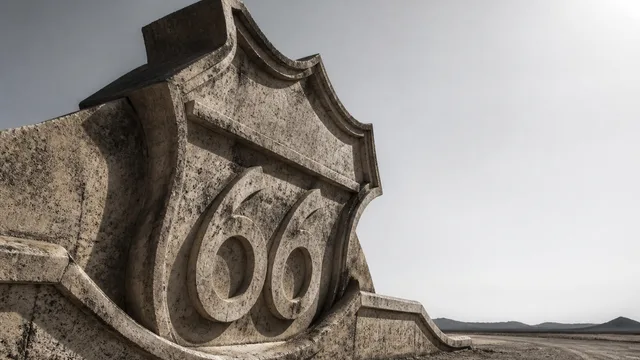
Route 66 and the Landscape of American Memory
Peter Adler's documentary on Route 66 reveals a road that stopped being infrastructure and became something stranger—a canvas for competing American mythologies.
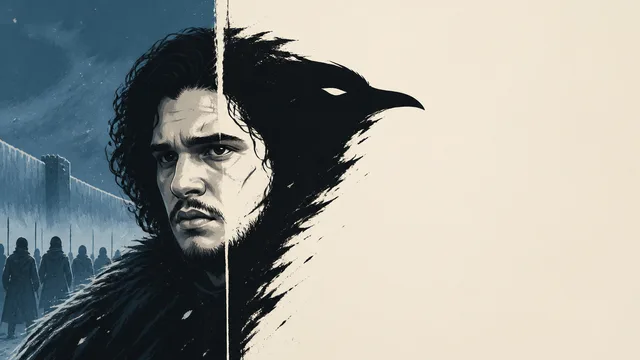
How HBO Turned Jon Snow Into a Logo
HBO's Game of Thrones didn't just simplify Jon Snow's character—it redesigned him into a merchandisable image. Here's what that visual shift cost the story.